


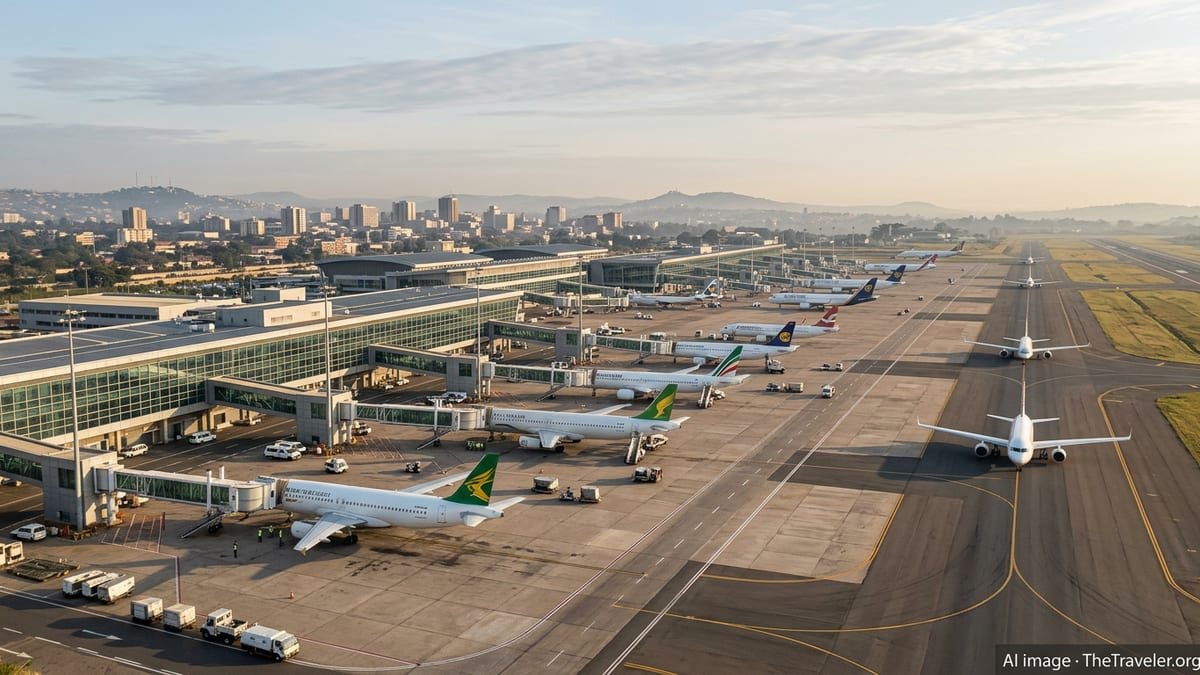
The African Development Bank has launched a continent-wide aviation investment platform aimed at attracting billions of dollars to airports, airlines and air navigation projects, marking a decisive push to strengthen connectivity and transform Africa’s air transport landscape.
A purpose-built platform for a rapidly expanding market
The Integrated Aviation Transformation Program, announced by the African Development Bank in partnership with regional aviation bodies, is envisioned as a one-stop platform to channel funding, policy support and technical expertise into Africa’s most strategic aviation projects. It brings together governments, development finance institutions, and private investors around a common framework to accelerate investments that are often stuck at the feasibility stage.
The platform covers the entire aviation value chain, from terminal expansions and runways to fleet updates, safety upgrades and digital systems. By bundling projects and standardizing preparation, AfDB aims to turn a fragmented pipeline into profitable opportunities that can attract large institutional investors.
The initiative comes at a time when demand for air travel in Africa is recovering strongly, with traffic growth exceeding the global average in several markets. However, capacity, infrastructure and connectivity lag, with many capitals underserved and secondary tourism and trade hubs only weakly connected by air.
For travel and tourism stakeholders, the platform signals that aviation is moving to the center of Africa’s economic integration agenda, alongside major projects such as the African Continental Free Trade Area and the Single African Air Transport Market.
Bridging the infrastructure and connectivity gap
Africa’s vast geography and limited ground transportation networks make aviation essential for both business and leisure travel, but decades of underinvestment have resulted in congested hubs, outdated terminals, and a patchy regional route map. The AfDB Aviation Framework has long emphasized that many airports operate below international standards, with regulatory and financial obstacles slowing upgrades and new construction.
The new investment platform is designed to directly address these bottlenecks. We are prioritizing projects to expand runway capacity, modernize terminals to accommodate increasing passenger flows, and upgrade air navigation and safety systems to international benchmarks. This approach is expected to reduce delays, improve on-time performance and improve the overall travel experience for both domestic and international passengers.
Importantly for travelers, the bank is tying its loans to efforts to deepen connectivity within Africa. This includes support for secondary hubs and city pairs that can open up new multi-stop itineraries for tourists, as well as faster links for business travelers moving between emerging economic corridors in West, East and Southern Africa.
Industry analysts have suggested that improved regional network connectivity could help rebalance a market where non-African carriers still carry the bulk of intercontinental traffic and many intra-African journeys require time-consuming routes through a small number of hubs.
Linking public finance and policy reform
The platform is being built not only as a source of funding, but also as a vehicle for long-debated aviation policy reforms. AfDB is working with the African Union, the African Civil Aviation Commission and national regulators to align investments with the phased implementation of the Single African Air Transport Market, which aims to liberalize skies across the continent.
By combining funding with its commitment to open skies, safety oversight and fair competition, the bank aims to create a more predictable operating environment for airlines considering new routes within Africa. This is particularly important for private and regional carriers, which have historically faced high operating costs and regulatory fragmentation.
The program also links to broader green and resilience challenges. Access to AfDB-backed equipment is expected to favor projects that incorporate energy-efficient terminal designs, modern air traffic management to reduce fuel consumption, and climate-resilient infrastructure that can withstand the extreme weather events that are becoming more frequent in some parts of Africa.
For investors, the combination of policy support and de-risking tools such as guarantees, blended finance and project preparation facilities is aimed at making African Airlines a more attractive long-term asset class, rather than a niche or speculative venture.
Impact on tourism, trade and hub development
Tourism boards and travel companies across Africa are monitoring this new platform closely, seeing it as a potential catalyst to tap into lesser-known destinations and diversify visitor flows beyond a few established gateways. Improved airport facilities and denser route networks could make cross-country itineraries more seamless, encouraging travelers to combine coastal, wildlife, and cultural attractions across multiple states in a single trip.
Major hub projects already in development, such as major expansion plans around Addis Ababa and other regional centres, are expected to benefit from a platform focused on integrated planning. By strengthening both major hubs and feeder routes, AfDB aims to reduce travel times and create more competitive options for long-haul passengers connecting to the continent.
Air cargo is another winner. Upgraded runways, modern cargo terminals, and better logistics systems can support exporters of high-value perishables such as flowers, fresh produce, and seafood, as well as time-sensitive industrial products. This in turn supports the goals of the African Continental Free Trade Area, where efficient air freight transport is increasingly seen as a complement to new road and rail corridors.
For business travelers, more reliable schedules, streamlined connectivity and improved ground facilities will lead to greater confidence when using African hubs for regional meetings, events and conferences. This is likely to strengthen the trend for global aviation and tourism gatherings to choose African cities as venues.
What travelers can expect in the coming years
Although AfDB’s aviation platform is a multi-year initiative, early impacts are likely to emerge in the form of visible construction projects at major airports, a gradual increase in flight frequency on high-demand routes, and the launch of new point-to-point services between emerging cities.
Passengers can expect incremental improvements to their terminal experience, including upgraded security lanes, streamlined check-in and boarding procedures, and expanded retail and hospitality offerings that incorporate local culture into the airport environment. Investing in digital systems can also lead to improved real-time information, smoother transfer, and more robust responses to disruption.
For the broader travel ecosystem, from tour operators to hotel groups to destination marketers, the AfDB platform provides a clearer pipeline of aviation projects to work with. As new and expanded airports become operational, tourism stakeholders have the opportunity to develop products around new gateways and encourage travelers to look beyond traditional points of entry.
If the platform can realize its ambitions, the growth of Africa’s aviation industry over the next decade is likely to be determined less by capacity constraints and route gaps and more by how quickly airlines, airports and destinations can adapt to a new era of connectivity across the continent’s skies.
