


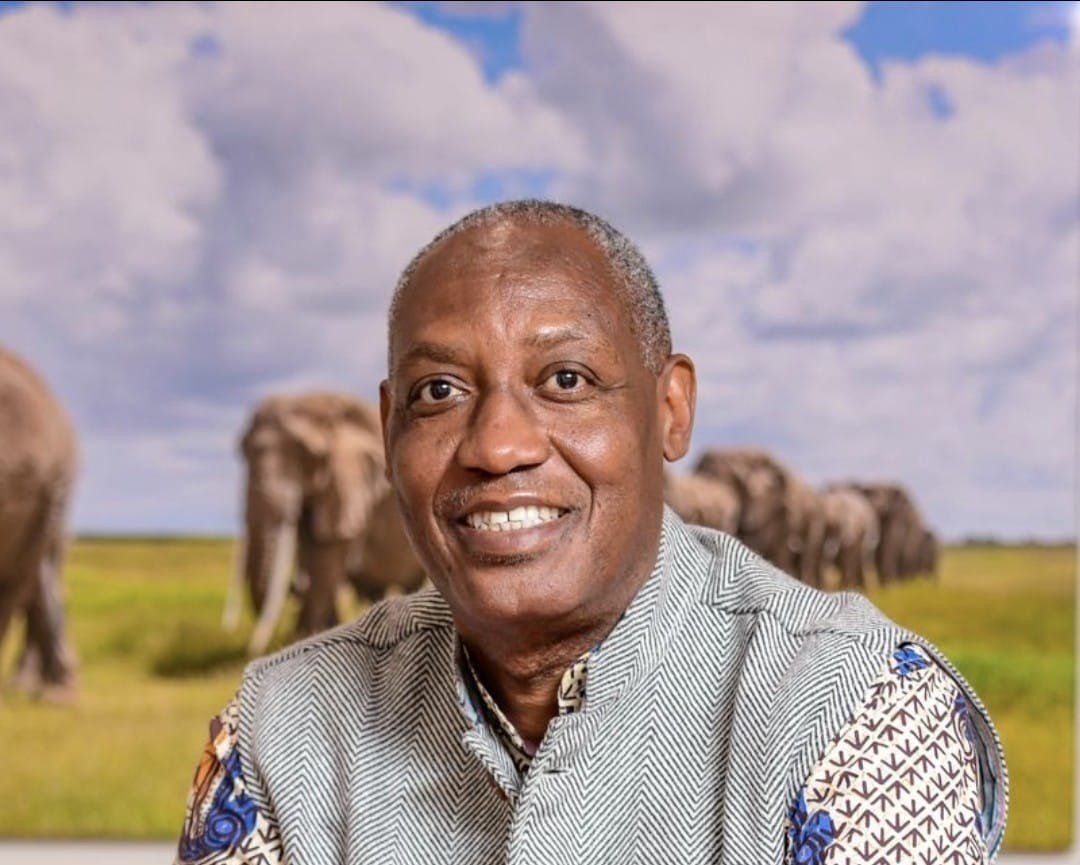
AWF CEO Kadu Sebunya
For much of Africa, climate change is no longer a predicted risk. It is the economic power of today, shaping productivity, public finances, infrastructure resilience and household stability. Harvest failures, schooling disruptions, soaring food prices and damaged transport networks are not isolated events. They are systemic signals.
What makes this moment particularly significant is the disconnect between global investment priorities and global needs.
While capital is rapidly flowing into artificial intelligence and frontier technologies that promise efficiency and growth, climate adaptation, perhaps the most urgent investment requirement of the decade, remains structurally underfunded, particularly in the Global South.
This is not a failure of innovation. It is a failure of strategic coordination.
Africa continues to be shaped primarily by fragility. This framework obscures the more fundamental reality that the continent is one of the world’s most important custodians of the ecosystems that underpin global economic stability.
Its forests, rangelands, river basins and biodiversity regulate the climate, support food systems and cushion shocks far beyond its borders.
The challenge is not a lack of assets. It’s that these assets are less recognized in economic and financial decision-making.
Nature is still treated as a constraint rather than a productive infrastructure. Adaptation is still approached as a cost rather than an investment. Resilience is still delivered through fragmented projects rather than being integrated into national development strategies. In such a situation, neither capital nor innovation can scale up to the required level.
Without a doubt, artificial intelligence will shape the next phase of global economic organization. The relevant question is not whether it will be introduced, but whether it will reinforce existing imbalances or help redress them.
In conservation and climate adaptation, AI’s most important contribution lies in decision intelligence, the ability to transform complex and dynamic environmental data into timely and actionable options for governments, communities, and markets.
Across Africa, smallholder farmers, pastoralists, and local governments already operate in high-risk environments where decisions have immediate economic consequences.
AI-powered climate forecasting, land use analysis, and market intelligence can significantly improve these decisions, as long as these tools are designed to support rather than replace human judgment.
The same applies to maintenance systems. Predictive analytics can enhance early warning capabilities, guide land use planning, reduce human-wildlife conflicts, and improve management of protected and productive landscapes. When partnered with local agencies, these tools move conservation from reactive enforcement to proactive risk management.
For small conservation geography teams, AI is a power multiplier. This expands the ability to code, analyze, and design sophisticated spatial products, making it much more possible to achieve high-quality work such as satellite-based land use change analysis.
It also serves as a true brainstorming partner, helping you speed up project design and translate complex spatial analysis into dashboards, tools, and interfaces that non-GIS users can actually use. In practical terms, AI can augment existing capabilities to deliver more rigorous and impactful conservation science with the same team and budget.
AWF is already achieving this with products such as the Amboseli Geospatial Hub. It is a decision support platform that helps county governments address one of East Africa’s more complex conservation planning challenges: rapid population growth, competing livelihood options, water security, and expanding wildlife corridors all at once.
If strongly implemented in the county, it could become a template for replication in other planning processes in Kenya and elsewhere.
The same goes for the Kidepo Regenerative Agriculture Dashboard. This is a four-page tool that uses AWF-led field research to summarize the participation, spatial distribution, and performance of more than 2,100 farmers enrolled in Uganda’s Nature Restoration Fund program. Its value lies not only in analysis but in making spatial work more legible for program managers, funders, and partners, while also providing a baseline against which future studies and other landscapes can be adapted.
One persistent barrier to increasing resilience to climate change is that natural capital remains largely invisible to formal economic systems.
Treasurys, insurance companies, and institutional investors respond to what can be measured, verified, and priced. Ecosystem services, water regulation, soil stability, and carbon storage rarely meet these criteria despite their fundamental economic roles.
This is where AI can play a catalytic role.
By improving data integration, monitoring, and validation, AI can help translate ecological performance into indicators that the financial system understands. When environmental resilience becomes readable on the balance sheet, it becomes investable. This change is essential if adaptation is to move beyond temporary donor funding to sustainable, long-term funding deployment.
Adaptation finance remains one of the most serious bottlenecks in global climate action. Annual needs are measured in the hundreds of billions of dollars, but flows remain fragmented and risk-averse.
AI can help reduce this friction by reducing transaction costs, improving project aggregation, and increasing transparency around outcomes.
These capabilities are particularly relevant to mobilizing domestic capital in Africa, where pension funds, banks, and government-linked institutions jointly manage trillions of dollars but lack sufficient de-risking and resilient investment channels.
The objective is not to create new financial products for their own sake, but to enable a reliable, investment-grade pipeline that connects capital to resilience at scale.
Adaptation is often framed in terms of coping. That framework is strategically inadequate.
The real opportunity lies in competitiveness. Climate-resilient agriculture linked to local markets. Distributed energy systems that power small and medium-sized businesses. and landscapes that support both biodiversity and production economies.
Africa’s development trajectory is already becoming more decentralized and entrepreneurial than the traditional industrial model. When properly aligned, AI can enhance this trajectory by improving logistics, energy reliability, and market access.
The result is not efficiency gains, but the emergence of new economic sectors, from recovery and sustainable tourism to climate-smart manufacturing.
For artificial intelligence to meaningfully contribute to conservation and development in Africa, three conditions must be met.
First, technology must respond to clearly defined economic and ecological challenges, not abstract possibilities.
Second, lasting impact will depend on engagement with Africa’s public institutions, markets and governance systems.
Third, resilience cannot be achieved by pilots alone. It requires policy coherence, regional coordination and long-term funding.
We are entering a period of global reset. Climate risks are currently impacting sovereign creditworthiness. Supply chains are being reorganized. Traditional development finance is under strain.
In this context, Africa is not a peripheral issue. It sits at the intersection of natural capital, demographic momentum, and economic transformation.
The next global development model will not be built solely on technology. It is built on the effective integration of ecosystems, human capabilities and organizational capabilities.
Artificial intelligence can accelerate its integration, but only if it is deployed as a public good rather than a speculative asset.
The test of success will not be technological sophistication, but whether the world’s most exposed regions will become more productive, more stable and better positioned to shape their own economic futures.
That’s the strategic question we’re looking to answer this decade.
Kadu Ssebunya is the CEO of the African Wildlife Foundation.
