Close Menu
Xsum NewsXsum News

    Stay Updated.

    Get the latest Africa-focused business & infrastructure news and more directly to your inbox.

    What's Hot

    How South African businesses are tackling infrastructure challenges

    Dangote Cement vows to make Africa self-sufficient in cement production – Nigeria Independent Newspaper

    10 major African cities where rent will be the highest towards the end of the year

    Facebook X (Twitter) Instagram
    Trending
    • How South African businesses are tackling infrastructure challenges
    • Dangote Cement vows to make Africa self-sufficient in cement production – Nigeria Independent Newspaper
    • 10 major African cities where rent will be the highest towards the end of the year
    • Construction of Africa’s largest airport picks up steam
    • Africa to be the most urbanized continent by 2050 needs more investment to prevent slum growth (experts warn)
    • Government failure to improve Egypt’s informal settlements: a brief history
    • Nairobi AI Forum 2026 accelerates AI adoption and impact
    • Mining Review Africa launches French and Portuguese versions to bridge regional digital divide
    X (Twitter) Instagram YouTube LinkedIn TikTok
    Xsum NewsXsum News
    • African Development Bank
    • Africa Finance Corporation
    • All Africa – Construction & Infrastructure
    • Africa Intelligence
    • Construct Africa
    • More
      • Mining Review Africa
      • Energy Capital Power
      • Sustainability & Climate-Resilient Infrastructure
      • Private-Sector Infrastructure Players
      • Urban Development & Housing
    Xsum NewsXsum News
    You are at:Home»More»Urban Development & Housing»Africa to be the most urbanized continent by 2050 needs more investment to prevent slum growth (experts warn)
    Urban Development & Housing

    Africa to be the most urbanized continent by 2050 needs more investment to prevent slum growth (experts warn)

    Xsum NewsBy Xsum NewsApril 24, 2026No Comments4 Mins Read3 Views
    Facebook Twitter Pinterest Telegram LinkedIn Tumblr Email Reddit
    Share
    Facebook Twitter LinkedIn Pinterest WhatsApp Email

    Africa’s urban population will triple over the next 25 years, and African countries will need to invest up to 5.5% of their gross domestic product (GDP) in urban development to avoid rapid slum growth.

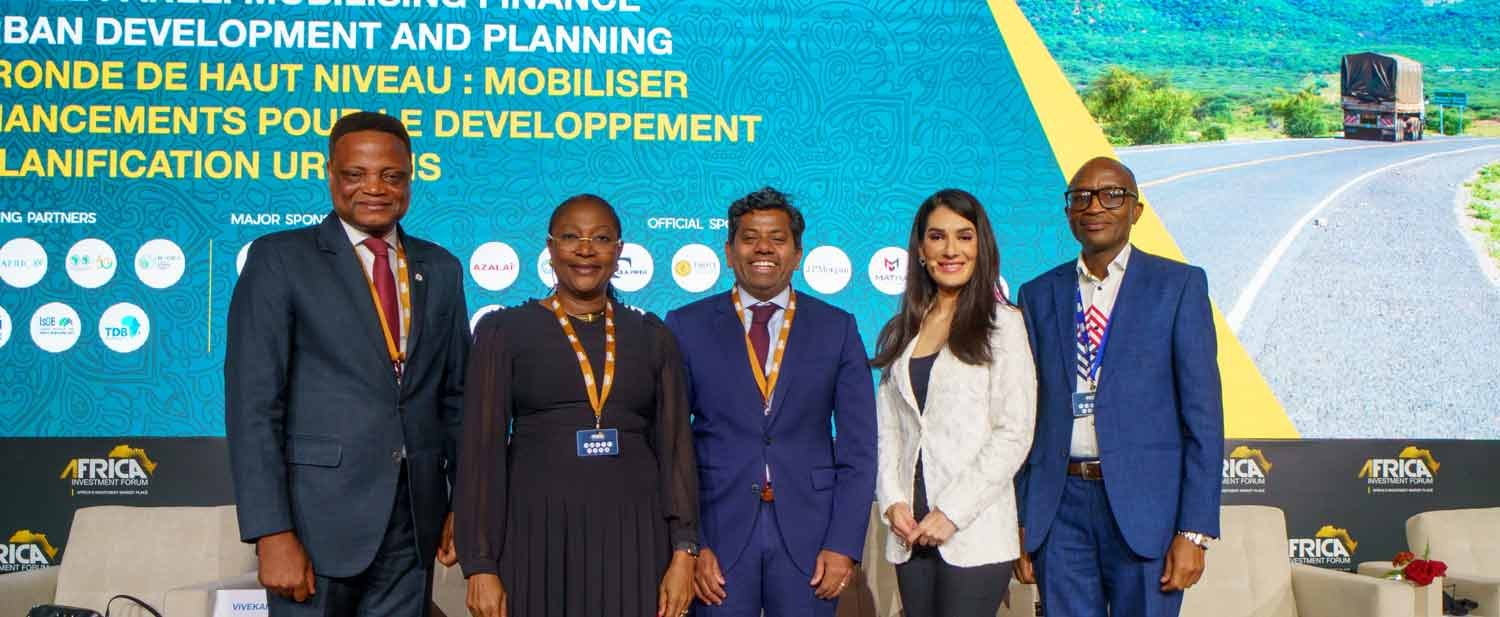
    This was the conclusion shared by experts at the roundtable discussion “Mobilizing finance for urban development and planning” held at the African Investment Forum in Rabat, Morocco from December 4th to 6th.

    Hastings Chikoko, senior director of cities at Big Win Philanthropy, a philanthropic foundation focused on development projects in Africa, drew attention to the phenomenon of rapid and poorly controlled urbanization. he asked.

    “The problem is a failure of planning, which leads to a lack of housing infrastructure and the emergence of shantytowns,” said Eric Gambo, associate director at Kenyan law firm G&A Advocates LLP. “Our countries cannot afford financing and this is affecting our cities. The debt/GDP ratio of African countries is around 65 percent,” Gambo added.

    Abimbola Akinajo, Managing Director of Nigeria’s Lagos Metropolitan Transport Authority (LAMAT), acknowledged that many of Africa’s largest cities face the same reality of severe lack of funding.

    Panelists agreed that a key challenge is to increase sources of investment by making greater use of the private sector, development finance institutions, investment funds, and pension funds, in addition to state and local government resources.

    Investment diversification needs to be coordinated with appropriate measures and regulations introduced by central governments and city authorities. This means improving urban governance, building capacity to plan and design bankable projects, better planning investments in local government, and modernizing revenue collection. Payments by users for various services (such as highway tolls) could help finance these provisions

    Ednick Muswell, head of water and sanitation at eThekwini, an urban municipality in KwaZulu with a population of 4 million people and a budget of $3.9 billion, introduced eThekwini as an example of successful urban management in Africa. “We have no debt to ESKOM (public electricity company) and our budgetary discipline is the result of good management. The municipality’s credit rating is high and investors trust us.” Muswell added that U.S. pension funds and banks are willing to invest in Yzakwini, and Yzakwini could also raise funds in the capital markets.

    However, Chicoco says other cities on the continent have fallen victim to poor and biased risk perception by African investors, which is impacting costs.

    “Debt is high in Africa and unless we find a way to address this problem, cities will run out of resources for development,” he warned.

    Mohan Vivekanandan, executive director of the Development Bank of Southern Africa (DBSA), a founding partner of the African Investment Forum, said cities need to do careful planning to attract investors. “Major projects have to be city-led and designed so that the private sector can benefit from investing in your city.”

    investor appetite

    Abdurrahman Diallo, Managing Director of the African Solidarity Fund, believes that the vast needs of African cities for roads, housing, water and sanitation cannot be met without strong support from financial institutions.

    Capital markets are also adapting to new norms as cities develop.

    “We need to think ahead,” said Neza Hayat, head of the Moroccan Capital Markets Authority. The Agency adopts a regulatory framework tailored to the needs of the local market and has developed green bonds (2016) and municipal bonds, which have helped Agadir attract capital market investments since 2020.

    Tierno Habib Khan, Managing Director of Shelter African Development Bank (ShafDB), pointed out that Africa needs 53 million more homes and $10,000 billion is needed to build them. His agency covers 44 African countries and works on the urban housing value chain, and Habibuhan stressed that low-cost housing (up to $10,000) is a viable solution thanks to appropriate construction techniques. He called on investors to come to Africa, where the housing market alone is worth between $700 billion and $800 billion.

    African Development Bank Group Vice President for Private Sector, Infrastructure and Industrialization, Solomon Quayner, concluded the forum by reminding that the African Development Bank is committed to connecting urban entities with competitively priced financing and supports local governments in developing public-private partnerships. He noted that six projects worth a total of more than $4 billion attracted investor interest at the African Investment Forum’s board meeting.

    Africa continent Experts growth Investment prevent slum Urbanized warn
    Share. Facebook Twitter Pinterest LinkedIn Reddit WhatsApp Telegram Email
    Previous ArticleGovernment failure to improve Egypt’s informal settlements: a brief history
    Next Article Construction of Africa’s largest airport picks up steam
    Xsum News
    • Website

    Related Posts

    Dangote Cement vows to make Africa self-sufficient in cement production – Nigeria Independent Newspaper

    April 29, 2026

    10 major African cities where rent will be the highest towards the end of the year

    April 25, 2026

    Government failure to improve Egypt’s informal settlements: a brief history

    April 23, 2026
    Leave A Reply Cancel Reply

    Top Posts

    African Development Bank Group and Nedbank Group sign multi-billion rand funding partnership to transform housing access and boost African trade

    December 19, 202529 Views

    A United Continent on the Move: Ambassador Kouyateh’s Call for an African Logistics Renaissance

    November 20, 202529 Views

    Eni secures multi-million dollar loan for African FLNG project

    January 26, 202622 Views

    African Development Fund and WHO collaborate to save Sudan’s health system

    November 17, 202522 Views
    Don't Miss
    Private-Sector Infrastructure Players May 2, 2026

    How South African businesses are tackling infrastructure challenges

    More private companies in South Africa are now generating their own electricity, but some are…

    Dangote Cement vows to make Africa self-sufficient in cement production – Nigeria Independent Newspaper

    10 major African cities where rent will be the highest towards the end of the year

    Construction of Africa’s largest airport picks up steam

    Stay In Touch
    • Twitter
    • Instagram
    • YouTube
    • LinkedIn
    • TikTok

    Stay Updated.

    Get the latest Africa-focused business & infrastructure news and more directly to your inbox.

    About Us
    About Us

    Xsum News is Africa’s digital window into the future of business. We tell stories of innovation, enterprise, and investment that are shaping the continent’s economic rise. African Business, Added Up.

    X (Twitter) Instagram YouTube LinkedIn TikTok
    Our Picks

    How South African businesses are tackling infrastructure challenges

    Dangote Cement vows to make Africa self-sufficient in cement production – Nigeria Independent Newspaper

    10 major African cities where rent will be the highest towards the end of the year

    Most Popular

    African Development Bank praises Algeria’s development model, aims to replicate its success across the continent

    Considering the redefinition of African capital by UBA and Arauba

    G20 Energy Investment Forum brings together Africa’s top finance, insurance and technology leaders

    © 2026 Xsum News. All Rights Reserved.
    • 🌍 About Xsum News
    • 📬 Contact us
    • Privacy Policy
    • Terms & Conditions
    • Disclaimer

    Type above and press Enter to search. Press Esc to cancel.