


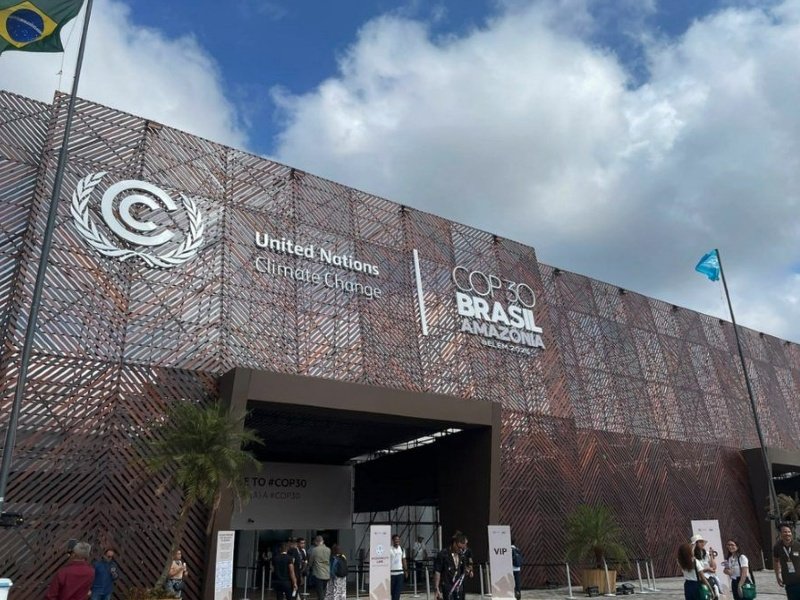
The first day of COP30 in Belem highlighted Africa’s urgent energy needs, with leaders stressing that closing the continent’s energy access gap is critical for both development and climate resilience. More than 600 million people in sub-Saharan Africa remain without electricity, and UNEP estimates that developing countries will need more than $310 billion annually by 2035 to adapt to climate-related impacts. COP30 participants emphasized that achieving energy access requires not just pledges, but significant, targeted capital and strong partnerships.
In the first signals from the summit, major multilateral development banks (MDBs) reaffirmed their commitment to accelerate and scale up support to African countries through adaptation and resilient finance. Last year, MDBs provided a record $137 billion in climate finance, but nearly 40% of it went to high-income countries and only about 30% to adaptation projects. Meanwhile, the African Development Bank announced a suite of climate finance tools to help countries transition to low-carbon economies and access large-scale finance, reflecting the growing importance of structured and financeable projects in Africa. These early actions highlight a central challenge. While important, adaptation, renewable energy and energy access projects often remain unattractive to private capital and slow to be deployed where they are needed most.
Against this backdrop, COP30 highlighted Africa’s energy investment priorities, including distributed renewable energy systems, storage-enabled solutions, resilient grid infrastructure, and integration with local industrial and social development goals. Early work at the Summit, particularly those linking energy access with smallholder agriculture and social protection, underscores the importance of projects that simultaneously address climate, energy and socio-economic goals. During the Africa Day dialogue, ministers and development agencies emphasized the need to mobilize finance for renewable energy, infrastructure and climate-resilient solutions, while pointing out that many existing mechanisms remain unattractive to private investors and limit the scale and impact of projects. Remarkably, the launch of the Climate Resilient Social Protection and Small Agricultural Finance Partnership, endorsed by 44 countries, highlighted the interconnected nature of climate action, energy access and poverty reduction. The implications for energy investment are clear. Integrated models that combine decentralized renewable energy, storage, agro-industrial collaboration and local services are likely to have the greatest impact.
These insights from COP30 highlight the need for a forum that transforms priorities into viable investment opportunities. The African Energy Investment (IAE) Forum, scheduled to take place in Paris from 30 March to 1 April 2026, provides such a platform to bridge the gap between ambition and implementation. While COP30 highlights why Africa needs urgent investment, the scale of the challenge and the imperative for resilient and inclusive projects, the IAE Forum shows how stakeholders can translate these insights into pipeline-ready opportunities. It brings together African governments, investors, development agencies, and private sector stakeholders to consider financing models, risk mitigation structures, and deal flows that support both energy access and climate goals.
Discussions at COP30 reinforced Africa’s dual imperative to expand universal energy access while building resilient, low-carbon systems. IAE 2026 will facilitate this by connecting investors around the world with locally relevant opportunities, from mini-grid and off-grid solutions to renewable power generation, energy storage and local manufacturing of clean energy components. By highlighting replicable models and practical paths to scale, the Forum bridges policy commitments and investment implementation, ensuring that funding structures, instruments and partnerships translate ambition into measurable impact across sub-Saharan Africa.
IAE 2026 is a special forum aimed at connecting African energy markets with global investors and will serve as a key platform for deal-making in the lead-up to Africa Energy Week. Scheduled for April 22-23, 2026 in Paris, the event will offer participants two days of in-depth interaction with industry experts, project developers, investors and policy makers. For more information, please visit www.invest-africa-energy.com. To become a sponsor or register as a representative, please contact sales@energycapitalpower.com.
