


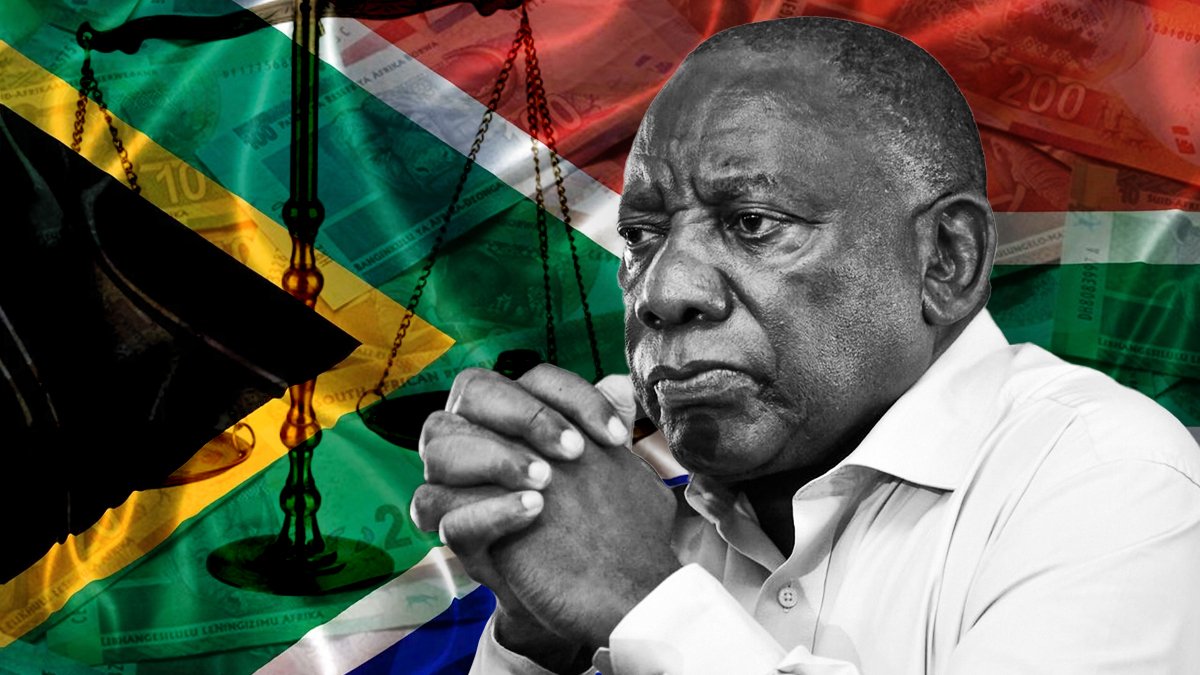
The government’s declining fiscal health is severely impacting South Africa’s ability to deliver critical services and invest in essential infrastructure.
This leaves a huge gap in the provision of these services, and many private companies are stepping in to fill it.
From Sanlam’s new R4-billion Real Estate Impact Fund to Discovery’s Pothole Patrol, some private sectors are investing heavily in South Africa.
This can be seen in the growing popularity of private schools, including Curro’s shining example, and in the widespread growth of private medical aid.
But South Africa’s low business confidence has prevented more companies from making similar efforts, with some private companies preferring to put their money on the sidelines.
South African businesses have hoarded R1.8 trillion in cash and are waiting to deploy it domestically when economic conditions improve, according to the Reserve Bank’s latest quarterly report.
The report explained that South African non-financial companies (NFCs) now hold more funds than they did before the pandemic.
The Reserve Bank said this excess stockpiling was due to increased uncertainty due to the COVID-19 pandemic, which will continue until 2025.
Kevin Lings, chief economist at Stanlib, also blamed the private sector’s reluctance to spend large sums of cash on a lack of confidence in the local economy.
He previously explained that if the government wants to encourage businesses to invest in the country, it needs to create an environment that fosters confidence in the local economy.
This is particularly true for fixed investment, which has declined significantly in South Africa over the past few decades, falling from around 30% of GDP in 1976 to 15% in 2024.
This decline is consistent with the government’s weak fiscal health, as the state does not have the balance sheet to invest adequately in developing and maintaining South Africa’s infrastructure.
Government debt has reached 78% of GDP over the past decade, and debt servicing costs the government around R1.2 billion a day, limiting its ability to spend in more productive areas of the economy.
At the same time, many private companies have been reluctant to invest in economies where average GDP growth over the past decade has been less than 0.8%.
But in recent years, some companies have been more willing to invest in services typically provided by governments. Below is an overview of these three initiatives.
Sanlam’s big bet on infrastructure
One recently launched initiative, Sanlam Investments’ Property Impact Fund, is set to lead to large-scale infrastructure investments over the next few years.
Established on 30 October 2025, the fund will invest in critical social infrastructure such as affordable housing, student accommodation, rural and county retail, education and healthcare.
Sanlam Investments noted that despite South Africa’s unique infrastructure investment opportunities, less than 2.7% of the country’s R5.8 trillion pension fund savings are allocated to the private market.
Moreover, infrastructure investments are only a small part of this, and this is what the new fund seeks to address.
The Property Impact Fund is an equity investment vehicle that integrates sustainability and inclusivity to meet South Africa’s critical infrastructure needs.
The fund focuses on providing real estate facilities in the form of affordable housing, student accommodation, rural and town retail, education and healthcare.
The company said these sectors are critical to the country’s “missing middle class”, including teachers, nurses, police officers and entry-level professionals, who make up 23-30% of the population.
“South Africa’s severe inequalities leave many lower-middle-income earners without access to quality social infrastructure,” the report said.
“While government initiatives tend to prioritize the very poor, private finance often ignores this group.”
The Fund therefore aims to directly take into account the needs of the low- to middle-income working class and contribute to a more inclusive and sustainable economy.
Sanlam Investments portfolio manager Kamogelo Leeuw explained that the fund targets over R2.9 trillion of investable opportunities in impact-driven real estate assets.
The fund, which has been seeded with R1.4 billion from Sanlam Group, has a target size of R4 billion worth of assets under management and aims for an annual return of CPI + 9%.
The Fund is structured as an open-end fund with a minimum investment of R50 million in investment-linked policy instruments.
A new era for Curro

Curro is currently in the process of becoming a nonprofit, which the new owners believe is the best way to achieve the group’s education and social impact goals.
Founded in 1998, Curro has since become South Africa’s largest private school group.
The company operates over 180 schools across South Africa to meet the growing demand for affordable, quality education.
At the beginning of 2025, the Janie Mouton Foundation offered to buy all the shares in the company for approximately R7.2 billion.
The Johnny Mouton Foundation is a charity established as a public interest organization by prominent businessman Mouton.
Mr Curro’s acquisition, described as a “game-changing” deal for South African education, is perhaps the biggest philanthropic move South Africa has ever seen.
“Education has always been close to Janie’s heart. He believes education is a powerful way to uplift South African communities and help South Africans reach their full potential,” the foundation said when the deal was first announced.
“That’s why the Trust is devoting almost all of its resources to making this happen. By working with Curro, we believe the Trust can create a far greater impact.”
“Building and improving schools takes time and most investors are not willing to wait that long. But the Trust is committed to the long term and focused on creating real and lasting change.”
“Over time, thousands more children will be able to attend Currot schools through scholarships, widening their access to a good education,” said Foundation Chairman Yann Mouton.
This move, and the rapid growth of the private education sector in South Africa, demonstrate strong public demand for these services.
Private schools continue to grow rapidly in South Africa, with the total number doubling in the past 15 years.
As public education steadily collapses across South Africa, private schools are finding themselves playing an increasingly important role in addressing the challenge of declining academic performance in South Africa.
At the same time, this has opened up significant opportunities for private education companies to benefit economically.
Edward Mtsweni, an investment analyst at Kamisa Asset Management, recently pointed out that while the number of public schools in South Africa has declined by 10% since 2009, the number of private schools has almost doubled.
Private schools currently educate 741,000 students in South Africa, with an average class size of 16 students. The public sector educates 12.8 million students in classes of 31 students.
This growing demand for private education has seen providers such as Curro, STADIO, and ADvTECH grow rapidly in recent years, and all three continue to go from strength to strength.
Discovery pothole problem

In a very unique move for an insurance company, Discovery launched its Pothole Patrol initiative in 2021.
The initiative, in partnership with the City of Johannesburg and Avis, has repaired more than 320,000 potholes in the city since its inception.
Discovery CEO Adrian Gore previously estimated that potholes cost South Africa around R650 million a year.
The company realized that potholes were not only causing significant losses to the government and ordinary South Africans, but were also impacting its insurance business due to the increasing number of pothole damage claims.
Therefore, Pothole Patrol was formed because addressing the growing problem would have far-reaching benefits.
“When we launched the Pothole Initiative in 2021, it was to solve a clear and widespread problem that not only affects our customers, but also other insurers and wider society,” Mr Gore said.
“The potholes were causing frustration and damage, and a sense that the country’s economic heartland was in deep and irreversible decline.”
Mr Gore recently revealed that the project has made tremendous progress, with more than 320,000 potholes being filled at a rate of 75,000 per year.
These efforts have not only improved the lives of drivers in Joburg, but have also reduced the frequency of Discovery Insure pothole claims by 26% since 2021.
