


The Government of the Democratic Republic of the Congo (DRC) has confirmed progress in developing an estimated 927km of strategic railways in recent weeks.
In early September, a joint delegation of EU and US experts announced the results of a pre-feasibility study on the development of the Democratic Republic of the Congo portion of the Lobito Corridor, a 1,300 km route stretching from the Atlantic port of Lobito in Angola to the mining regions of the Democratic Republic of the Congo and Zambia.
The Lobito Corridor infrastructure includes the Benguela railway line, Lobito Port, and border facilities between Zambia and Angola, and Angola and the Democratic Republic of the Congo.
The Democratic Republic of Congo’s portion of the Lobito Corridor, which includes 427 kilometers of the National Railway Society of the Congo (SNCC) railway line from the mining center of Kolwezi to Di Loro on the Angolan border, is currently in a dire state, according to the government.
Source: European Commission
The pre-feasibility study enabled the estimation of the investment and completion schedule required for the first phase of the project, namely the rehabilitation of the Dilolo-Kolwezi-Tengke railway line. The initial cost of this phase is estimated to be more than $410 million, and the cost to manage and maintain the line over 10 years will be approximately $180 million.
The second phase, which could extend the line to the Zambian border, is estimated to require an investment of around $1 billion to $1.5 billion.
Several financial partners have expressed interest in supporting the project, including the European Investment Bank and the World Bank.
Joint research between the European Union and European Union experts, implications of the Lobito Corridor project, preliminary investigation of Mardi on September 9, 2025, results of the preliminary examination, Minister of Public Affairs of France, reunification of the Ministers… pic.twitter.com/qqHIYbgepq
— RDC Department of Transport (@TransportsRDC) September 9, 2025
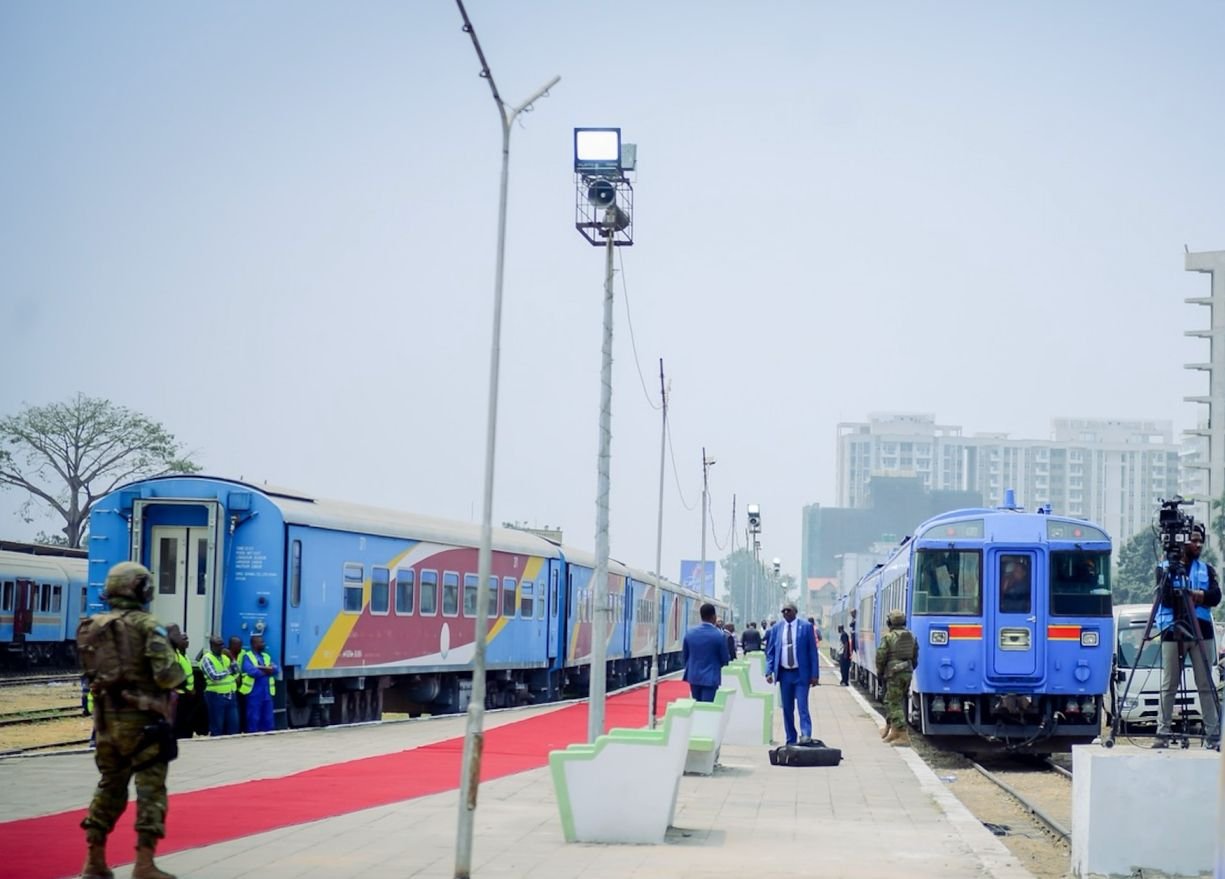
In early September, President Felix Tshisekedi presided over a ceremony to reopen the 350km Kinshasa-Matadi railway line.
The 100-year-old line, which was closed in February 2020, will be fully rehabilitated and will significantly contribute to improving the operational capacity of the National Transport Authority (ONATLA), effectively evacuating a large portion of the 4 million tons of cargo annually received by the Port of Matadi, easing congestion at the port, streamlining the movement of people and goods between Kinshasa and central Democratic Republic of the Congo, and significantly reducing traffic on National Highway 1.
In addition, urban rail services will be launched on the 20km line between Central Station and N’Djiri International Airport and on the Central Station – Kitambo-Magasin line.
In addition, the Ministry of Transport has launched a feasibility study on the construction of a 150km railway linking the proposed Banana Deep Sea Port with the Matadi-Kinshasa railway line and extending the rail connection to Banana via Boma. The aim is to develop a continuous Banana-Boma-Matadi-Kinshasa rail corridor, opening up new routes for the transport of people and goods and turning the Democratic Republic of the Congo into a regional logistics hub.
In late March, UAE port operator DP World announced that it had selected Portugal’s Mota Engil to lead the construction of Banana Port. Located in Congo’s Central Province along the Atlantic coast, this container port is the country’s first deep-sea port and a fully equipped maritime gateway. The investment will exceed US$1 billion and will be developed in stages.
Top photo: Matadi-Kinshasa Railway resumes operations (Source: Facebook@DRC Ministry of Transport)
