


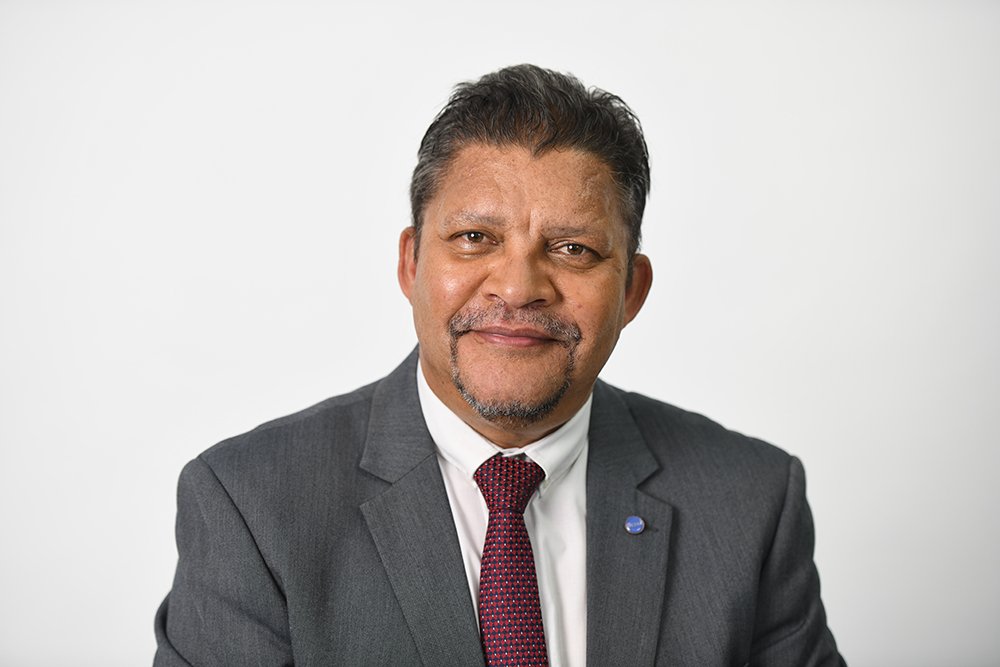
Optimist engineer Christopher Campbell is bullish about the future of South Africa’s currently struggling infrastructure sector.
“We need to turn South Africa into one big construction site, especially as South Africa is seen by many as the gateway to the African economy, to coin a phrase often quoted by our Minister for Public Works and Infrastructure (Dean McPherson),” said Mr Campbell, who is also CEO of Consulting Engineers South Africa (CESA), an voluntary association of consulting and engineering firms founded in 1952.
The CEO has held a number of positions including Director of the Construction Sector Charter Council of South Africa, Vice-Chairman and Chair of the Engineering Capacity Building Committee of the World Federation of Engineering Organizations (WFEO), and Chair of the Directors’ Secretaries Advisory Committee (DNSAC) of the International Federation of Consulting Engineers (FIDIC). He is therefore well aware of the potential of South Africa’s construction industry and the challenges it needs to overcome.
“South Africa, like the continent’s other major economies, is an integral part of the continent’s overall growth and cannot afford to continue on its current trajectory,” Campbell said.
On the issues slowing down the country’s construction sector, he said there are a number of factors holding back “the region and the world, which was once a world-class construction service provider”.
“Many (South African contractors) have been driven to near extinction due to high contractual debts in foreign markets, a shrinking domestic market and a significant reduction in investment in gross fixed capital formation in South Africa. (But) in reality, that investment should have been in the opposite direction (addressing) aging, poorly maintained, and under-capacity infrastructure to serve more than 60 million citizens and growing numbers of immigrants from other parts of the continent.
“The fact that South Africa’s economy has not grown by more than 1% in recent years, due to political and policy uncertainty and corruption, has not helped to foster a large private sector and international investment.The biggest challenges at the moment will be dealing with the influence of global criminal organizations operating in South Africa, the hostile global geopolitical climate, and the (lack of) a stable political environment.”
“Coalition governments are a new phenomenon and will require further maturity from parties forming such alliances to focus more on service delivery, infrastructure maintenance and development at the local government level, as opposed to the partisan influence and sometimes personal interests of such political actors, especially as local government elections approach in 2026.”
“Also at the national government level, despite the (formation of) the current coalition government in the form of the Government of National Unity (GNU)… there is much to learn from other countries about achieving coordination between the parties in such arrangements, which is primarily in the national interest. Policy uncertainty and legal inconsistency are hampering investment both domestically and internationally.”
“Despite the huge opportunity and demand for functional, modern infrastructure, South African finances alone cannot fund the large backlog that currently exists,” Campbell says.
Commenting on the skills shortage and aggressive discounting plaguing South Africa’s construction and engineering industry, Campbell points out that “according to figures released by our Department of Labor and Employment, civil, mechanical and electrical engineering skills are among the top 10 most scarce skills in South Africa.”
“Compared to other developed countries, previous studies and recent figures show that South Africa has about one engineer for every 3,000 people, compared to one engineer for every 200 people in developed countries,” he says.
“The majority of the shortfalls occur not only in local government departments and municipalities, but also in various other areas of government. This means that there is a lack of sufficient management capacity to upgrade and maintain public infrastructure, a situation made worse by the cumbersome tendering processes that precede such projects.”
“Many young engineers (due to lack of opportunity) are moving to other countries in search of more secure employment and ongoing development (in line with their expertise). Additionally, the workforce of skilled engineering practitioners is also aging, with some still active in their 70s. Meanwhile, the number of executives who would be in a position to be mentored by these aging practitioners is not as large as needed.”
“Furthermore, the lack of recognition for the value that engineering professionals create to society has a negative impact on the potential compensation that a growing profession can receive. Unfortunately, clients in both the private and public sectors treat these professional services as a commodity, and once a project is tendered, these[services]are often demand deep discounts, thereby reducing the compensation income needed for a sustainable consulting engineering industry and the retention of such engineering skills.
“South Africa, like many other countries, has a mix of engineers, technicians and technicians,” says Campbell. “However, high school graduates are more likely to pursue the latter two categories of engineering studies, which limits the number of engineers and creates an imbalance between the different categories of engineering professionals we need as a nation.”
Source: Dietmar Ravitch | Wikimedia Commons
The CEO also points out that South Africa’s construction industry is prone to corruption.
“Apart from finding anomalies related to overpricing and under-delivery (if any at all), the industry is also plagued by extortionists posing as business forums, claiming to represent communities unhappy with the lack of employment and business opportunities secured when projects are implemented locally,” he says.
“The absence of local economic development and implementation raises expectations that temporary construction activities in the neighborhood should fully benefit the local community. On the other hand, the construction companies that win these bids are not necessarily based in one location and are subsequently able to effectively and efficiently We need a core management team and trusted subcontractors to be part of these projects before sourcing local subcontractors (where available) to ensure successful project delivery. Once this balance is created, the project will be on track.”
“The opportunism exercised by extortion groups, known locally as the ‘construction mafia,’ is generally not interested in adding value to these projects and is simply looking for rent. Unfortunately, local law enforcement is still grappling with this scourge and does not appear to be cracking down on such criminal activity.”
Regarding Africa as a whole, Campbell said: “African governments need to put more emphasis on changing the narrative that may (derived from) colonialist thinking that instills negative confidence that Africans can survive and prosper through trade rather than aid.”
“We have human capital, especially young people, we have mineral resources, and we are now certainly regaining the intellectual capacity that was perhaps lost centuries ago, when places like Timbuktu in Mali were recognized as centers of trade and learning in the 15th and 16th centuries.The continent is home to many world-class educational institutions, and many African students tend to pursue degrees in other countries.
“What we need is an eradication of corruption.…We need a stable and well-managed government that develops and implements good policies and provides political certainty. These attributes are needed to instill confidence in foreign investment. As a result, the focus should be on both economic and social infrastructure so that the economy grows, fewer people fall victim to poverty and unemployment is significantly reduced.”
“Unfortunately, many African leaders seem to do well at first, increase investment through infrastructure development, but then stay in power and undo what they have achieved when they no longer have the initial drive and energy to continue what they started. Unfortunately, good legacies are then nullified.”
The CEO opined that localization should not be an option, but should be the norm, as it is the only way to provide local engineering personnel with the right experience and experience to drive such projects in the future.
“International expertise is always welcome,” Campbell says. “However, we need to develop local capacity to ensure we have a local construction industry that can not only deliver future projects, but also support governments who are the owners and managers of such infrastructure and are responsible for the lifecycle management of such infrastructure.
“The selection of design, materials and technology must be appropriate to local conditions, so that there are no inherent challenges in obtaining compatible repair and maintenance components. However, this also applies to the difficulty of obtaining replacement components for water distribution systems: sizes of pipes and components, which in the past may have followed the imperial measurement system, are now available only in metric units.
“Procurement philosophy should be part of a turnkey approach so that local infrastructure is (developed) with long-term effective and efficient asset ownership in mind.”
South Africa is said to have Africa’s most industrialized, technologically advanced and diversified economy, and Campbell says action must be taken now to reverse that misfortune.
“South Africa’s infrastructure development has always been seen as an example of what all infrastructure development on our continent should look like,” he says.
“South Africa needs to turn the tide on all its failing infrastructure sectors to avoid ending up in the situation of many of its neighboring countries that continued their liberation struggles in the post-colonial era.”
Top photo: Engineer Christopher Campbell (Source: Facebook)
