


A series of memoranda of understanding signed over the past year could shape Africa’s energy landscape beyond 2026. Although tentative, these agreements demonstrate growing investor confidence, increased cross-border cooperation, and new momentum in both hydrocarbons and renewable energy. While some will develop into commercial deals or financing commitments in time for next April’s Africa Energy Investment (IAE) Forum in Paris, a key hub for energy investors on the continent, others are often political in nature and will require sustained follow-through to gain traction. Here are seven MOUs for 2025 that are worth tracking. Where it’s signed, what it’s about, and a realistic outlook for a concrete deal in the year ahead.
Libyan NOC and ExxonMobil
In August 2025, the Libyan National Petroleum Corporation signed a contract with ExxonMobil to carry out geological and geophysical studies across four offshore blocks, marking the company’s most significant re-entry into Libya’s upstream sector in more than a decade. The agreement is expected to lead to an impactful campaign and technology evaluation, which, if successful, could pave the way for licensing negotiations and farm-in agreements. Its strategic importance lies not only in ExxonMobil’s technical and financial size, but also in sending a signal to major Western oil companies about the gradual reopening of Libya.
REA and WeLight in Nigeria
The Rural Electrification Authority of Nigeria and WeLight signed an MOU in March 2025 to develop renewable mini-grids and metro grids aimed at expanding access to electricity in rural and peri-urban communities. The initiative, which targets 400 mini-grids and 50 metro grids by 2030, highlights how distributed energy solutions are gaining traction in Africa’s largest economy. The implementation of such projects has the potential to meaningfully contribute to national electrification goals (improving access for up to 2 million people) and strengthen public-private cooperation in the clean energy sector.
Block with Etu Energias 17/06
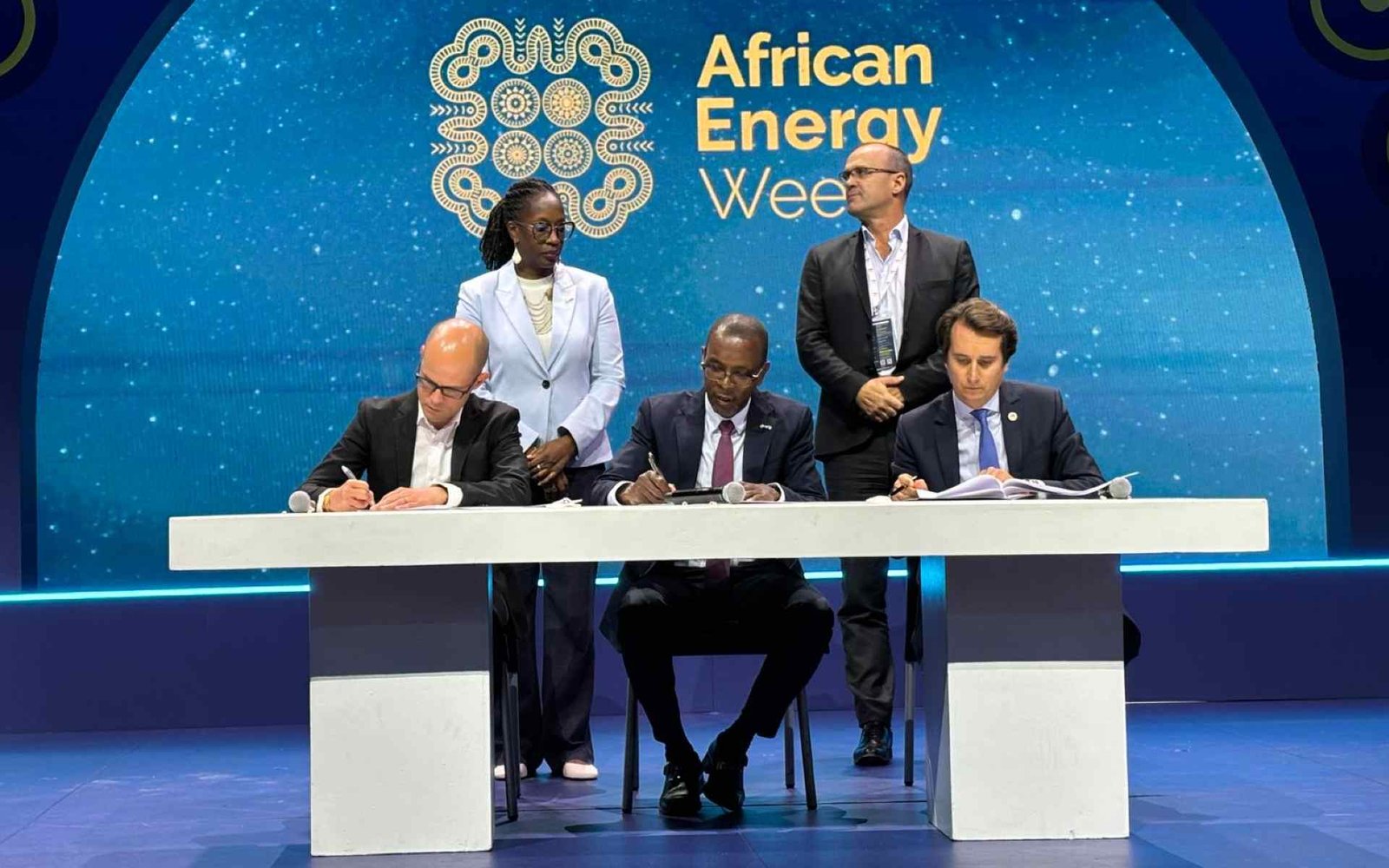
During Africa Energy Week 2025 in Cape Town, Angola’s Etu Energies secured structured financing to support a 7.5% stake in Block 17/06, home to the Begonia project. The project began production earlier this year with an expected production capacity of 30,000 barrels per day. Partners in the block include Sonangol E&P, SSI, Etu Energies and Falcon Oil, with TotalEnergies as the operator. The loan will fund ongoing development activities, including infrastructure expansion and production optimization, with the potential to increase production volumes and operational efficiency in 2026. The deal highlights growing investor confidence in Angola’s upstream sector and underlines the role of African independent energy companies in promoting production, local participation and value creation.
.Sonatrach and Occidental Petroleum
In Algeria, Sonatrach and US-based Occidental Petroleum signed two MOUs in April 2025 to cooperate in hydrocarbon exploration and production. The agreement signals new engagement between Algeria and international businesses as the country seeks to maintain production volumes and expand its export capacity. By combining Occidental’s technical expertise with Sonatrach’s established infrastructure, this partnership could help unlock new upstream opportunities in North Africa. Such MOUs often act as a bridge from technical cooperation to commercial agreements, depending on host government support, exploration potential, and financial terms.
Central African pipeline system
In July 2025, the African Petroleum Producers Organization and several Central African governments signed a regional memorandum of understanding to begin a feasibility study for the Central African Pipeline System (CAPS). The project envisions a multi-country oil and gas pipeline network aimed at strengthening regional energy security and market integration. Still in its early stages, the MoU reflects a concerted effort to drive long-term infrastructure development across the region. A well-funded feasibility study is essential before project sponsors and development finance institutions move to the procurement and financing stages.
Mitrelli Group and HYDRO-LINK
Private partners Mitrelli Group and HYDRO-LINK have signed an MOU in 2025 to collaborate on a 1,150km transmission line project connecting Angola and the Democratic Republic of the Congo. This interconnection will enhance power trade and grid stability between the two countries and support regional electrification goals. If the project progresses, it has the potential to attract development finance institutions and obtain export credit support, with the potential for cross-border renewable energy integration.
Petromoc and Aiteo
In May 2025, Mozambique’s state-owned oil company Petromoc partnered with Nigeria’s Aiteo Eastern E&P to develop a modular oil refinery in Mozambique. The project aims to build a facility with a capacity of up to 200,000 barrels per day to produce gasoline, diesel, jet fuel and naphtha to meet local demand and support regional trade. This initiative is in line with Mozambique’s strategy to strengthen domestic refining capacity and reduce import dependence, while strengthening its position as a regional energy hub in Southern Africa.
