


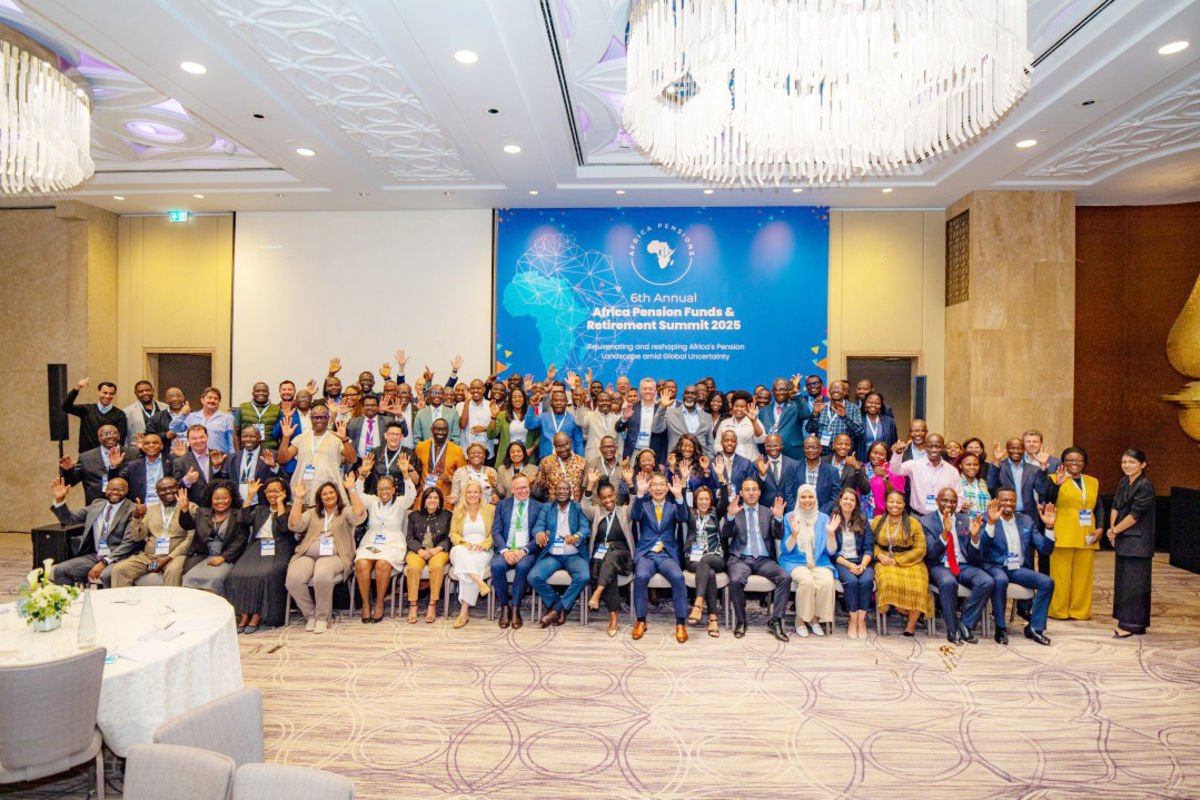
Dar es Salaam. For the first time, pension funds across Africa are pooling their funds to address the continent’s development challenges, aiming to reduce their dependence on traditional overseas funding sources, according to African pension industry leaders.
Africa faces huge funding gaps every year, with the African Development Bank estimating that the continent needs more than $1.3 trillion each year to meet its development goals.
Against this backdrop, the continent’s pension providers are preparing to work on the creation of an ‘African Development Fund’ at the ‘$700 billion in one room’ pan-African pensions summit scheduled for November 5-7 at the Munyonyo Convention Center in Kampala, Uganda.
Organized by NSSF Uganda, the summit will be held under the theme ‘Pension Funds – Africa’s Growth Engine’.
Its agenda focuses on deepening patient capital pools, strengthening partnerships, strengthening social impact, and positioning pension funds as catalysts for infrastructure development.
“Pension funds across Africa manage around $700 billion in assets. This is a huge opportunity for Africans to boost their economies by providing unfavorable funding from foreign donors,” said Patrick Ayota, managing director of NSSF Uganda, East Africa’s largest fund, valued at more than $7 billion.
Ayota stressed that global geopolitical realignment has made traditional foreign funding insufficient to meet Africa’s growing infrastructure needs.
“We are looking at $7 billion by setting aside just 1 percent of the assets held by African pension funds. 2 percent equates to $14 billion to $20 billion. This is significant funding that has the potential to drive meaningful development across the continent,” he said.
Leonard Zulu, the UN Resident Coordinator for Uganda, called on Africa to look inward and mobilize domestic savings, diaspora remittances and mixed financing models.
“Traditional models of development cooperation are being redefined. Official development assistance, while important, is no longer sufficient for the scale and complexity of the challenges we face. Reduced aid flows, shifting geopolitical priorities and funding uncertainty make it critical to develop innovative domestic financing solutions to support national development strategies while promoting resilience and sustainability,” he said.
He noted that 15 of the continent’s 20 traditional donor partners have cut funding, highlighting the urgent need for African countries to shift from aid to trade and to ensure small and medium-sized enterprises (SMEs) have access to essential finance to achieve national goals.
Meanwhile, African Social Security Association (ASSA) Secretary-General Meshach Bandawe stressed that funding Africa’s infrastructure must increasingly come from Africans themselves.
“Pension funds are increasingly recognized as important instruments for inclusive development, able to unlock long-term finance for infrastructure, agriculture, climate change mitigation and tackling social impacts,” he said.
According to ISSA, there are 51 pension and social security funds in Africa. Several companies, including Tanzania’s NSSF, have already demonstrated the potential of mobilizing local capital in development projects.
“The time is ripe for African pension providers to unite around this approach. As foreign funding sources dry up, there has never been a better time to leverage domestic capital for the continent’s development needs,” Bandawe added.
The summit brought together pension fund CEOs, chief investment officers, global investors, development finance institutions (DFIs), venture capital and private capital firms, policy makers and government officials from across Africa and beyond.
Amanda Kabagumbe, Chairperson of the East African Private Equity and Venture Capital Association, explained the complementary role of private equity in infrastructure.
“Private equity and venture capital typically don’t have the money for projects that span 15 to 20 years, so it’s up to governments and long-term players to fund infrastructure.
These funds are better suited to projects with short risk, liquidity, and return timelines. But private equity can directly participate in the infrastructure developed by DFIs and complement their investments,” she said.
The summit will also consider ways to expand pension coverage and deepen capital pools. Many Africans, especially those in the informal sector, save in livestock and land rather than formal financial instruments. Pension funds aim to convert these savings into investable capital, thereby increasing domestic long-term savings.
“Compared to Asian tigers such as South Korea, Singapore and Malaysia, where domestic savings reach 25-27%, African countries’ savings remain in the low teens of GDP. By mobilizing and pooling our savings, Africa can finance its own development rather than relying on external partners,” Ayota said.
The summit will feature examples of pension funds promoting infrastructure projects. In Tanzania, NSSF contributed significantly to the construction of the Gemoni Bridge. In Ethiopia, local capital financed the Gaddam.
In Uganda, NSSF is participating in the Kampala-Ginja Expressway Project. By pooling their resources, African pension funds could potentially fund multiple major projects across the continent.
A regional task force has already been established by six East African pension funds to explore cross-border investment opportunities. Regulatory barriers between Tanzania, Kenya and Uganda are minimal, with political considerations and risk diversification being key factors in investment decisions.
“Diversification protects members’ savings. For example, political risks vary from country to country. By investing across East Africa, the fund can reduce these risks while ensuring better returns for members,” Ayota explained.
There will also be a focus on social impact investing. Rwanda’s RSD has extended health insurance coverage to more than 94 percent of its population. NSSF Uganda implements the Education Without Borders initiative to ensure equal access for children across borders.
Pension funds can also strengthen public-private partnerships in agriculture, support start-ups and fund research and development.
Zulu stressed that Africa is not poor. With $57 billion in private savings and $100 billion in remittances, the continent has sufficient domestic resources to become its own development actor.
He said: “The Pan-African Pension Summit will lay the foundations for a continental discussion on how Africa’s $1.3 trillion in pension assets can be strategically leveraged to drive inclusive growth, sustainable infrastructure and social protection.”
The summit will be attended by the President of Uganda, CEOs from across Africa, international organizations including the World Bank, United Nations Development Programme, African Development Bank and East African Development Bank, and venture capitalists.
NSSF Uganda is leading this effort, encouraging collaboration and shared learning among pension providers in Africa.
“The goal is to transform Africa’s pension funds from mere financial institutions into powerful development engines, reducing dependence on foreign aid by investing domestically, minimizing currency risks and mobilizing capital that can be reinvested in local economies,” Ayota said.
