


This article was produced with support from Shelter African Development Bank.
Africa needs cities and communities that are inclusive, resilient and sustainable for current and future generations. In the Kigali Declaration, Ministers recognized urbanization as an important driver of development and poverty reduction.
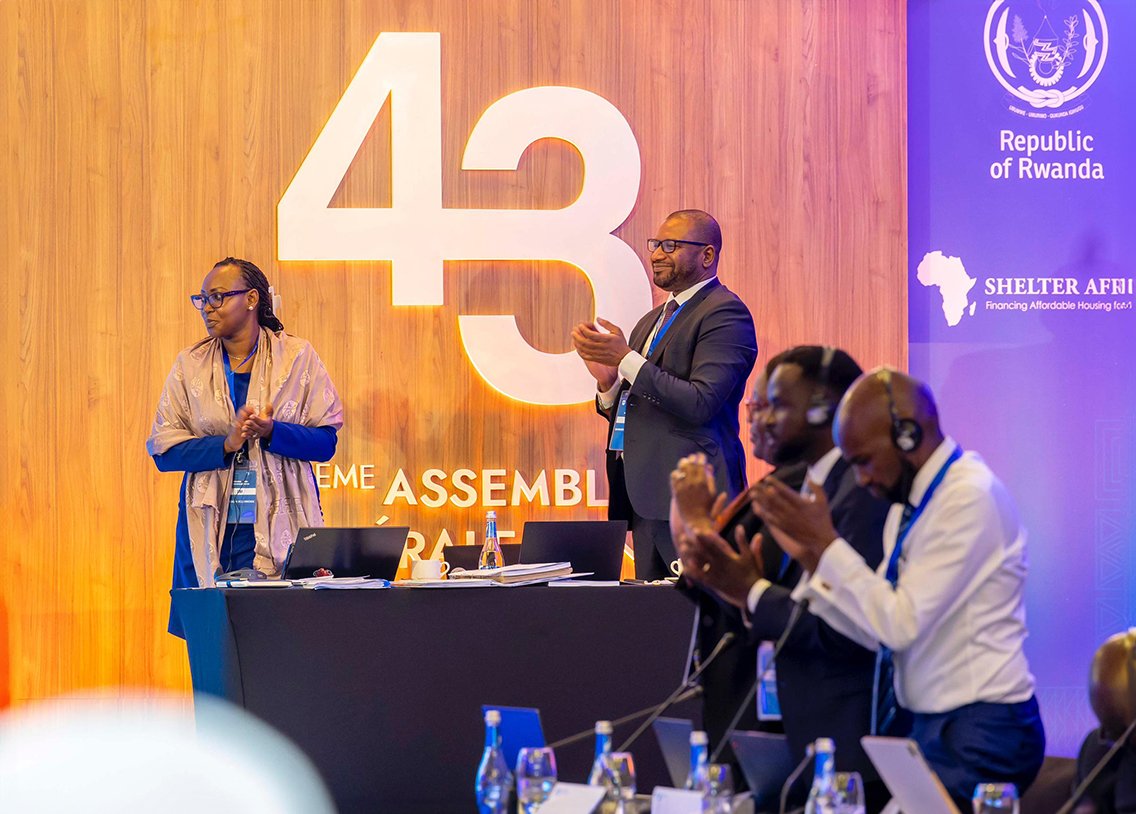
“Governments have an opportunity to respond to this important development challenge by promoting new models of urban development that integrate all aspects of sustainable development and promote equity, well-being and shared prosperity,” ministers said in a declaration agreed at the end of the Shelter African Development Bank (ShafDB) general meeting in Kigali.
“Addressing the complex challenges of urbanization requires the concerted efforts of Member States, multilateral organizations, local governments, the private sector and civil society, in line with the Sustainable Development Goals (SDGs),” the declaration states. “The time has come to mobilize the international community for social and economic growth, focusing on all levels of human settlements, from small rural communities to large cities.”
The manifesto is underpinned by a ‘funding and delivery methodology’ roadmap that leverages ShafDB expertise and proposes a system for measuring progress and a networking platform for collaboration, knowledge sharing and innovation.

“The Sustainable Development Goals will be advanced through sustainable urbanization with a focus on decarbonizing the built environment, rewarding innovative green solutions, and leveraging certified carbon credit currency conversion for green infrastructure development with concessional financing,” the declaration states.
According to this declaration, financing is at the core of the housing sector achieving its set mission and is based on the cooperation of various stakeholders across the housing value chain. Harnessing these dynamics is essential to addressing the challenges and opportunities in providing affordable and sustainable housing for all.
With an estimated housing deficit of 52 million homes, Africa requires investments of at least $1.2 trillion to close the region’s housing deficit. This challenge is further exacerbated by the fact that Africa is considered to be the most rapidly urbanizing region in the world. The Organization for Economic Co-operation and Development (OECD) predicts that the continent’s population will double between now and 2050, with two-thirds of this growth expected to be absorbed by urban areas.
“Given the scale of Africa’s housing crisis and the economic and employment multiplier effects of the housing industry, DFIs and other relevant multilateral institutions should play a fundamental role in addressing Africa’s housing needs,” the ministers said. “Development partners’ interventions should primarily focus on improving housing conditions for low-income households, mobilizing resources, promoting efficiency, and supporting innovative solutions to address the continent’s vast housing shortage…
“This aligns well with ShafDB’s core mission in that it takes into account both the demand and supply sides of the housing value chain, as well as the institution’s thematic areas,” they say.
Ministers recognize that it is essential to establish sustainable financing mechanisms, including increased public investment, innovative private sector engagement, and the use of international development assistance, to ensure long-term financial stability for housing and urban development initiatives.
They are committed to advocating for policy reforms and regulatory frameworks that encourage investment in affordable housing, promote inclusive urban development strategies, and facilitate access to finance for underserved populations.
Ministers recognize the role of partnership and cooperation in achieving the set goals of the human settlements, housing and built environment industry and commit to the need to leverage the strengths and capabilities of various multilateral institutions and DFIs to provide integrated solutions to the challenges of this industry.
To fill the funding gap in the housing and urban development industry, Ministers agreed to ensure resource mobilization. Implementation of capacity building and project preparation facilities. Harnessing the power of innovation and technology. Cooperate in areas related to policy, research and development. and establishing robust implementation, monitoring and evaluation mechanisms to track implementation of the key action points set out in the Declaration.
Urbanization represents a significant economic, political and social opportunity to accelerate progress towards the goals set out in the United Nations Sustainable Development Goals (SDGs) and the African Union’s Agenda 2063, which provides a blueprint for transforming Africa into a future global power.
