


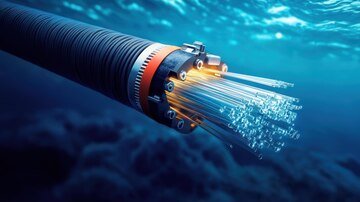
eta has announced the completion of its Core 2Africa submarine cable infrastructure, which it claims is the world’s longest open access submarine cable system.
In a blog post published this week, the tech giant said the completion of the 2Africa cable was a “defining moment” for Africa’s digital future.
Mehta led the design, financing, and implementation of the submarine cable system. The company says it is building infrastructure that fosters economic growth and connects more than 3 billion people (more than 30% of the world’s population) in Africa, Europe and Asia.
2Africa is a meta-supported project built by the 2Africa consortium consisting of China Mobile International, MTN GlobalConnect, Orange, Telecom Egypt, Vodafone/Vodacom, and Western Indian Ocean Cable Company.
The project took nearly six years to build and was built and deployed by Alcatel Submarine Networks.
“Building 2Africa required us to push the boundaries of what is possible with subsea infrastructure,” said Gaya Nagarajan, vice president of network engineering at Meta, in a blog post.
“We introduced advanced space division multiplexing technology to support up to 16 fiber pairs per cable, which is double the capacity of the old system. We incorporated undersea optical wavelength switching to enable flexible bandwidth management and support the evolving demands for artificial intelligence, cloud, and high-bandwidth applications.”
At 45,000 km in length, 2Africa is one of the largest submarine cable systems. It interconnects Europe (eastward via Egypt) and the Middle East (via Saudi Arabia), landing in 46 locations around the world and 21 in 16 countries in Africa. The project is expected to exceed the combined capacity of all submarine cables currently serving Africa, delivering up to 180Tbps of design capacity in key parts of the system.
“During the construction period, we deployed 35 marine vessels, which equates to approximately 32 years of vessel operations. Meanwhile, land-only operations required many more land vessels, which were mobilized locally for cable towing, guarding, security and diving support. In remote areas, specialized equipment such as diving decompression chambers and shore edge burial tools were imported and mobilized to vessels operating locally,” Nagarajan added.
According to a study by RTI International, 2Africa could have an economic impact of up to $36.9 billion, equivalent to 0.58% of Africa’s GDP, within two to three years of operation.
“Cable’s arrival will spur job creation, entrepreneurship and innovation hubs in connected regions. Evidence from cable’s arrival so far shows that high-speed internet access increases employment rates, improves productivity and supports the transition to higher-skilled occupations,” said Alex Handler Eme, Global Head of Network Investments at Meta.
“Meta’s vision is to enable African entrepreneurs, creators and businesses to innovate and collaborate. By partnering with policymakers, regulators and stakeholders, we will drive Africa’s digital transformation and support its position as an emerging key player in the global digital economy.”
In August 2023, the East African part of the 2Africa submarine cable arrived in Mozambique and Tanzania, resulting in the establishment of a new data center in the city of Nacala Porto by Master Power Technologies.
In December 2022, the cable touched down in Iserfontein and Duinfontein in the Western Cape, and in January 2023 in Gkebela in the Eastern Cape. It landed in Amanzimtoti, KwaZulu-Natal in February 2023.
MTN Group Digital Infrastructure CEO Mazen Mroue said the cable delivery reflects years of close collaboration, innovation and a shared vision between 2Africa consortium partners to connect communities, drive economic growth and deliver transformative digital experiences across Africa and beyond.
“For MTN, 2Africa is more than just a cable, it is a statement of what can be achieved when global technology leaders and African champions come together in purpose.
“This project is proof that global scale and African leadership can combine to build the infrastructure that will define the next chapter of Africa’s growth story. Yes, together we are connecting Africa to the world, but above all, we are connecting Africa to its potential,” says Mroue.
Source: IT web.co.za
