


This article was produced with support from Shelter African Development Bank.
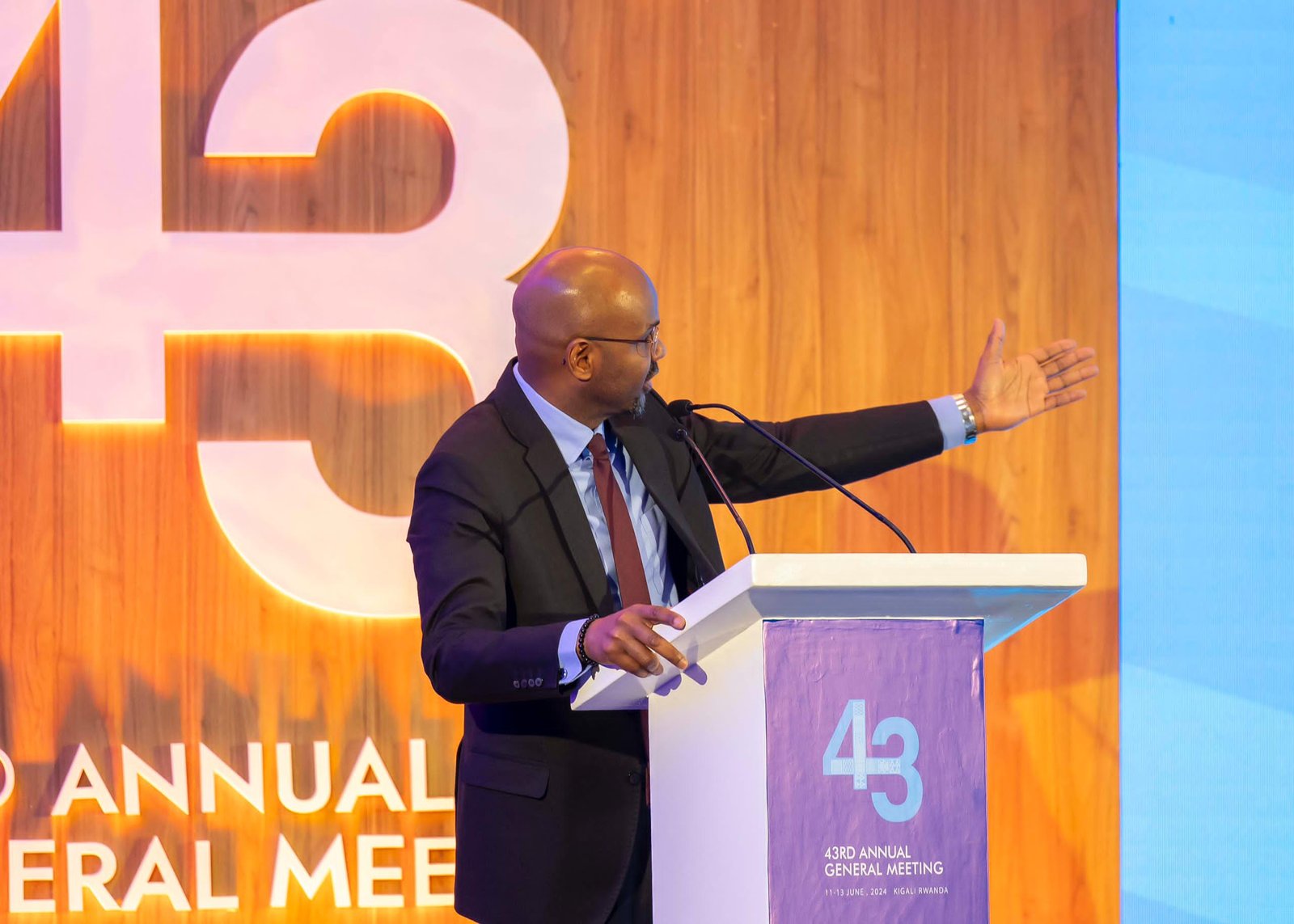
African Ministers of Finance, Housing, Urban Planning and Development spoke at the Ministerial Roundtable on Financial Innovations to Achieve Housing Affordability on the second day of the 43rd Annual General Meeting (AGM) of Shelter African Development Bank (ShafDB) in Kigali, Rwanda.
Rwanda’s Minister of State for National Treasury, Richard Tsabe, said in his opening remarks to the ministerial meeting that affordable housing requires a structured approach. Affordable housing in Africa requires data-driven decision-making and private sector involvement.
He proposed creating a favorable environment and providing incentives for private investment in housing as solutions to ensure affordable housing construction.
Jimmy Gasore, Minister of Infrastructure of the Republic of Rwanda, discussed the urgent need for innovative and sustainable solutions to address the wide range of housing affordability challenges facing member countries.
The incoming ShafDB General Assembly Secretary-General stressed the importance of fiscal measures, support and comprehensive economic policies to address this issue.
“We need a comprehensive approach that considers both the financial and economic aspects of housing. Affordable housing is key to family well-being and economic resilience,” Gasore said, adding that overcoming the housing crisis requires greater transparency.
Meanwhile, the outgoing ShafD Director-General and Minister of Housing and Urban Development, Federal Government of Nigeria, Mr. Ahmed Musa Dangiwa, has highlighted the potential of affordable housing in Nigeria to address the challenges of Nigeria’s housing crisis due to rising costs, inflation and population growth.
He acknowledged the efforts of the Nigerian government and the potential for private sector innovation to address Nigeria’s growing housing shortage, stressing the importance of creating a secure land and financing enabling environment, leveraging digital finance, and empowering low-income households.
Ghanaian Housing Minister Kojo Oppong-Nkrumah talks about how Africa’s financial sector has introduced various financing options to promote home ownership. He said Ghana was facing a housing shortage of 1.8 million units.
He said: “The government is addressing the housing shortage through a public-private partnership PPP approach, providing incentives to the private sector and leveraging the country’s home ownership fund.”
Additionally, he said the program includes partnerships with banks and government agencies that provide funding and technical support.
“Affordable construction financing and shared responsibility between government and developers are critical to the success of the project,” said Oppong Nkrumah.
Namibia’s Minister of Urban and Economic Development Erastus Utni said the country faces a housing shortage and a $1.3 trillion funding gap.
He discussed potential solutions to solve Africa’s housing shortage, including sourcing cheap housing loans through government banks to create jobs and develop the housing sector economically.
He emphasized the need to strengthen fiscal strength and achieve affordable housing in Africa, with a focus on addressing capital, improving financial stability and fostering partnerships to fulfill the mandate of financial institutions and address housing shortages.
Countries were asked to sign a statement of intent to participate in the program.
Secretary of State for Housing and Urban Development Charles Hinga said the Kenyan government aims to establish a housing scheme and utilize tax dollars for housing programmes.
“We aim to raise $7 million a month, or $864 million in annual revenue, to help eliminate the housing shortage.”
Tierno Habib Khan, Managing Director of Shelter Afrik, emphasized the need to strengthen financial strength and partnerships to achieve affordable housing in Africa, focusing on capital commitments and improving financial stability to meet the obligations of financial institutions and address housing shortages.
