


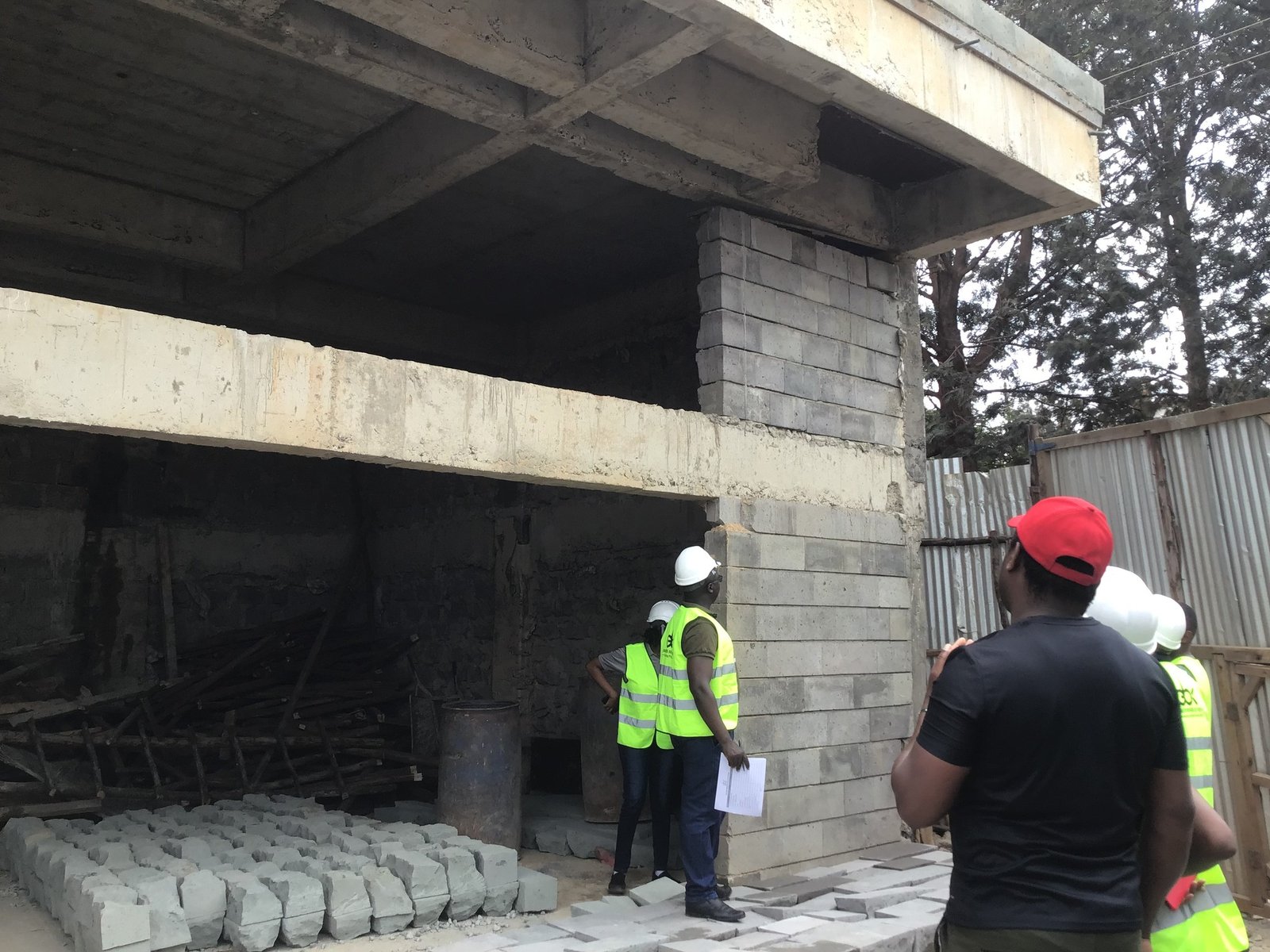
In early April, a four-story residential building under construction in Kisii County, southwestern Kenya, collapsed, killing five people and injuring several others.
The incident was said to be due to non-compliance with construction regulations, and preliminary findings by the National Construction Authority (NCA) revealed that there were no registered consultants or contractors on the project’s records, nor were they registered with the authorities. Additionally, the NCA had suspended construction at the site in September 2024 due to legal violations, but the developer had resumed construction without obtaining the necessary approvals.
The collapse was the third such incident in Kenya in April alone, but the Architectural Association of Kenya (AAK) said it was a grim sign of systemic negligence in building safety enforcement, site inspections and regulatory oversight.
The country’s construction sector has a history of poor occupational safety, with a study published in 2017 entitled “Common Construction Site Hazards in Nairobi County, Kenya” finding an overall occupational injury prevalence of 74% among construction workers.
Kenya’s construction industry is one of the main drivers of the economy, provides a major source of employment in urban areas, and is driven by the government’s drive to close the affordable housing gap, making the need to address safety concerns critical.
industry opinion
According to Barasa Ongeti, International Federation of Consulting Engineers (FIDIC) Certified Contracts Manager at Raxio Data Centers, Kenya is a member state of the International Labor Organization (ILO) and has adopted several conventions through the Occupational Safety and Health Act 2007 (OSHA 2007), making compliance with safety regulations legally mandatory and providing penalties for non-compliance. Additional regulations also apply to construction and public health safety.
In addition, the Directorate General for Occupational Safety and Health (DOSHS) and the NCA conduct regular workplace inspections to ensure that safety standards are met.
Nevertheless, Ongeti points out that construction safety culture is generally underdeveloped in Kenya due to limited technical and financial resources. Many workers lack basic personal protective equipment (PPE) and safety manuals are often lacking. Mr. Ongeti says that while large companies, especially international contractors, value safety, foreign companies may need to make extra efforts to instill a strong safety culture among their employees.
According to Ongeti, a weak safety culture, lack of training and resources, and inefficient operating procedures are major contributors to the construction industry’s poor safety performance. But he says the most important aspect needed is a cultural change.
“Safety needs to be deeply embedded in the values and practices of the construction industry. In many cases, safety is seen as an afterthought rather than a top priority, and this mindset must change,” says Ongeti.
Tony Onyango, a field engineer with local contractor Ark Construction, says safety has improved in Kenya’s construction industry, especially commercial construction projects that utilize experts, but the country does have a “weak safety culture”.
“It flows from the people at the top (levels) of the construction project and trickles down (to) the bottom,” Onyango said. “Informal housing construction sites rarely have safety personnel, and where such resources exist, they are mandated as a client requirement rather than a voluntary initiative of the construction team.”
Meanwhile, Ronald Mbiu, founding partner of Endelevu Designs, which provides sustainable design and construction services, opines that Kenya lacks a culture of safety, but this is closely tied to finance.
“The construction industry has been in constant decline since 2015, which has made construction companies and contractors more concerned about allocating funds to areas that have a more direct impact on their revenue streams,” Mbiu said. “It’s not that people don’t see[safety]as a priority, it’s not the top priority. But1763822096more companies are paying attention to[safety]than ever before and working with their occupational health and safety officers, but it’s not at the ideal rate that you would expect.”
government measures
The Kenyan government itself recognizes the scale of the issues affecting the construction industry and the importance of addressing them.
In late March, the Ministry of Lands, Public Works, Housing and Urban Development set up a committee to carry out a comprehensive review of the 2011 NCA Act and the 2014 NCA Regulations.
Key priorities for the review include containing structural deficiencies. Introducing tougher penalties to support quality assurance inspections. Enforcement of compulsory technical inspection based on the Building Standards Act 2024, which came into force on March 1, 2025. Adoption of international construction standards and best practices in construction. and incorporating sustainability into this sector.
The committee is expected to engage stakeholders from across the construction industry, including engineers, architects, contractors and developers, before drafting amendments to the NCA Act. Once finalized, the reform proposal will be submitted to Parliament for approval.
Building Standards Act 2024
The Building Code 2024 itself is a mechanism that the government hopes will transform the way construction is conducted in the country by providing a modern framework and standards for planning, design, approval, enforcement, maintenance and demolition of buildings.
Enacted nearly 60 years after the 1968 Building Code was enacted, which was seen as static, outdated and a hindrance to the government’s affordable housing goals, the new code will, among other things, promote orderly and coordinated development. Evaluation of appropriate building materials and techniques. Professional maintenance of building stock. Accountability and responsibility within the built environment. Access to professional services in the construction sector.
A hallmark of the Building Code 2024 is disaster risk management at construction sites. This emphasizes the responsibility of owners, contractors and other stakeholders to ensure health and safety throughout all stages of construction, from planning to execution.
This guideline aims to minimize risks associated with construction activities and ensure compliance with safety standards. It also emphasizes the importance of testing, emergency preparedness, and implementing safety measures to protect workers from hazards such as drowning, vehicle movement, fire, and inadequate air quality.
Under this provision, contractors are prohibited from starting work unless the owner is aware of its liability under the safety regulations. In addition, certain safety protocols must be followed for scaffolding, ladders, and work platforms, including the dimensions and materials used. In the case of demolition or the use of explosives, a clear plan must be drawn up and approved by the relevant authorities to ensure safety. In addition, engineers are required to promptly communicate safety concerns and provide written documentation of inspections.
The mandatory five-year review cycle of the Building Code 2024 is expected to ensure Kenya remains at the forefront of global architectural trends.
Strengthening safety culture
Efforts are also being made to improve the safety culture in Kenya’s construction industry. In mid-February, London-based global safety charity Lloyd’s Register Foundation announced a partnership with the Engineers Board of Kenya (EBK) to invest nearly £300,000 (US$397,965) in a program aimed at transforming the culture of safety across the construction industry.
The project, entitled ‘Safety Skills Development Program for Engineers and Practitioners in the Construction Industry in Kenya’, will support the development of curricula, courses and monitoring tools to ensure practitioners and workers have the capacity, competency and understanding to identify and address safety risks on construction sites across Kenya.
EBK will collaborate with expert and academic networks to deliver three targeted work packages focused on analyzing and identifying gaps in construction training, industry and policy. The findings from this phase will inform a series of resources, including a new curriculum for apprentices and improved training for practitioners, which are expected to improve safety awareness among Kenyan engineers and construction workers. Monitoring and evaluation throughout the project is planned to help develop a set of regulatory frameworks that raise standards across the engineering value chain.
Following its successful implementation in Kenya, the Lloyd’s Register Foundation says there is scope for the program to scale up its work across East Africa, share learnings with key stakeholders and support the adoption of engineering best practices in neighboring Tanzania, Uganda and Rwanda.
For change to last, it needs to come from the top, says Onyango of Ark Construction.

“We start with the owner of the construction project, the client,” says Onyango. “In most cases, if a client requests a certain safety standard during the bidding stage, the contractor will price accordingly and implement it during the construction stage. If enough clients demand[safety standards]it will soon become a culture worth emulating for all other players in the industry.”
Mbiu of Endelevu Designs points out that sustainable design and construction services can also help reduce various safety risks associated with the use of traditional building materials and processes.

Source: Construct Africa
“For example, using little or no cement in building design mixes removes cement dust, which can cause silicosis with prolonged exposure, and also reduces waste that is known to cause injuries due to clutter, leading to reduced awareness of objects that can cause injuries,” he says.
According to data from the Kenya National Bureau of Statistics, the construction industry is expected to grow by $15.6 billion in market size in 2023, with an average annual growth rate of over 5% from 2025 to 2028. Increasing awareness of occupational safety by all stakeholders will help the sector realize its full potential.
Photo: Construction site in Kenya (Source: Facebook@EBK)
