


When history looks back on Africa’s economic awakening, November 10, 2025 may stand out as one of the quietly decisive days when ambition and architecture met and rhetoric gave way to solutions.
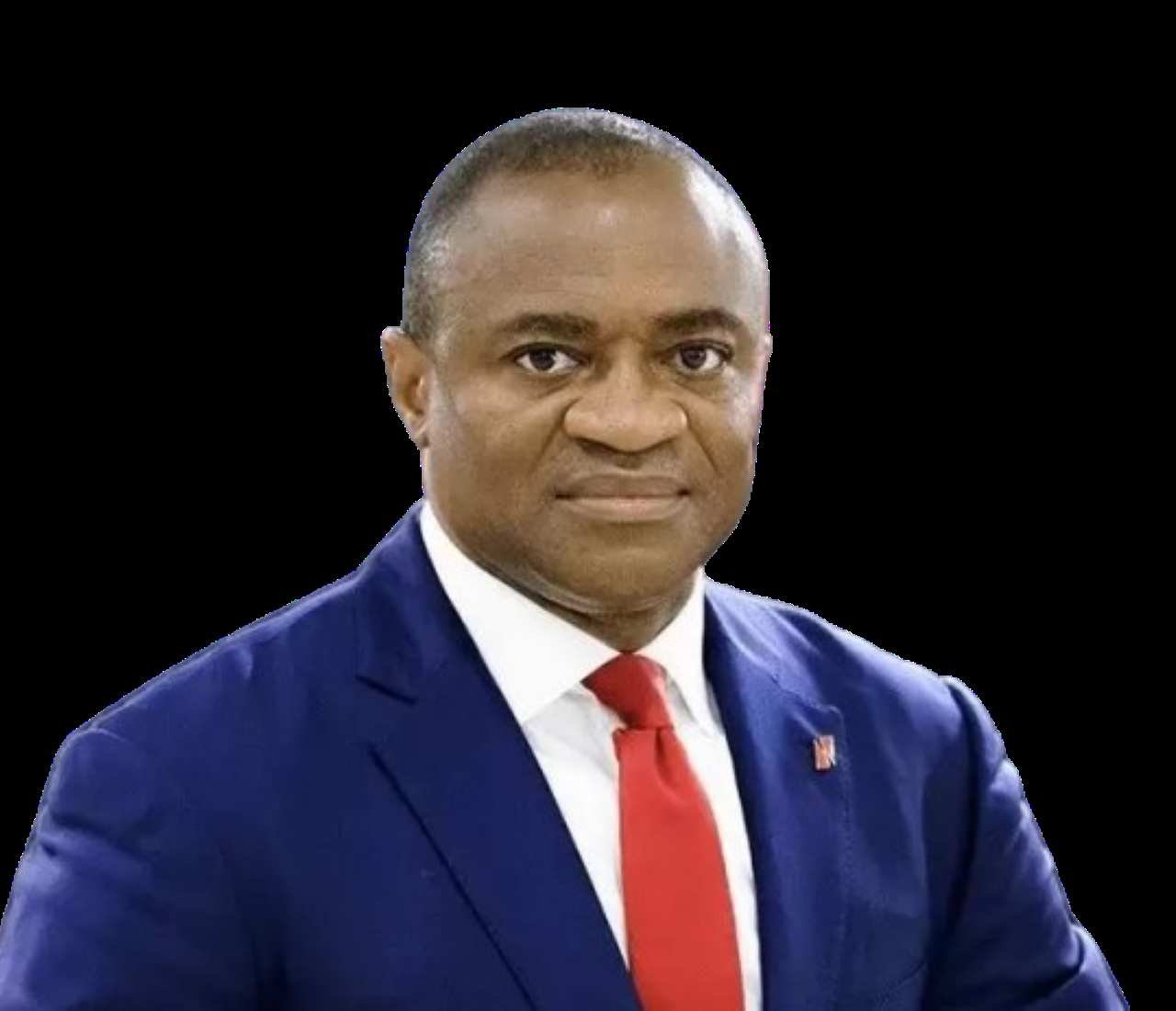
Oliver Arauba, Group Managing Director and Chief Executive Officer of United Bank for Africa (UBA) Plc, delivered a thunderous keynote speech at the UAE-Chad Trade and Investment Forum in Abu Dhabi. Under the theme “Financing Africa’s Competitiveness: Building Bridges and Accelerating Progress,” Mr. Arauba outlined a compelling blueprint for how Africa can finance not just its dreams but its destiny.
“The age of possibility is over; now is the age of execution,” he declared. The line drew a clear dividing line between the past and the future. This came across not as an optimistic view but as the intention of bankers who have spent decades proving that African capital can and should drive Africa’s transformation.
At the heart of his message was Chad Connection 2030, Chad’s $30 billion development plan covering 268 projects across energy, water, infrastructure and human development. Mr. Arauba hailed it not just as an economic plan, but as a declaration of confidence and a move from the fringes of the global economy to the mainstream.
What made his speech so valuable was his advocacy for a new financial architecture for Africa: mobilizing local capital, leveraging regional expertise, and attracting global investment through trusted structures. He proposed a three-part model built on international capital, African institutional banks and development finance institutions, and a framework to make the partnership practical and profitable.
In Arauba’s framework, African banks like UBA are no longer intermediaries but “financial architects.” He backed this up with examples. He demonstrated that African banks are already funding major transformations, from the $400 million Julius Nyerere Hydropower Project in Tanzania to UBA’s $700 million investment in Nigeria’s power sector and $315 million investment in Ghana’s road infrastructure.
In Chad, the commitment is personal and concrete. UBA has invested more than $102 million in country securities and has financed a $49 million domestic gas project, a $6.7 million wind farm in Amjaras, and major energy and communications infrastructure. “We are here to be the bridge between vision and reality,” Arauba said.
Beyond large-scale projects, his emphasis on inclusion resonated. He reminded the audience that without inclusion, competitiveness is empty and that the road to Africa’s recovery must go through Beira, Nzerekole and Gulu, not just Lagos and Nairobi. By extending banking services to remote areas, UBA ensures that smallholder farmers and local entrepreneurs are as much a part of Africa’s competitiveness as corporate boardrooms.
Perhaps the most impressive part of the speech was Mr. Arauba’s busting of the old myth that Africa lacks capital. Citing data from the African Finance Corporation, he revealed that Africa holds approximately $4 trillion in domestic financial assets, of which less than 15% is directed towards productive infrastructure.
“The challenge is never a lack of capital, but a lack of bankable structures and reliable partnerships,” he said.
At that moment, the story changed. Africa was no longer a continent waiting to be rescued. It was a market ready for funding.
Prime Minister Arauba also invoked the spirit of partnership rooted in history, quoting the UAE’s founding father, Sheikh Zayed bin Sultan Al Nahyan, and said: “Our ancestors lived and survived in difficult environments because they recognized the need to work together.” This echo was a deliberate call to Africans and their international partners to pool their resources and resilience to build something lasting.
Seen from this perspective, the UAE-Chad partnership represents a new kind of South-South cooperation that is investment-driven and rooted in shared prosperity. For Chad, it’s a leap forward for change. For Africa, it offers a glimpse of what is possible when vision and viable funding meet.
Mr Arauba’s speech was a manifesto of Africa’s new confidence, based on capacity, cooperation and capital. It was a reminder that Africa’s growth story will be written in balance sheets and infrastructure blueprints, not aid memos.
If Chad Connection 2030 is the blueprint and leaders like Arauba are the bridge, it is safe to say that Africa’s future is already under construction.
• Communications expert Johnson writes from Lagos
