


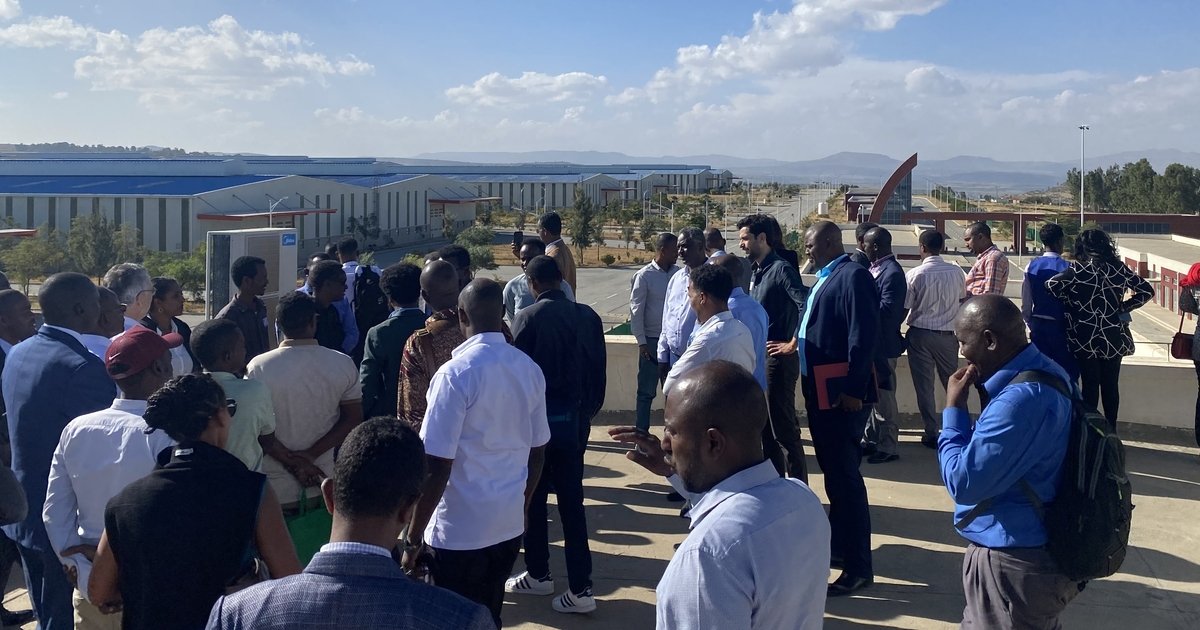
More than 13 cities in the Horn of Africa have come together to sign the Mekelle Urban Resolution, pledging to support planned, inclusive and sustainable urban growth.
Urban populations are rapidly increasing due to natural growth and rural-to-urban migration, especially in secondary cities in developing countries, especially in the Horn of Africa. Much of this expansion is disorganized, has inadequate infrastructure, and has serious environmental impacts. In sub-Saharan Africa, 80% of residential areas developed in the past 25 years are informal and unplanned.
The Mekelle Urban Resolution commits mayors and central government officials from cities in Ethiopia, Uganda, and Somaliland to proactively plan for urban growth. They also emphasize the importance of committing adequate financial and human resources to the formulation and implementation of urban plans for urban expansion.
The Mekelle resolution is the result of a recent high-level visit to Mekelle, Ethiopia, organized for East African Cities Alliance partner cities to learn first-hand the benefits of urban expansion plans.
The visit, which took place from 20 to 23 November 2023, was part of a City Alliance project to support urban expansion plans for inclusive and green growth in Ethiopia and Uganda, with funding from the Swiss Agency for Development and Cooperation (SDC).
City Alliance organized the visit in collaboration with the Ethiopian Ministry of Urban Development and Housing, the Uganda Ministry of Local Government, the Uganda Ministry of Land, Housing and Urban Development, the Ethiopian Civil Service College and Makerere University.
Some pioneering cities in Ethiopia have been working on urban expansion plans since 2013, creating plans that take into account the unique needs of young people and women for access to safe transport, markets, public spaces, water and sanitation.
During the three-day visit, participants toured newly constructed highways, residential areas and industrial parks in Mek’ele. They reflected on the Ethiopian approach and related it to their own experiences in developing urban expansion plans.
The event was attended by regional delegations led by mayors and representatives of central and local governments from 13 cities in three countries, including Adama, Bahir Dar, Dire Dawa, Mekele and Wajare in Ethiopia. Arua, Gulu, Jinja, Koboko and Mbale in Uganda. the cities of Boroma, Gabili and Togwajale in Somaliland;
10 years of urban expansion planning in Mekelle
Mekelle, with a population of approximately 559,000, is Ethiopia’s second largest city and the economic, cultural, and political center of the Tigray region.
Like many other urban areas in East Africa, Mekelle has grown rapidly in recent decades, with an average growth rate of more than 6%. Over the past 40 years, the urban area has expanded approximately nine times from 3,524 hectares in 1984 to approximately 32,000 hectares in 2023.
In 2013, Mekele was one of four pilot cities (in addition to Adama, Bahir Dar, and Hawassa) selected in partnership with the former Ministry of Urban Development and Construction and New York University (NYU) to participate in the pioneering Ethiopian Urban Expansion Initiative. New York University’s Marron Institute for Urban Management introduced an urban expansion planning approach and supported the pilot.
Mekele used past growth rates to predict future population growth and expansion in order to plan more effectively. Projections predict that Mek’ele’s population will increase fivefold from 2013 to 2040, and the built-up area will more than double over the same period.
The city realized that it needed to think long-term to proactively accommodate this growth, and began preparing an urban expansion plan.
Mekelle’s political and technical leaders understood that planning for Mekelle’s rapid growth was a unique opportunity to provide affordable housing, basic services, and employment opportunities for existing and future residents, and to provide businesses and industry with adequate infrastructure, business opportunities, and affordable, well-developed land.
The city calculated and planned its investment needs and integrated the urban expansion plan with the 10-year structural development plan. Surveyed land and negotiated highway rights-of-way with landowners.
In 10 years, the city successfully implemented the first two of the five planned phases and built more than 120 km of asphalt roads. The expanded areas developed provided many new residents with access to affordable housing and basic services, as well as a base for business and industry within and outside the international and local industrial parks. The Mekelle expansion area currently houses an airport, medical school and teaching hospital.
In Mekelle, we were able to see for ourselves the importance of prioritizing investment in road infrastructure, which has so many synergies.
Sanya Kirk Wilson, Mayor of Koboko and President, Uganda Urban Authorities Association (UAA)
Learn from Mekelle
The visit provided valuable practical insight into Mr. Mekelle’s experience with urban expansion planning.
The city has demonstrated that the urban expansion planning approach is not an end in itself, but a simple but impactful planning tool that allows city officials to create space for growth, industrialization, and sustainable and inclusive development. At the same time, it can facilitate attracting and guiding investment.
Mekele also emphasizes the importance of involving all stakeholders in the plan implementation process, including landowners, land developers and communities. Building confidence in the plan, its implementation, and the resulting benefits is essential to success.
Another important advantage of urban expansion planning is that it is cost-effective. Mr. Mekelle indicates that there are various options for financing urban expansion, particularly for rights of way and road infrastructure. A contextual approach to understanding land value can be a valuable financing tool.
Based on their experiences during the visit, the Somali, Ethiopian and Ugandan delegations issued the Mekelle Urban Resolution, which was signed during a reception at the Ethiopian Ministry of Urban Infrastructure in Addis Ababa, attended by Ethiopian and Ugandan Deputy Ministers for Urban Development.
Obiga Kania, Uganda’s Deputy Minister for Urban Development, Ministry of Lands, Housing and Urban Development, summed up the value of his visit to Mekele:
I learned about the importance of an active, long-term physical development plan…People who come to this city know where they will settle. It becomes easier to guide them and for the government to provide services.
