


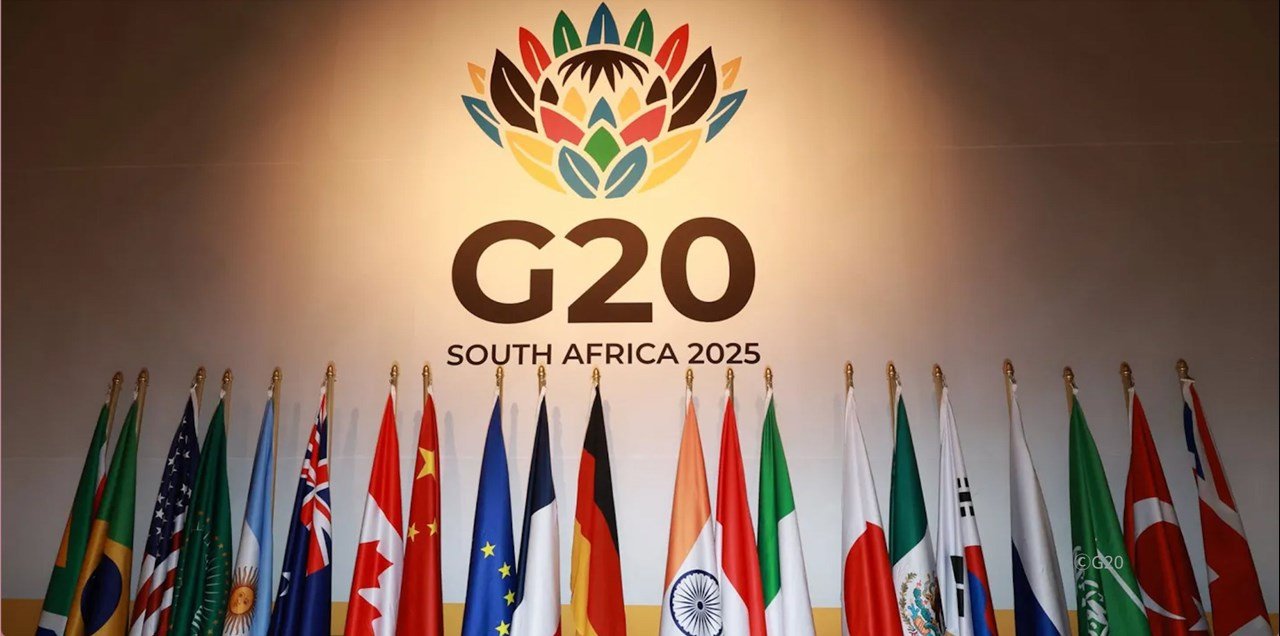
A landmark report released under South Africa’s G20 Presidency calls for ambitious multilateral reforms that will unlock Africa’s development potential, shift global cooperation towards investment-led growth and strengthen the role of African institutions, particularly the African Development Bank Group (AfDB), in promoting productive investment across the continent.
The document, titled “Growth, Debt and Development: Opportunities for a New African Partnership,” was formally handed over at a ceremony in Johannesburg on 17 November 2025, marking a major milestone in history as the first African country to lead the G20.
President Ramaphosa: “Africa is the greatest opportunity of this century”
South African President Cyril Ramaphosa praised the work of the African Expert Panel, a 25-member body convened by Finance Minister Enoch Godongwana and chaired by former Finance Minister Trevor Manuel.
President Ramaphosa emphasized that Africa is a vital force in global prosperity.
“We have a young and growing population, a dynamic and innovative society, and an abundance of natural resources. Africa has the greatest opportunity for global prosperity in the 21st century.”
This year’s G20 summit in Johannesburg brought world leaders together on African soil for the first time, putting African priorities firmly at the center of the global economic agenda.
African Development Bank leaders play a central role
The expert panel includes prominent figures from the African Development Bank Group.
Professor Kevin Chika Ulama, Vice Chancellor and Chief Economist
Dr. Anthony Musonda-Simpasa, Director of Macroeconomic Policy, Forecasting and Research
Their participation reflects the Bank’s deep expertise and long-standing leadership in African development finance, macroeconomic stability, and innovative investment mechanisms.
Continued capitalization of the African Development Fund
One of the report’s strongest recommendations is for continued and sustained recapitalization of the African Development Fund (ADF), the concessional lending arm of the AfDB Group. ADF is essential for Africa’s low-income, fragile and vulnerable countries that struggle to access affordable finance in the current global climate.
The report identifies the ADF and the World Bank’s International Development Association (IDA) as the largest providers of grants and concessional loans to African countries.
The next major milestone is the ADF-17 Replenishment Conference in London (15-16 December 2025), where donors will decide on funding levels for 2026-2028.
Paradigm shift: from aid dependence to investment-led growth
This report outlines important changes in how global partners should engage with Africa. Instead of focusing on traditional aid, we should focus on:
productive investment
Africa-led growth strategy
Continental and regional institution building
Mobilizing private capital
This vision places African governments at the center of development and positions Africa as a new driver of global economic growth.
AfDB’s catalytic role: accelerating Africa’s investment surge
The report highlights that the African Development Bank Group is a central pillar of Africa’s economic transformation.
“Africa needs a surge of productive investments in infrastructure, energy, education, health and climate resilience.”
This highlights AfDB’s leadership in introducing innovative financing instruments, including:
Room2Run — A breakthrough debt securitization initiative that transfers portfolio risk to the private sector and increases banks’ lending capacity without the need for new capital.
Mixed loan system
Sovereign risk sharing platform
These innovations will massively expand development finance and help African countries pursue major infrastructure and social development projects.
Key recommendations for G20 leaders
The panel’s recommendations focus on strengthening Africa’s financial stability, empowerment and long-term resilience.
1. New G20 debt repayment initiative
Provide relief to low-income countries, supported by contributions from official creditors.
2. Establishment of Borrowers Club
Unifying the collective voice of borrowing countries, supporting technical capacity and coordinating debt strategies.
3. Creation of a transparent multilateral debt resolution mechanism
To address delays and inconsistencies in the current global debt structure.
4. Developing national and regional growth and investment frameworks
Promote structural transformation, industrialization, and job creation.
5. Empowering African trade finance institutions
Enable institutions such as AfDB, Afreximbank to scale up support.
6. Strengthening international tax cooperation
Combating illicit financial flows and mobilizing domestic resources for development.
Formation of the G20 Africa Engagement Framework
The report will inform discussions at the 2025 G20 Leaders’ Summit and guide the implementation of the G20 Africa Engagement Framework, launched during the IMF/World Bank Annual Meeting in October.
This framework aims to:
promote investment
Improving debt sustainability
Strengthening Africa’s governance and institutions
Strengthen resilience to climate change
Supporting inclusive and sustainable development
Africa’s future: the crossroads of global growth
As the world navigates rising geopolitical tensions, the shock of climate change and economic uncertainty, the report argues that Africa can and must become a cornerstone of global stability and growth.
With the right investments, strong institutions and fair financial partnerships, Africa has the potential to shape global markets, drive innovation and generate prosperity for generations to come.
