


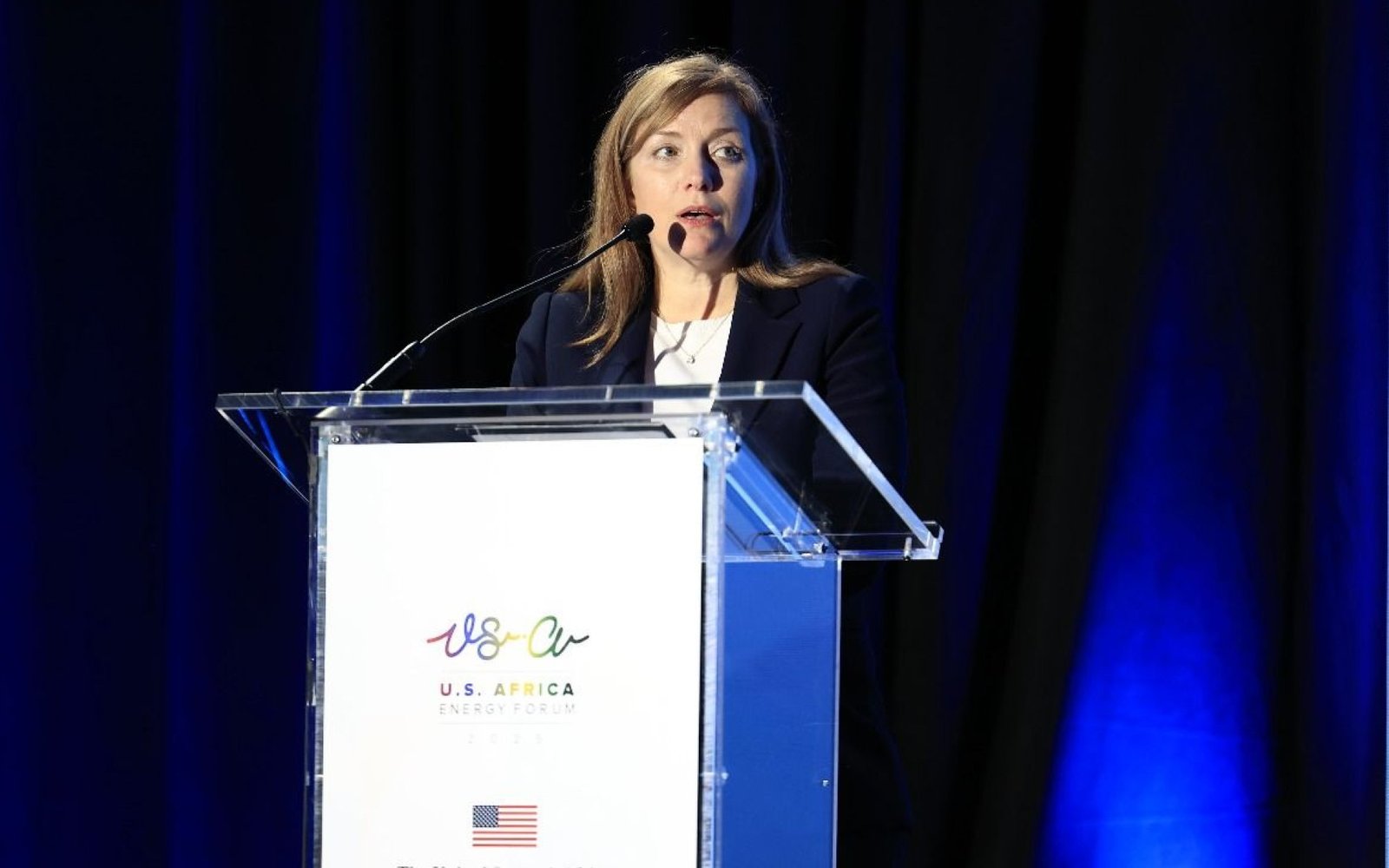
The 2025 U.S.-Africa Energy Forum (USAEF) opened Wednesday in Houston with a direct message to U.S. investors and policymakers. Africa is one of the most important energy investment frontiers of the 21st century, and the United States risks losing ground unless we take immediate and concerted action.
Against a backdrop of global competition and shifting energy security priorities, U.S. and African leaders used the opening session to push for stronger institutional engagement, accelerated project financing, and a recalibration of the U.S. commercial approach to the continent.
“The United States cannot afford to stand idly by,” said Representative Lizzie Fletcher of Texas’ 7th Congressional District, emphasizing Houston’s role as a key hub for African trade, with $6.8 billion in African-related trade passing through the Port of Houston in 2024 alone.
While U.S. private sector interest is growing, the leaders emphasized that policy inertia, risk perception, and underutilization of U.S. financing tools such as the DFC, the Export-Import Bank, and the U.S. TDA are hindering momentum, especially as African economies accelerate efforts to industrialize, electrify, and exploit their vast energy and mineral reserves.
“African resources need to partner with American innovation. To make this happen, we need to create the right environment for American capital to flow…Projects alone are not enough. Capital follows trust, and trust follows policy,” said Dr. Guevera Yao, vice president of the U.S.-Africa Business Center at the U.S. Chamber of Commerce. “Africa’s energy future is not just a development challenge, but also a commercial opportunity.”
Echoing these remarks, Kelly Waterman, regional director for U.S. Sen. Ted Cruz’s office, said, “Critical minerals are a strategic opportunity to reshape the U.S.-Africa relationship, from aid-based aid to commercial engagement.”
The Democratic Republic of the Congo (DRC), a major source of cobalt and other transition minerals, is preparing to sign a new bilateral economic agreement with the United States aimed at mobilizing significant external funding and knowledge transfer, particularly in the construction of basic infrastructure.
“To achieve this, the government of the Democratic Republic of the Congo has chosen a strategy of financing development projects through public-private partnerships and cooperation agreements,” said Yves Tara Ngai, director of research and planning at the country’s Treaty Agreement Management, Coordination and Supervision Agency.
The country is also repositioning its hydrocarbon sector.
“We have concluded the last bidding round in 2022 and are currently reviewing the legislation and preparing the data room. We are fully committed to reforms. These reforms should lead to a change in the perception of the oil sector in the DRC,” said Joel Fanbwe, Upstream Technical Advisor at the DRC Ministry of Hydrocarbons. “We are aware that the United States has extensive experience in the oil industry and look forward to strong cooperation with the United States.”
Liberia also appealed directly to U.S. investors, citing significant world-class mineral reserves, a favorable investment climate, and first-mover opportunities in refining, processing, and gas-to-power development.
“My mission is clear: to identify and develop opportunities to bring U.S. capital to Liberia’s priority sectors, including energy and mining,” said Special Envoy Isaac E. Taggart, Jr., Liberia’s Special Envoy for U.S. Trade and Investment at the Ministry of Foreign Affairs.
Adding to this, Romualdo Ruindula Mayamona, President of the Texas African Chamber of Commerce, said: “Africa is not without potential. It lacks scale in infrastructure, investment and partnerships. It is a frontier of resilience, ingenuity and unparalleled possibilities.”
