


Water is a major issue in most African countries. Outdated and overstretched infrastructure, often controlled by distressed publicly traded companies, has led to expensive and unreliable access to water in many cities across the continent.
The World Bank says one in three people in Africa faces water scarcity and “bold action” is needed to address the water crisis. This includes addressing water scarcity in drought and climate disaster areas, as well as deploying higher standards of water access in cities.
less involvement
However, the private sector has historically had little interaction with water across the continent. African governments have typically taken full control of the sector and managed the resources as public goods.
Rami Ghandour, managing director of Metito, a UAE-based water company with operations in Africa, argues that utilities have an overall negative impact on the sector. This, he says, prevents significant investment in the industry.
“Water authorities in many countries across the continent are losing large sums of money, and as a result are unable to deliver projects on a sustainable basis. But people still need water, which means they are using tank solutions that cost 20 to 30 times the cost of a properly researched and implemented municipal solution.
“I think there is a false impression that large subsidies benefit the public, but in reality they prevent viable projects from being implemented and force the public to find other solutions.”
Another big problem is what Ghandour calls “non-revenue water,” or water illegally siphoned from pipes or lost through leaks.
In extreme cases, some of Africa’s largest cities could lose up to 90% of their water supply, he said. This makes it very difficult for the private sector to make a profit and creates significant barriers to investment. According to data collected by the World Bank and the Public-Private Infrastructure Advisory Facility (PPIAF), there were only 51 public-private partnerships (PPPs) in the water and wastewater sector in Africa between 1992 and 2012.
open the floodgates
Despite the challenges, Ghandour said there is great potential for the private sector, especially PPPs, citing Rwanda’s Kigali Bulk Water PPP as an example.
In 2010, Kigali’s population was growing rapidly, putting extreme pressure on its water infrastructure. The government has set an ambitious goal of achieving 100% water coverage by 2018 and has approached the International Finance Corporation (IFC) to support the establishment of PPPs.
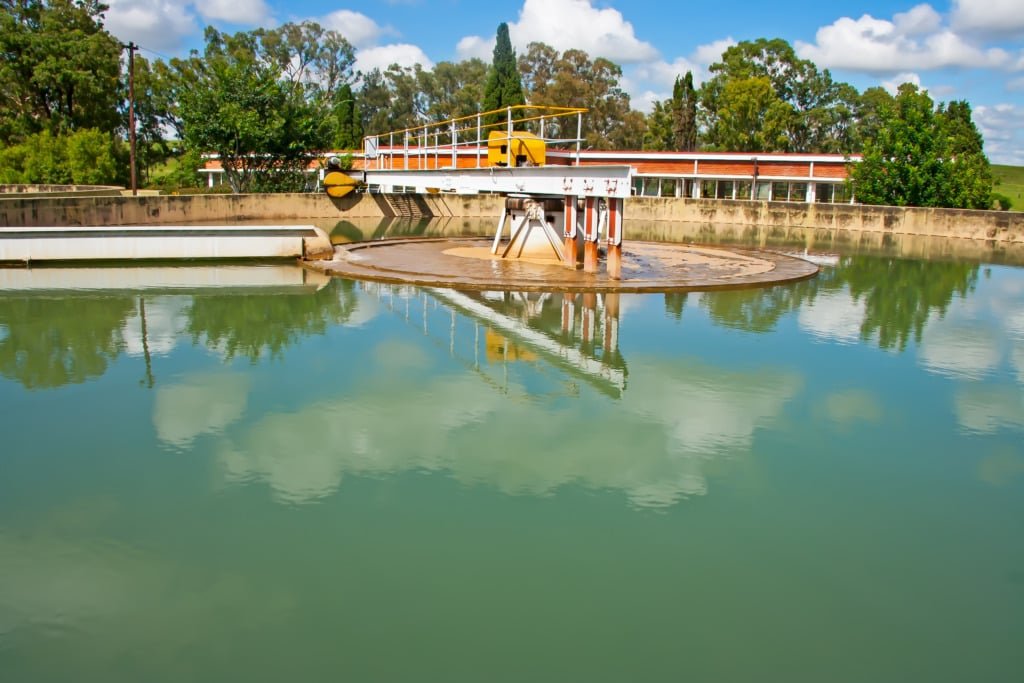
In 2015, Meteeto won a 27-year concession from the government to develop, operate and maintain a water treatment plant and three reservoirs capable of supplying 500,000 people with 40m liters of clean water every day. The sole underwriter for the project was the Water and Sanitation Corporation, the national water utility.
The $60.8 million project was primarily funded by the Emerging Africa Infrastructure Fund (EAIF), a company managed by the Private Infrastructure Development Group (PIDG), a financial institution funded by the governments of the United Kingdom, the Netherlands, Switzerland, Australia, Sweden, and Germany, as well as IFC. EAIF provided $20.6 million in junior and senior debt.
“This is a project that started operating a little less than two years ago and has been running very well ever since,” Ghandour said. “This is a model project for Africa in terms of its business model and the involvement of the private sector in the water sector. Most of the projects that have come to market are funded with public funds.”
Ghandour says the project’s success should open the floodgates for more PPPs in Africa. Most of Metito’s projects are in North Africa, primarily Egypt, but since the Kigali project, there has been a greater focus on PPPs in sub-Saharan Africa, he says.
In 2021, the Botswana government approached IFC to create a Rwandan-style PPP to turn wastewater into drinking water in Gaborone. The $100 million Glen Valley Wastewater PPP aims to combine wastewater treatment and reuse plants to produce a combined 140 million liters of clean water each day.
“We have a legal and financial structure very similar to what happened in Rwanda, but we are recycling wastewater instead of water,” Ghandour says.
Ghandour said that apart from Botswana, the market is still “99% untapped” and represents a huge opportunity for international water companies. Along with Metito, French and Chinese companies are the most active in Africa’s water sector.
controversy
The role of private companies in water supply is a topic of debate around the world. Critics argue that private sector involvement could lead to higher tariffs, the emergence of monopolies, and the enrichment of companies at the expense of the public interest.
Anti-privatization movements have argued that public provision is the most appropriate model for realizing the human right to water and sanitation.
In 2020, then-United Nations Special Rapporteur on the human right to safe drinking water and sanitation, Leo Herrer, submitted a report recommending that “countries, when adopting laws authorizing privatization, make clear that water and sanitation is a human right, establish that private providers must be held to the same level of obligations as public providers, and define the need for a human rights assessment to be conducted before deciding whether to privatize a service.”
The report states that before states choose privatization, evaluations should consider available alternatives.
In 2005, Tanzania’s flagship water privatization plan collapsed when the government canceled its contract with British company Biwater. Biwater had been awarded a contract to provide clean water to the capital Dar es Salaam and surrounding areas within five years of installing new pipes. The government said the $140 million World Bank-funded project “failed to produce any product.”
Bridging the infrastructure supply gap
Not all governments still support private involvement. Martijn Proos is a director of the company Ninety One, which is the fund manager of the EAIF. He says one of the biggest barriers to water PPPs in Africa is government participation. He says the Kigali water project would not have been possible if the Rwandan government had not taken the first step more than a decade ago.
“If governments open up this sector to private investment and create a legal and regulatory framework, there will be significant benefits,” he told African Business. “I think it’s important to make this sector financially sustainable while at the same time maintaining affordability for end users.”
Mr Prose believes that ultimately private sector participation will become an essential part of closing the infrastructure supply gap. He likens this to the electricity sector, which used to be almost completely controlled by the government.
“Twenty years ago, electricity was primarily driven by government utilities,” he says. “There used to be very few independent power producers (IPPs) on the continent. Looking at today, the IPP sector has grown significantly and the power supply gap has closed in many parts of Africa. Several countries have followed the model that started in Ivory Coast and Kenya in particular.”
“I think we’re going to see a similar trend with water. Sometimes it seems like a bit of a bold move to take that first step of bringing in the private sector, but we see that there are big long-term benefits.”
Pross said that following the success of the Kigali Bulk Water PPP, EAIF is considering increasing the number of water projects in its portfolio. The development finance institution has other similar projects in Karanga and elsewhere in Uganda’s Sese Islands. In 2005, we committed $7 million to provide residents with infrastructure services such as electricity, ferry service, and clean water.
