


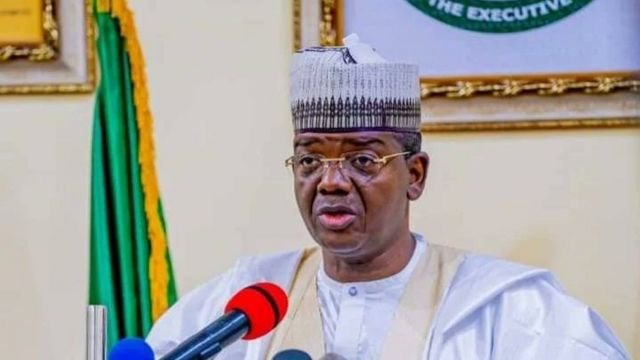
Alhaji Bello Matawalle, Minister of Defence, said new tools such as artificial intelligence, data analysis, advanced imaging systems and cyber capabilities have significantly enhanced the threat detection, analysis and response capabilities of the military and other security agencies.
He noted that the integration of modern technology and human intelligence is at the center of deliberations at the 2025 Annual Conference of the Directors of Defense Intelligence.
Declaring the conference adjourned on Friday in Abuja, the minister said: “We must recognize that technology alone is not enough. The judgment, experience and dedication of our intelligence personnel remains essential. The true strength of our intelligence systems lies in the synergy between the two, where technology amplifies human capabilities and human insight guides its application.”
Matawalle added that participants considered practical strategies for incorporating multi-source intelligence into Nigeria’s security framework and reviewed case studies where intelligence solutions prevented crises and improved operational outcomes.
He assured the participants that the Ministry of Defense would pay due attention to the recommendations adopted at the conference and work with stakeholders to ensure their effective implementation.
He encouraged the Armed Forces to continue adopting new technologies, strengthen interagency cooperation, and maintain the highest standards of professionalism in intelligence operations.
He said Nigeria’s future security depends on building partnerships rooted in trust, shared commitment and collective responsibility, rather than working in isolation.
The Minister commended the Director of Defense Intelligence and his team for successfully organizing the conference, stressing that their dedication has significantly enriched national security efforts.
In his closing remarks, Lieutenant General Emmanuel Andandie, Director of Defense Intelligence, said this year’s activities have been exciting and challenging.
“This provided a unique platform for the Secretary of Defense, advisors, and field commanders to share experiences, consider emerging intelligence concepts, and strengthen professional bonds across national and regional security agencies,” he said.
He added: “I am confident that the conversations, papers and briefs presented have laid a solid foundation for the continued modernization of our nation’s intelligence architecture.”
He added that the deliberations reaffirmed the need for strong synergies across human intelligence (HUMINT), signals intelligence (SIGINT), geospatial intelligence (GEOINT), and open source intelligence (OSINT) to effectively address modern threats that continue to grow in complexity and scale.
Andy&I encouraged attendees to apply the lessons learned and maintain the momentum created throughout the conference.
end
Experts advocate greater collaboration and innovation to strengthen national security
Linus Aleke of Abuja
Nigeria’s security experts are calling for stronger cooperation and innovative approaches to strengthen national efforts to address rising security insecurity across the country.
At a press conference in Abuja on Thursday, Chairman of the Interim Management Committee of the Association of Private Security Professionals of Nigeria (ALPSPN), Retired Major General Elvis Njoku, outlined the association’s readiness to work more closely with traditional security agencies.
He emphasized the importance of structured information sharing, increased community monitoring, and technology-driven interventions.
“We can no longer operate in silos. Cooperation is the future of national security. Civilian security professionals are well positioned to complement police, military and intelligence agencies, especially at the grassroots where many threats first emerge,” Njoku said.
He added that ALPSPN is pioneering the deployment of drones, AI-assisted surveillance systems, and digital neighborhood monitoring platforms to improve early detection of threats.
“Innovation is no longer optional. We are developing systems that enable real-time reporting and rapid escalation of incidents, which is essential to closing the information gaps exploited by criminals,” he said.
On regulatory issues, Mr Njoku called on government agencies to harmonize operational frameworks and expand opportunities for trusted private security companies to be integrated into both national and sub-national security networks.
Dr. Dauda Ajeni, Director-General of ALPSPN, stressed that improved coordination will help consolidate Nigeria’s fragmented security architecture and build trust at the community level.
He explained that private security guards are often the first point of contact in residential areas, commercial areas and critical infrastructure, and are critical for early detection and rapid response.
“Our operatives interact with the public every day. We collect first-hand observations, and a seamless coordination channel can greatly assist security agencies. Greater coordination means faster response, better prevention, and a safer environment for Nigerians,” Ajeni said.
He also stressed that the ALPSPN is intensifying training and raising professional standards to ensure that private security personnel have the necessary skills and discipline to support national security operations.
“We are investing in capacity building, technology implementation and ethical practices. Security is a shared responsibility and ALPSPN is committed to fulfilling its role fully and professionally,” he said.
Both officials concluded by reaffirming the Association’s readiness to innovate, collaborate and contribute to making Nigeria safer in partnership with government agencies, security agencies, communities and technology providers.
Linus Aleke
follow me:
