


Donald Trump’s support for fossil fuels and his decision to end trade incentives is benefiting Africa in unexpected ways, according to the incoming president of the Pan-African Trade Bank, one of Africa’s largest investors.
“President Trump is doing good for Africa, even unconsciously,” said George Elombi, a former Cameroonian lawyer who took over as president of Cairo-based Afreximbank last month.
He said the US president’s support for fossil fuels has slowed the pace of the global energy transition, inadvertently easing pressure on African countries whose economies still depend on revenues from oil production. Tighter trade conditions were forcing African companies and countries to think more seriously about exploring other markets, including the continent.
“He’s forcing Africans to look inward so they have to deal with their own problems,” Elombi said.
Elombi said the immediate impact of the end of the 25-year U.S.-Africa trade agreement, Agoa, which expired in September, would hit textile producers particularly hard. But he plans to work with African governments to redirect some exports to regional markets that previously received preferential U.S. tariffs.
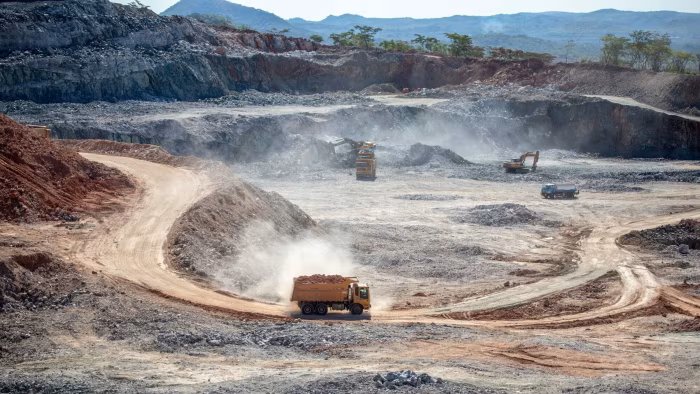
He will also prioritize financing for raw materials processing facilities to help African countries retain more value and jobs from their resources while leveraging new global interest in the continent’s mineral deposits. Although South Africa has a well-developed processing industry, much of the rest of the continent’s metals are processed overseas, particularly in China.
“Our balance sheet is large enough to transform certain sectors overnight,” Elonbi said. “As soon as we start the business and it looks promising, other investors will want to join us,” he said.
Afreximbank was founded in 1993 by African countries and private investors to facilitate intracontinental trade, and thanks to shareholder support and capital generation, its assets and reserves have grown from $6 billion to $44 billion in 10 years.
Along the way, the company has taken on an increasingly strategic role. He contributed to steering Africa through the pandemic, including by taking on the distribution of the new coronavirus vaccine across Africa. It spent $5 billion to combat inflation and supply chain disruptions caused by Russia’s invasion of Ukraine. Analysts say multilateral development banks have been slow to meet their targets.
But the bank has also drawn criticism for acting like a development bank while charging commercial bank interest rates. It also enjoys “creditor preferential treatment” backed by a founding agreement designed to protect banks’ loans, especially in times of financial crisis.
“It’s unfair that the likes of the African Development Bank are given priority creditor status in addition to the commercial benefits they enjoy on loans,” said Bright Simmons, deputy director of Ghanaian think tank IMANI.
Elonbi said Afreximbank was determined to continue to challenge the orthodoxy of development finance as it sought to fend off what he called a “coordinated attack” on the bank’s “disruptive” model.
He claimed that Afreximbank lends in ways and times that others do not want.

“When you do the processing that we are talking about, it involves risks. You make huge investments. And you build infrastructure that others can live in comfortably,” he said, pointing to investments in Gabon’s timber value chain and Benin’s textiles, doubling the foreign exchange earnings of both countries.
Afreximbank was downgraded by rating agency Fitch earlier this year to a grade above junk after disagreements over the classification of non-performing loans and concerns about its sovereign exposure to Ghana, South Sudan and Zambia. Other regional credit institutions, such as Japan’s JCR, maintained their investment grade ‘A’ ratings.
Elonbi characterized Fitch’s downgrade as part of a broader plan to pressure the bank into taking “haircuts” in debt-stricken countries, and claimed the credit rating agency ignored information disclosed by the bank.
He said the majority of loans are collateralized and sovereign debt only makes up 10% of the bank’s portfolio.
A Fitch spokeswoman said the bank could appeal the downgrade if it notifies the agency of “what we believe is a material factual error in the information we are using.”
But Deepak Dave, former chief risk officer at Africa Trade, Investment and Development Insurance, said that while Afreximbank has been a catalyst for other commercial loans, it “has taken its position for granted and should have been more cautious about country lending.”
Eronbi hit back at the criticism, saying it ignores the hidden costs of job losses, loss of sovereignty and erosion of state capacity associated with historically concessional lending from other development finance institutions, particularly the Bretton Woods institutions.
He said that “conditions that have pushed young people onto the streets, created conditions for social unrest, and have historically limited public investment in industrialization” have “further exacerbated Africa’s dependence on exports of raw goods.”
“We’ve been doing this for 50 years, and it’s not working. Shouldn’t we try something else?” he said.
