



Rapid population growth and increasing urbanization in Africa are creating a need for growth in the infrastructure sector and construction industry.
According to the African Development Bank (AfDB), Africa’s urban population is expected to grow to 350 million people by 2030, making the continent the fastest urbanizing in the world. This requires rapid technological advances that can fundamentally change the construction landscape by reducing costs, increasing efficiency, and shortening project delivery times.
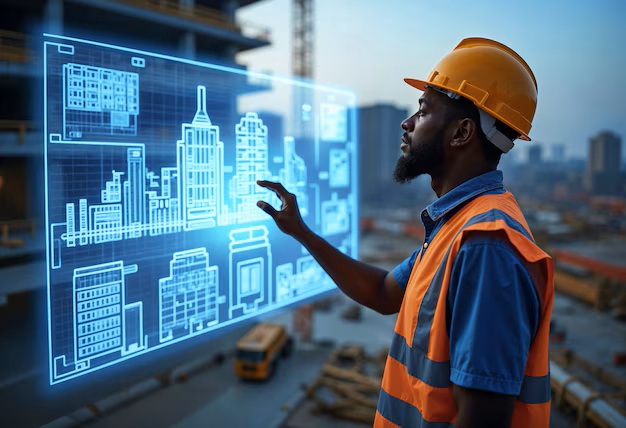
Africa’s construction industry is on the cusp of digital transformation. Cutting-edge technologies such as artificial intelligence (AI), building information modeling (BIM), drones, and augmented reality/virtual reality (AR/VR) tools are driving a digital shift in the continent’s construction industry. The integration of these technologies involves moving from blueprints to bytes, sites to simulations, and bricks to clicks, revolutionizing the way projects are planned, designed, and executed.
On most, if not all, of Lynas International’s projects, we have employed technology to automate client, contractor and supplier coordination and communication. These range from using collaborative design boards to installing cameras to provide minute-by-minute progress and reports.
For projects in Africa, technology becomes even more important, and often essential, to collect site and project information and report progress back to headquarters in Dubai. This information can be analyzed by the project team and senior management and immediate corrective action can be taken if necessary. This strategy can be important for companies that operate across multiple jurisdictions and locations, even within the same country.
Today’s digitally automated world requires the adoption of cutting-edge technology in an evolving and competitive industry where precision, efficiency and safety are paramount. By using time-lapse videography, BIM, drone flybys, and interactive walkthroughs, you can enhance your marketing efforts while monitoring construction speed with real-time progress tracking.
Building Information Modeling (BIM)
For example, BIM allows stakeholders to digitally view the physical project, allowing for holistic visualization of the infrastructure and eliminating potential errors.
For warehouse projects bound by strict completion deadlines, meeting tenant take-back requirements is essential. By addressing concerns identified through our tracking system, we can respond quickly to delays and offset them much more quickly than ever before. In this case, time is literally money.
Utilization of drones
Timelapse and drone photography transformed our large warehouse project. Given the scale, scale and remote location of the project, such photos often provide instant updates from the field. Most importantly, when carrying out projects for other customers, time-lapse photography/videography will give you a complete picture of the progress achieved, even if it is not obvious at first glance.
Such technological advances represent a paradigm shift from traditional construction methods. These speed up the build process and significantly reduce build time compared to slow traditional processes and traditional tools. Drones, such as those we have started using throughout our projects, facilitate an aerial view of the site from vantage points and provide real-time visibility. This makes it easier to monitor progress, enables faster decision-making, and reduces delays. Compared to traditional methods, drones can inspect areas inaccessible to humans, ensure worker safety, and provide accurate data.
Other innovative technologies
On the other hand, technologies such as 3D printing create structures in a way that significantly reduces waste and costs. AR and VR are also important tools in the construction toolkit to provide immersive experiences in simulated environments. This allows stakeholders to virtually explore projects and troubleshoot issues early.
Similarly, innovative technologies such as AI, robotics, and automation will optimize construction planning, cost estimation, and risk analysis, thereby accelerating the growth of the construction process. Automation technology introduced over the years has enabled our manufacturing department to adopt more precise production of joinery, woodwork and metal parts that traditionally require a lot of rework. Machine automation has reduced human error and inaccurate measurements that led to the famous “garbage in, garbage out” scenario.
The Internet of Things (IoT) is also enhancing equipment monitoring and data collection. Our scaffolding division has recently begun its first efforts to adopt IoT for truck movement, inventory delivery, and scaffold assembly speed and progress. This allows us to provide our clients with granular updates across projects, large and small. This reduces previously manual monitoring costs and dramatically reduces human error.
As our logistics network expands, more vehicles have been introduced to meet our growing needs. More importantly, we have established four new warehouses to support our main hub in Dubai. Using fleet management software, internet-based trackers, and smart allocation tools, you can dynamically dispatch stocked vehicles based on a variety of factors, such as jobsite distance, nearest location with available stock, and best fuel efficiency by managing traffic conditions and vehicle selection.
green future
Africa’s construction industry can play a key role in paving the way to a green future. Technology can also help reduce pollution by ensuring proper waste utilization, resource management and energy efficiency. Investing in technology will prove to be a wise move towards a sustainable future.
To give an example from Lynas International’s experience, our interiors division, which aims to become a global company, undertook a major interiors project in Kinshasa. We faced significant cross-continental execution challenges, including timeline management, logistics and customs clearance, quality control, off-site execution and delivery, and legal challenges.
Execution waste and inefficiency became a major concern. In response, we have launched a range of innovative pilot initiatives to enable waste management through modular design and packaging/assembly done using state-of-the-art modeling software. We also employed video monitoring to track hourly changes at the site.
Using modular design software, cut pieces and scrap materials could be reused in other aspects of the design. This is very similar to the design approach that IKEA uses for its prefabricated furniture for personal use.
In addition, we employed a tongue-and-groove joint system enhanced by the use of an advanced computer-aided design (CAD) system to significantly reduce the use of nails and screws unless necessary. Such software also improved accuracy and avoided reliance on “tolerances” that were often maintained against “accidental” errors during manufacturing and installation.
The future has always been, and always will be, technology. Integrating technology into the construction industry is no longer just an option. It has become the need of the times. Embracing the use of technology offers a unique opportunity for Africa to make meaningful changes in the industry and position itself as a potential leader on the world stage.
Photo above: Construction manager using AR/VR technology on site (© Chumporn Chophwan | Dreamstime)
