


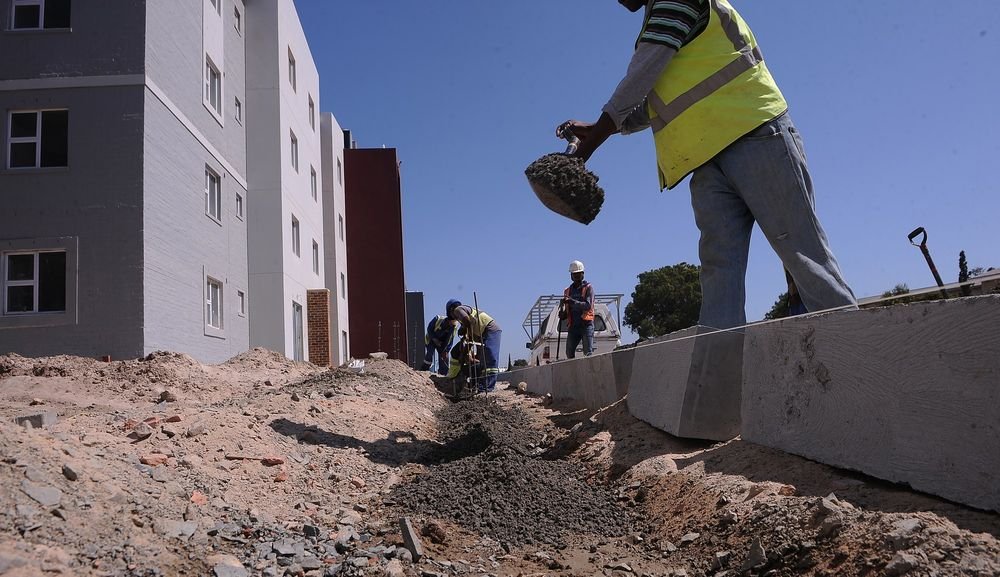
South Africa’s construction sector recorded a strong recovery in the third quarter of 2025, with the Afrimat Construction Index (ACI) recording a double-digit quarterly increase, indicating a notable improvement in industry activity.
The ACI, a comprehensive indicator of building and construction activity compiled quarterly for Afrimat by economist Dr. Roelof Botha, increased by 10.2% quarter-on-quarter, far outpacing the country’s GDP growth rate of 0.9%.
Although construction sector activity significantly outpaced GDP in the third quarter, it lagged behind overall economic activity compared to the third quarter of last year.
Importantly, the index broke a long-term downward trend in its four-quarter moving average, registering a slight uptick for the first time in several quarters.
Dr Botha said the latest results were driven by widespread improvements across the sector.
“While most indicators recorded double-digit growth rates, construction materials production recorded the second-highest year-on-year growth and third-highest quarter-on-quarter growth,” he noted.
A 25 basis point decline in prime overdraft rates over the same period also helped stimulate activity, particularly in building plan passages and hardware retail sales.
Of the 10 indicators tracked by the index, only construction (in real terms) did not show quarterly growth.
Botha warned that the weakness in capital formation, which is usually a key driver of construction work, should concern policymakers.
He said: “The lack of progress in capital formation in the economy, which is generally associated with a key element of construction work, should be of concern to the government, as the country is in dire need of repair and expansion of infrastructure, especially roads, water and sewage systems.”
Still, Mr Botha said South Africa’s growth prospects were improving, supported by lower interest rates and stronger fiscal stability.
“The latter is supported by the price developments in gold and platinum, which played a key role in ensuring a healthy cumulative trade surplus in the first 10 months of this year,” Botha said.
Looking ahead, Botha expects construction activity to continue to recover following the recent reduction in the prime rate to 10.25%, but warned that further rate cuts are needed to bring South Africa’s cost of capital in line with that of its major trading partners.
“While the gradual easing of monetary policy is to be welcomed, further rate cuts are needed to bring South Africa’s cost of capital in line with its major trading partners.”
Afrimat CEO Andries van Heerden said the company is already seeing positive contributions from its recently acquired Lafarge assets and is beginning to realize the potential identified at the time of the acquisition.
“These assets experienced some neglect during the Competition Tribunal approval process, but are now beginning to fulfill the potential we originally identified.”
Although the central government has not yet rolled out large-scale maintenance and infrastructure development programs, Afrimat is benefiting from increased state and private sector activity.
Van Heerden added that the group’s cement plant in Lichtenburg has reached break-even point and reliability and production continue to improve.
He said: “Previously closed quarries have also successfully reopened and are now receiving meaningful orders and margins are stabilizing. This trend is consistent with recent construction sector data as reflected in the ACI and supports South Africa’s recent credit rating upgrade.”
He said the strong demand for aggregates and cement (both bagged and bulk) reflects the broad-based upside shown by ACI and supports South Africa’s recent credit rating upgrade.
“Although losses in the first half of the financial year are not fully recovered, we do not expect them to widen further. Demand for cement remains strong in local and regional supply areas, reflecting strong demand for aggregates,” he said.
Mr. Van Heerden credited progress in improving cooperation between state leaders and the private sector.
“We believe that public-private collaboration will foster sustainable growth for all South Africans.”
He added that Afrimat’s diversified position as a multi-product, mid-sized mining company places it well placed to support South Africa’s anticipated growth trajectory.
business report
