


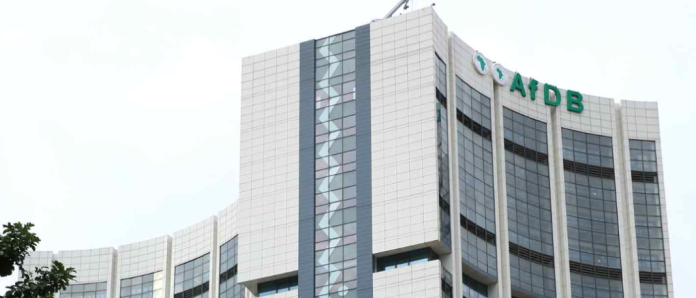
The African Development Bank becomes the first multilateral development agency to be admitted as a member of the Berne Coalition, gaining direct access to an industry that will deploy approximately $140 billion in insurance capacity for emerging markets in 2024 as part of efforts to mobilize private capital for infrastructure projects in Africa. The announcement was made during the 4th Insurers and Export Credit Agencies Day held in Rabat, Morocco on 25 November, ahead of the 2025 Africa Investment Forum Market Day.
Berne Association President Yuichiro Akita formally approved the membership at a meeting attended by more than 50 insurance companies, brokers, export credit agencies and risk mitigation companies from around the world. The Berne Union represents the leading global association for the export credit and investment insurance industry, and its members provide approximately $2.5 trillion in payment risk protection annually to banks, exporters and investors around the world. This represents 13 percent of the world’s cross-border trade in goods and services.
This accession is expected to facilitate the creation of guarantees, insurance-backed lending, and risk-sharing tools designed to increase confidence in private lenders in African markets. African Development Bank officials said the move should make it easier to work with export credit agencies and insurance companies in project finance transactions across the continent, especially for large-scale infrastructure developments that require complex risk mitigation measures.
Insurers and Export Credit Agencies Day represents a strategic platform to strengthen risk-sharing and credit enhancement mechanisms to mobilize private capital at scale for African development. Hassatu Diop Nsere, Vice President for Finance and Chief Financial Officer of the African Development Bank, told participants that many had previously called on the African Development Bank to engage early and improve visibility into its processes and pipeline. The 2025 edition was designed to provide just that, she said.
Max Ndiaye, senior director of syndication and client solutions at Africa Investment Forum, said the bank has executed $2.3 billion worth of guaranteed transactions since 2014, helping to mobilize about $5.2 billion for projects in eight countries. The agency relies heavily on guarantees to attract private capital as African governments face fiscal pressures that limit their traditional sovereign lending capacity.
Chief Economist Dr. Kevin Chika Ulama stressed that the outlook for Africa’s economy remains strong despite global headwinds. The sector, which includes agritech and agribusiness, is expected to total $1 trillion by 2030, he noted. The renewable energy market could grow even larger, reaching $1.3 trillion, as the continent holds almost half of the world’s renewable energy potential. However, turning these opportunities into investments requires further cooperation with insurance companies and credit guarantee companies.
Detailed technical sessions in Rabat considered how to better allocate risk between sovereign and private borrowers, the type of information insurers require before underwriting, and how to involve export credit agencies in projects at an early stage. The Bank’s Risk Office pushed back against what it called outdated assumptions about Africa’s risk profile, pointing to data from the Global Emerging Markets Risk Database that shows Africa has the highest default recovery rates in the world.
To give attendees a sense of the opportunities ahead, the African Development Bank announced its 2026 pipeline of projects worth more than $200 billion. These include the $12 billion Bishoftu International Airport in Ethiopia and the Unical Gas Logistics Project in Angola, both of which the Bank is the lead arranger. This pipeline demonstrates the scale of infrastructure financing needs across the continent and the potential business opportunities for insurance companies and export credit agencies willing to get involved.
The Africa Investment Forum’s Market Day concluded on November 29 with $15.3 billion in investment interest covering 39 bankable projects, highlighting the growing global demand for African opportunities. African Development Bank Group President Sidi Ould Tarr announced the results at the conclusion of a three-day event held at the Sofitel Jardin des Roses in Rabat on the theme “Bridging the Gap: Mobilizing Private Capital to Maximize Africa’s Potential.”
Under the leadership of President Ould Tarr, the World Bank has articulated four fundamental principles aimed at strengthening Africa’s long-term competitiveness. This means mobilizing capital on a large scale, reforming Africa’s financial structure, turning population growth into economic power, and building resilient infrastructure while increasing regional value added. The strategy reflects the recognition that public funds alone cannot meet the continent’s development needs and that private sector participation is essential.
Senior Vice President Marie-Laure Akin Olugbard said Insurance Companies and Export Credit Agency Day is central to the Bank’s strategy under the incoming administration. As African governments face fiscal pressures, he said the continent’s development drive is increasingly dependent on how well institutions like the African Development Bank can mobilize private finance through partnerships with risk mitigation providers.
The 2025 Africa Investment Forum is funded by 32 global private sector organizations, twice as many as in 2024, underscoring the Forum’s growing profile as Africa’s leading investment market. Over three days, more than 2,000 delegates representing private capital providers, international investment banks, commercial banks, multilateral development finance institutions, entrepreneurs, and government representatives considered project structuring, capital mobilization, and women’s access to finance.
Approximately two-thirds of the proposed deals presented during the market day targeted the energy and transportation sectors. Chairman Urd Tarr said investors responded strongly because the projects discussed at the forum’s board meetings were backed by social and environmental impact studies and robust financial models. The Bank president announced new measures to track how commitments are translated into actual projects through an annual dashboard to monitor progress.
Established in 2018, the African Investment Forum is a multi-stakeholder and multidisciplinary platform that brings together investors and project developers. This provides a framework to support projects until they reach bankability, accelerating the financial completion of the transaction. Founding partners of the Forum include the African Development Bank Group, African Finance Corporation, Afreximbank, Africa50, Southern African Development Bank, Trade and Development Bank, Islamic Development Bank, European Investment Bank, and Arab Bank for Economic Development.
The event attracted participants from approximately 80 countries including Japan, sent approximately 100 delegates, and was the main sponsor along with African Guarantee Fund, Argest Investment Fund, Ashurst LLP, European Investment Bank, and Private Sector Development Islamic Corporation. Nadia Fetta, Minister of Economy and Finance of Morocco, stressed that achieving the Sustainable Development Goals will require $4 trillion a year worldwide, and nearly $1.3 trillion annually in Africa.
