


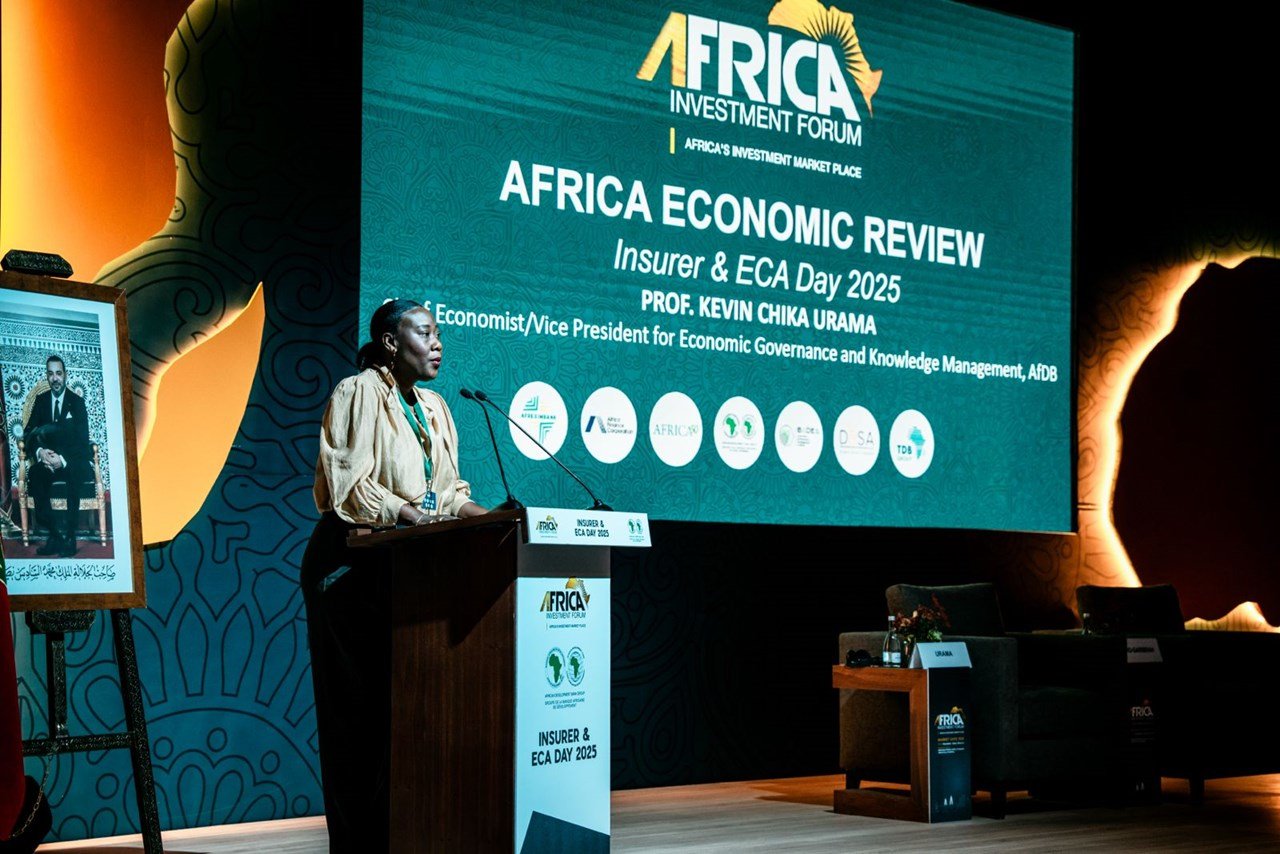
The African Development Bank Group (AfDB) convened more than 50 global insurers, brokers, export credit agencies (ECAs) and risk mitigation partners in Rabat, Morocco, for its 4th annual Insurers and ECAs Day, held on 25 November in conjunction with the 2025 African Investment Forum Market Days. The meeting highlighted the Bank’s expanded efforts to deepen risk-sharing mechanisms and strengthen credit enhancement tools that can unlock significantly more private capital for Africa’s development.
AfDB becomes the first multilateral bank to join the Berne Union
A major highlight of the event was the announcement by Yuichiro Akita, President of the Bern Union, that the African Development Bank Group has become the first multilateral development bank to be admitted to the Bern Union, the world’s largest association of export credit and investment insurance institutions. Mr. Akita noted that Bern Union member states will deploy $140 billion of insurance capacity for emerging and developing markets in 2024, demonstrating solid momentum in risk-sharing partnerships.
Africa’s growth prospects: a $1 trillion opportunity
AfDB Chief Economist Dr. Kevin Chika Ulama presented the Bank’s economic outlook, highlighting Africa’s resilient economic growth despite global uncertainties. He highlighted the huge investment potential across key sectors.
Agricultural technology and agribusiness: Projected to reach $1 trillion by 2030.
Energy market: Underpinned by Africa’s 48% share of global renewable energy potential, projected to reach $1.3 trillion by 2030.
These sectors represent transformative opportunities for retail investors seeking long-term value in emerging markets.
Sharing risk for impact: Strengthening capital mobilization
Hassatu Diop Nsere, AfDB’s Vice President for Finance and Chief Financial Officer (CFO), highlighted the event’s theme: “Sharing Risk for Impact: Accelerating Investment Across Africa with Insurance and Guarantees.”
He highlighted that the 2025 version reflects feedback from insurers and ECAs, which called for:
Early approach to project preparation
Improved visibility into AfDB processes and pipelines
A more predictable collaboration framework
Enhanced syndication and balance sheet optimization
He noted that the World Bank is expanding its private capital mobilization strategy by strengthening collaboration with the global insurance industry.
Guarantees as a catalyst for private capital
Max Ndiaye, Senior Director, Syndication, Africa Investment Forum and Client Solutions, highlighted the important role of guarantees in mobilizing insurance capital. Since 2014, AfDB has provided $2.3 billion in guarantees and helped attract $5.2 billion in private investment in eight African countries. These mechanisms reduce perceived risks and pave the way for financing large-scale infrastructure and innovative projects.
Technical session: Improving risk allocation and early engagement
Participants discussed:
Risk allocation in sovereign and non-sovereign transactions
Information requirements to support underwriting operations
Integrate insurance companies and ECAs early in the project cycle
AfDB risk awareness and due diligence framework
The Bank’s Risk Office shared findings from the Global Emerging Markets Risk Database (GEM) showing that Africa has the highest default recovery rate in the world, a key indicator that can help change global investor perceptions.
Introducing $20 billion project pipeline for 2026
The event concluded with the presentation of AfDB’s 2026 pipeline, worth more than $20 billion, including key flagship projects such as:
These projects represent a significant opportunity for insurers and ECAs to participate in Africa’s next-generation infrastructure development.
Advancing AfDB’s strategic vision
In her closing remarks, Senior Vice President Marie-Laure Akin Olugbard praised Insurer-ECA Day as a core part of the Bank’s mobilization strategy and a direct contribution to the Four Cardinal Vision of the Bank’s new President, Sidi Ould Tah.
He stressed that strengthening partnerships with insurers and ECAs is essential to bridge Africa’s huge infrastructure and climate finance gap and enable the continent to realize its full economic potential.
