


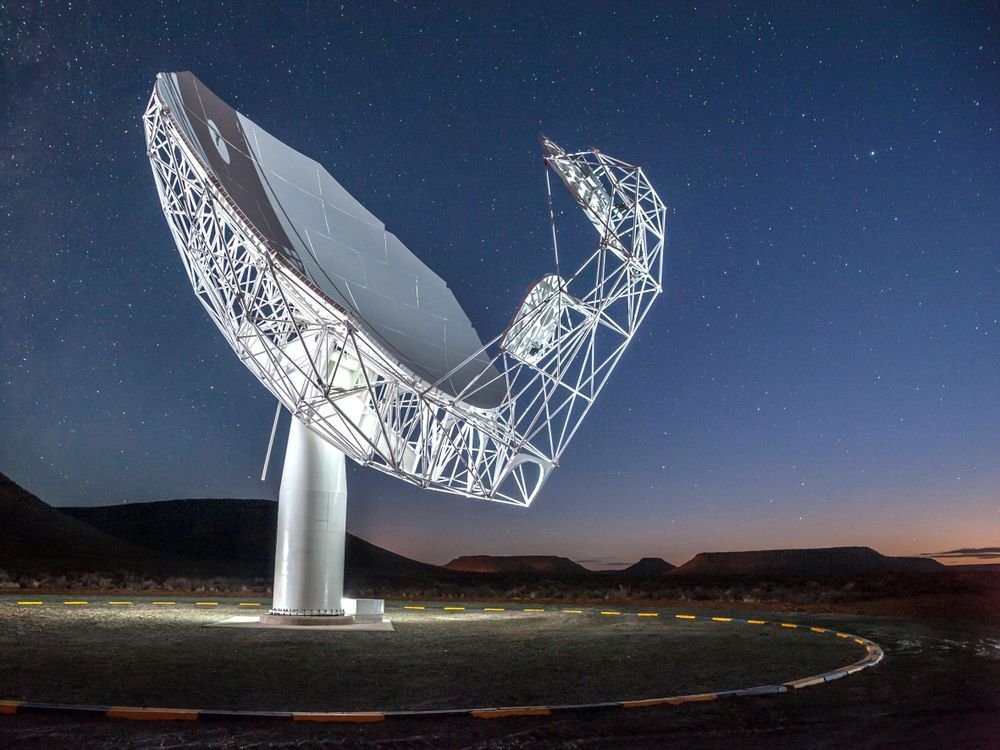
Scientific infrastructure is not only important for the generation of new scientific knowledge and the training of researchers and scientists. Scientific infrastructure also has immense potential to drive social and economic development of local communities and stimulate science tourism.
Over the past 30 years, as the Department of Science, Technology and Innovation, we have made major targeted investments in building South Africa’s key scientific infrastructure. As South Africans, we are proud hosts to the world’s largest radio astronomy project, the Square Kilometer Array. Through SKA, we have significantly strengthened international cooperation to advance the frontiers of discovery science, backed by state-of-the-art infrastructure in the fields of astronomy, computational technology, fiber optics, and engineering. In addition to this, we have also been able to use the SKA to provide significant socio-economic benefits to the community of Caernarfon and surrounding areas in the Northern Cape, where the SKA is located. The SKA project’s socio-economic benefits program is implemented by our organization, the National Research Foundation (NRF), through its facility, the South African Radio Astronomical Observatory (SARAO).
Through its Stakeholder Engagement Program, SARAO has been working with a range of community-based stakeholders in Caernarfon and the surrounding area to ensure that the socio-economic benefits of SKA are distributed as equally as possible. To facilitate this, SARAO conducts monthly community engagement sessions with the communities of Caernarvon, Williston and Van Wycksvlei. Through these sessions, the community will be provided with updates on upcoming projects and opportunities available to small businesses and unemployed community members.
As a result, the program has contributed to increased employment opportunities for engineers, technicians, project management, logistics, administrative and ancillary jobs in the construction industry. SARAO currently employs 110 staff in the Karoo, 80% of whom are from the communities surrounding the SKA site.
This includes work created by contractors participating in the construction activities of the MeerKAT/SKA project. More than 6,346 jobs have been created in the local communities surrounding the MeerKAT/SKA site.
Through its SMME development program, SARAO has enabled the Karoo community to benefit from business training, support and compliance assistance. For example, from 2024 to 2025, the following initiatives to support the development of small and medium-sized enterprises were implemented.
Provided training to eight local SMEs on the construction of concrete drifts for roads in the SKA MID Infrastructure-1 project.
Providing informal skills training and day-to-day guidance in general business compliance, payroll administration, and human resources management to eight subcontracted small businesses from surrounding communities. and
In collaboration with the Small and Medium Enterprise Development Finance Authority (SEDFA), training was provided to 16 SMEs on how to prepare tender documents and cost accounting.
SARAO also makes significant contributions to our Department’s programs to produce sufficient numbers of young, Black, and female scientists and researchers. Through its Human Capital Development Program, SARAO hosts the Surrounded Schools Program to improve mathematics and science education in local schools. The program has benefited nine schools in the area, with two maths and science teachers employed at Carnarvon High School. At the graduate level, SARAO has awarded over 200 South African faculty and postdoctoral positions and grants to doctoral-level researchers. Aggressive targets have been adopted across the talent development pipeline to increase equity in the research workforce, with over 90% of undergraduate grants awarded to black South Africans, of whom 50% are women.
SARAO has trained more than 130 young people as artisans through its artisan training program. Another exciting addition to the Department’s regional economic development program through the SKA is the promotion of science tourism in Caernarfon and the surrounding area. SARAO, in collaboration with the Northern Cape Economic Development and Tourism Authority, has launched a pilot space tourism initiative that includes the training of local astroguides. This year, 10 guides working in the tourism sector received further training. The program combines modern astronomy with indigenous knowledge and is developed in partnership with local elders and communities. An independent socio-economic study was conducted to assess the national impact of radio astronomy investments in MeerKAT and SKA projects from 2011 to 2022. Economic modeling results revealed that a total of 23,022 full-time equivalent (FTE) jobs were created across the country, production increased by R19.4 billion, GDP increased by R8.891 billion and household income increased by R4.624 billion. It has benefited 92,088 people. Given the socio-economic situation of Caernarfon and the surrounding area, SARAO also implements interventions to address social issues. This is done through early childhood development centres, sports and recreation, and community Wi-Fi connectivity.
Through all these interventions in Caernarfon and the surrounding region, the Department of Science, Technology and Innovation is actively supporting the vision of our National Development Plan 2030 and our 10-year Science, Technology and Innovation Plan, which emphasizes inclusive economic growth through job creation, skills development and infrastructure investment, particularly in rural areas.
Minister of Science, Technology and Innovation Professor Blade Nzimande;
*** The views expressed here do not necessarily represent the views of Independent Media. IOL.
business report
