


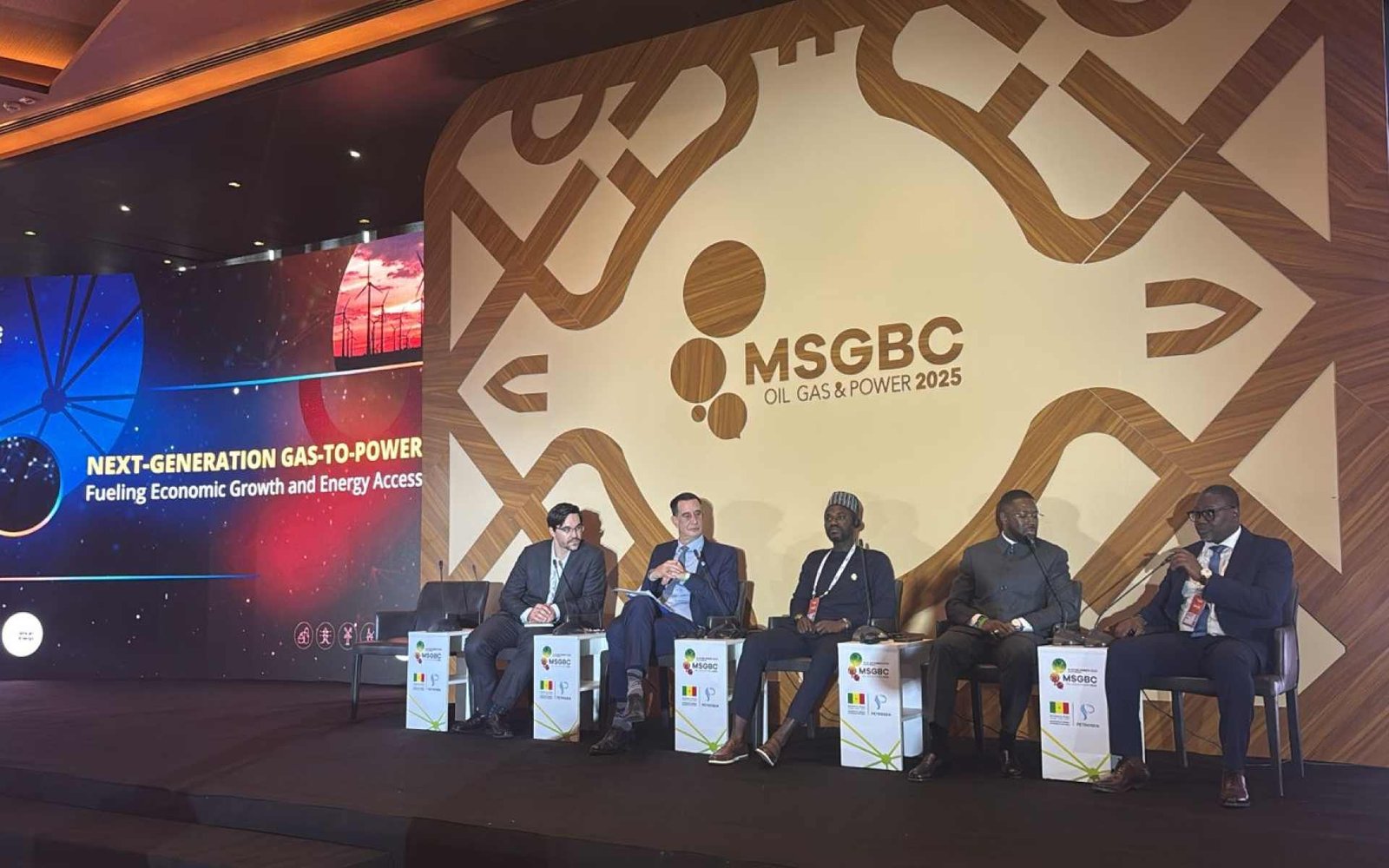
Panelists at the MSGBC Oil and Gas Power 2025 conference in Dakar on Tuesday said Senegal is emerging as a continental leader in gas-to-power solutions, combining innovative technology models and flexible project implementation to meet rapidly growing electricity demands.
Senegal’s approach is already bearing fruit, with the country launching Africa’s first subsidy-free LNG power project in July, highlighting a model that could serve as a blueprint for the region, according to Zachary Fortin-Brazeau, Karpowership’s vice president of LNG power generation and clean technology.
“This is a milestone for the continent and a testament to the discipline and strong execution here in Senegal,” said Fortin-Brazeau. He noted that Senegal’s electricity demand is increasing at 9-10% per year, making it the fastest growing country in the world. “Continuing to meet this demand requires reliability, flexibility and speed. Today’s new turbines take about five years to procure, deliver and install. This is why power ships have a long-term role to play in rapidly emerging power countries.” Fortin-Brazeau stressed that floating power ships can be deployed more quickly and at lower cost than land-based power plants and can complement renewable energy sources by providing generation that can respond quickly to intermittent supplies.
The push for gas integration is underpinned by a broader strategic shift, said Papa Toby Gay, director general of state-owned power company SENELEC. “This strategy is built on the decentralization of capacity. We understand that electricity costs are highly dependent on the type of fuel used… If we can introduce gas into the mix, we can significantly lower electricity costs,” Gay said. He added that small-scale, decentralized power plants give Senegal the flexibility to integrate gas when it becomes available.
Technical execution remains central to these efforts. Pape Momah Law, CEO of the state-run Réseau Gaziers du Senegal, emphasized thorough preparations including stakeholder consultations, mapping and environmental planning. He also highlighted the wide potential of gas infrastructure, saying: “Even today, the discussion is moving beyond just ‘gas to electricity’ to ‘gas to X’.” This reflects the ability of different industries, such as agriculture, transport, aquaculture, healthcare and fishing, to adapt and utilize this gas infrastructure to their own developments. To make this sustainable, we need a strong legal framework with strong gas regulations. ”
The economic case for gas to power in Africa was reinforced by Dr. Riverson Oppong, CEO of the Chamber of Petroleum Marketing Companies. “We have been testing gas to power not only in Ghana but also in other African countries. The technology is tested, accepted and, most importantly, very affordable,” he said. He highlighted Ghana’s experience, noting that switching from crude oil and diesel to gas significantly reduced electricity bills, demonstrating the financial impact of gas integration.
Dominique Gadelle, Vice President of Early Engagement Gas at TechnipEnergies, highlighted the pillars of success for Gas-to-Power projects from a financial and operational perspective: profitability, risk mitigation, ESG compliance, and technology integration. “Switching from fuel to natural gas is one of the most reliable routes as it can reduce CO₂ emissions per megawatt hour by around 50%,” he said. Gadel also emphasized future-proofing plans for the sector. Gas-to-power is a way to transition from coal and fuels to cleaner electricity, but the network should be ready to eventually integrate hydrogen and reduce reliance on carbon to meet future energy needs.
