


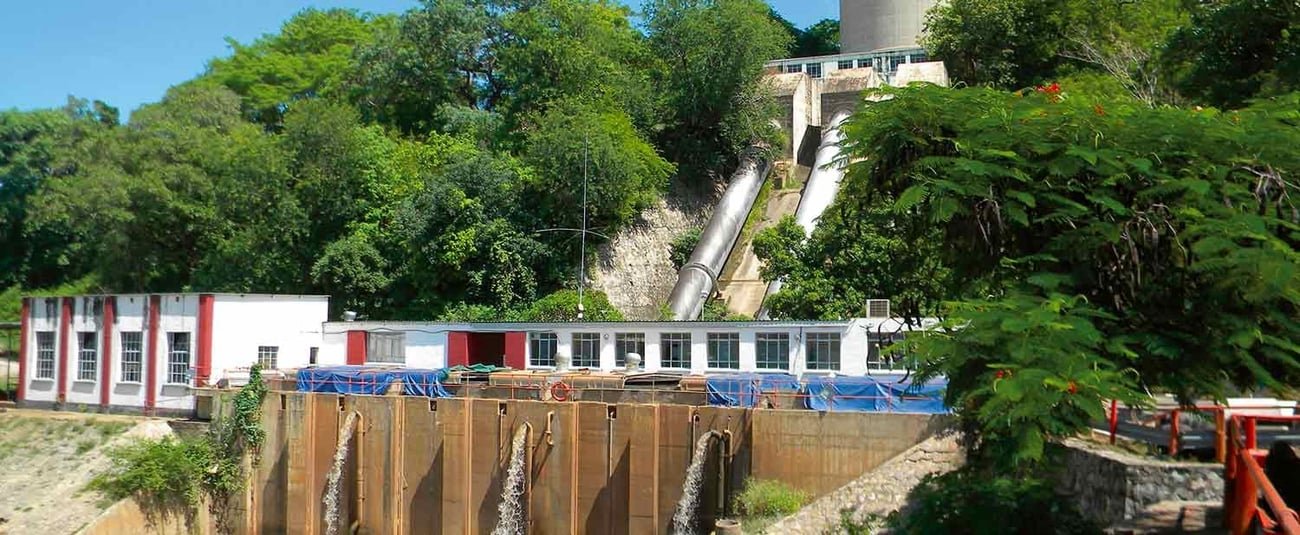
The African Development Fund (ADF) has approved a $22.9 million grant to support the rehabilitation of the Kapitjila and Nkula B hydropower stations in Malawi. Together, these two facilities provide about half of the country’s electricity supply.
The grant forms part of a broader $118.7 million restructuring program, with additional co-financing expected. The project will focus on Kapithila I, a 64MW power plant located in the Chikwawa district serving southern Malawi, and Nkula B, a 10MW power plant commissioned in 1966 and the country’s oldest major hydropower plant. Both factories are operating below capacity due to aging equipment and damage from recent cyclones.
Macmillan Anyanwu, Country Manager for Malawi at the African Development Bank, said: “This project is a foundational investment in Malawi’s economic transformation.” “By restoring these hydropower plants to optimal performance, we are not only repairing infrastructure, but also unlocking economic potential, creating jobs, and delivering reliable power to communities suffering from chronic power shortages.”
The renovation will increase annual power generation by an estimated 55%, from 916GWh to 1,426GWh, according to the African Development Fund. This work is also expected to extend the operational life of the facility from approximately 22 years to 47 years, increase plant availability from approximately 80% to 95%, and reduce forced outages.
Malawi has one of the lowest electricity usage rates in Africa, with 25.9% of the population connected to electricity. In 2022, Tropical Storm Ana damaged the Capichilla power plant, which accounts for approximately 30% of the country’s power generation capacity, exacerbating supply constraints.
The project is in line with Malawi’s Vision 2063 development strategy and the Malawi Energy Compact, signed in January 2025 under the Mission 300 initiative, which aims to provide 300 million people in Africa with access to electricity by 2030. The program is expected to support industrial, agricultural and mining activities by improving supply reliability and reducing dependence on diesel power generation.
Malawi’s state-owned power generation company will be the implementing agency. The implementation period is scheduled to run from March 2026 to December 2030.
The restructuring also aims to strengthen Malawi’s role in the regional electricity market. Planned outcomes include improved readiness for interconnection with the Southern Africa Power Pool via the Mozambique-Malawi interconnector, potential future connections to the East African Power Pool via the proposed Malawi-Tanzania interconnector, coordination with planned 132kV and 400kV transmission backbone projects, and improved integration capacity for new generations including the planned 358MW Mpatamanga hydropower project.

