


The African Development Bank (AfDB) plans to finance the Uganda-South Sudan power interconnection project, which is planned to run 299 kilometers from northern Uganda to the equatorial region of South Sudan. The bank published an evaluation report on the scheme at the end of December.
The two 400kV lines will have a transmission capacity of 1GW and will be connected from the Olwiyo substation in Uganda, which is supplied with electricity from the Karma hydroelectric power plant, to the planned metering substation in Bibia, near the South Sudanese border, to the Gambo substation, planned on the outskirts of the capital Juba. Construction is expected to begin in 2026 and be completed in 2029.
The scope of works in Uganda includes the construction of approximately 150km of transmission lines and a new 400/132/33kV substation in Bibia, integrating the surrounding 33kV network, as well as expanding the 400kV Karuma substation and increasing the Olwiyo substation from 132/33kV to 400/132/33kV.
Source: Project ESIA Report, August 2024
In South Sudan, the works include the construction of approximately 149km of transmission lines and a new 400/132/33kV substation in Gambo, in addition to 100km of 33kV transmission lines and 400km of low voltage The electricity distribution network is also included, targeting a total of 1,000 new connections to businesses, social infrastructure and households in Nimle and Juba, as well as a new 33kV transmission line to connect the existing Juba electricity grid to Gambo. Substation. The substation is designed to not only connect future hydropower facilities, but also accommodate future connections from Ethiopia and transmission to other states in the country.
The overall objective of the interconnector project is to integrate South Sudan into the East African Power Pool (EAPP) grid, specifically to address power shortages, reliability and affordability in South Sudan, which currently relies on thermal power generation, as well as provide a market for surplus clean energy generated in Uganda.
The proposed project would provide a medium-term prospect of supplying electricity to the southern region of South Sudan around Juba. Additionally, the project will facilitate rural electrification in Uganda and South Sudan in areas connected to the planned Bibia substation.
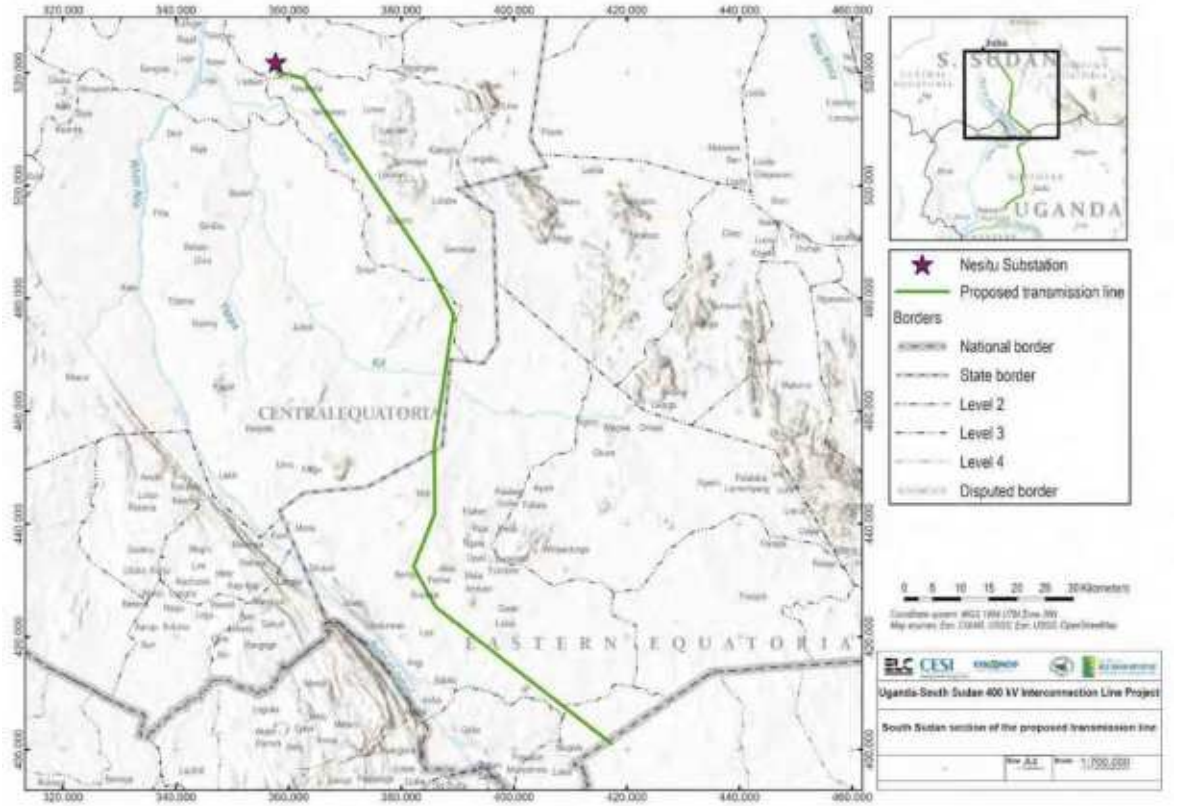
Source: Project ESIA Report, July 2024
Based on Uganda’s power generation expansion plan, the interconnector is expected to help meet the country’s demand and supply security over the long term until 2045 by providing an avenue for regional imports once South Sudan’s hydropower potential along the Nile River is developed. Additionally, the route could also improve Uganda’s supply if other cross-border interconnections such as South Sudan-Ethiopia and South Sudan-Kenya become available.
In the long term, Uganda hopes to be able to import cheap hydropower from Ethiopia and South Sudan, avoiding the realization of around 900MW of new thermal power capacity.
The total cost of the Uganda-South Sudan interconnection project is US$259.6 million, with support from the AfDB and the EU. Construction is expected to begin in 2026 and be completed in 2029.
South Sudan Electricity Corporation (SSEC) and Uganda Electricity Transmission Company Limited (UETCL) will be the project implementing agencies. According to the project evaluation report, the two countries will jointly hire a supervisory consultant who will be responsible for overseeing, managing and implementing the project in both countries.
The consultant will work with the project coordinator, the Nile Equatorial Lakes Supplementary Action Program Coordination Unit (NELSAP-CU), to assist the implementing agency in the joint recruitment of EPC contractors for the substation works in both countries and EPC contractors for the transmission lines in both countries. Contractors will enter into separate contracts with SSEC and UETCL and will be assigned separate teams for work in each country.
The interconnector project feasibility, environmental and social impact assessment (ESIA) and resettlement action plan (RAP) report was prepared by a team from Italy’s Cesi and ELC Electroconsult and Nigeria’s Colenco Consulting.
In June 2023, the governments of Uganda and South Sudan signed a Power Sales Agreement (PSA) to facilitate electricity trade between the two countries. Prior to this, a Memorandum of Understanding (MoU) was signed in December 2015 to construct a joint transmission line.
The two countries are also cooperating in the field of electricity distribution, with electricity distribution networks already in place in the border towns of Nimre and Kaya.
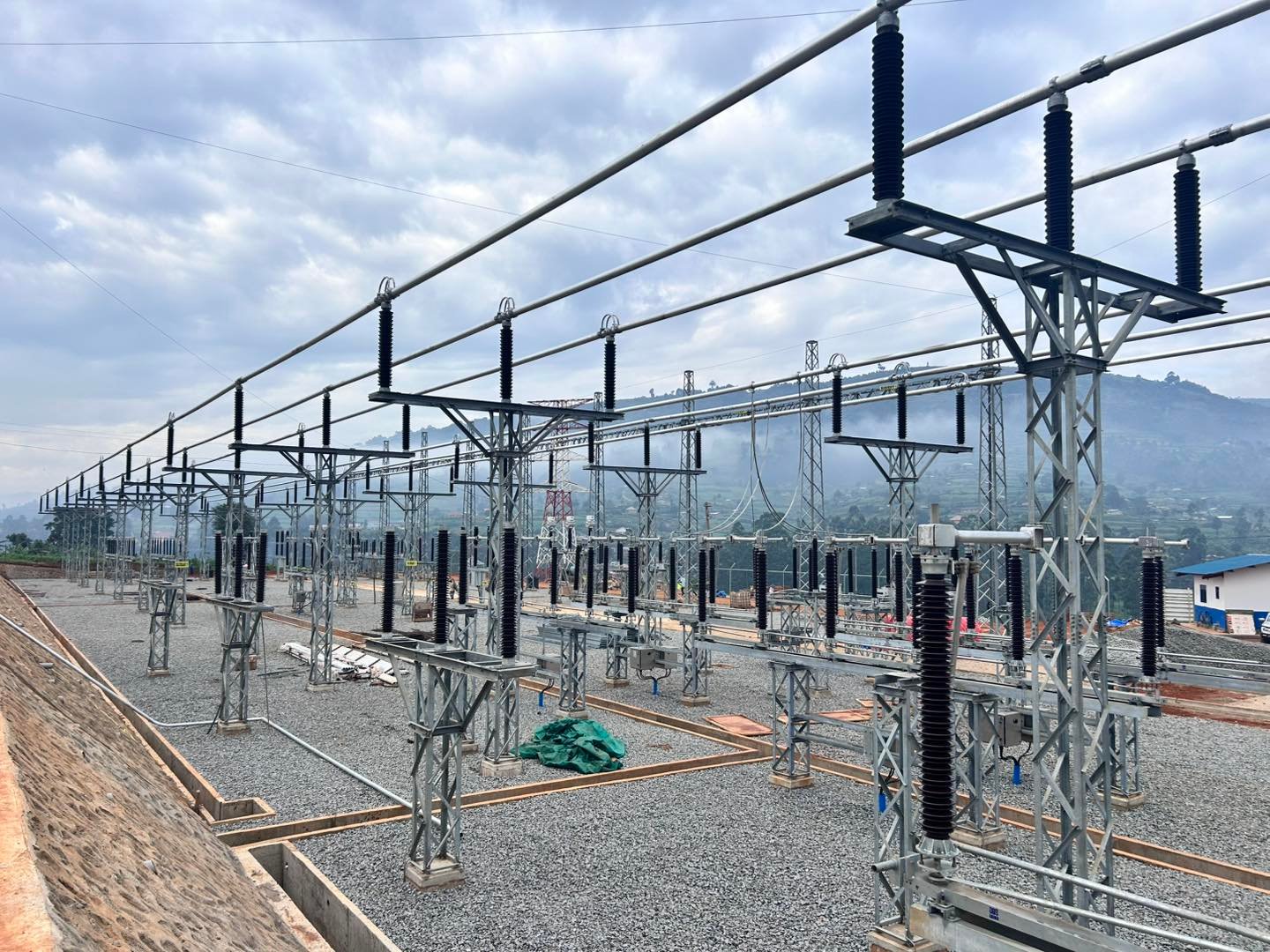
Top photo: Substation in Uganda (Source: Facebook @ UETCL)
