


Minister of Water and Sanitation Pemi Majodina has stressed the urgent need to meet the 2028/2029 completion deadline for the second phase of the Lesotho Highlands Water Project (LHWP), warning that no further extensions will be granted.
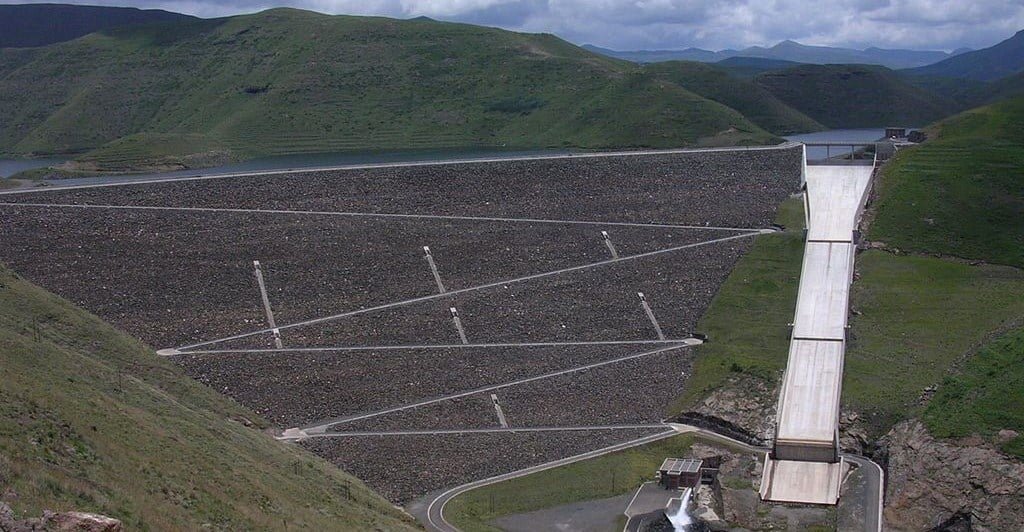
Mohale Dam, part of the Lesotho Highlands Water Project – David Love, Public Domain, via Wikimedia Commons
Majodina acknowledged progress on the project but said delays were unacceptable, especially considering the project is already nine years late.
“If we are behind schedule, we need to have a clear rebuilding plan for when and how we will catch up, because we cannot afford to delay this project any longer. The taste is in the pudding,” Majodina said.
surveillance visit
Majodina spoke to stakeholders on Sunday on the first day of a project monitoring visit and was briefed on the progress regarding the implementation of Phase II. This visit follows her commitment in August 2025 to return to Lesotho to monitor and review progress.
During the presentation, the Minister was briefed on the relocations related to the dam construction so far, including the relocation of 24 households. She was also informed that around 300 households have been affected by the project and construction of 105 replacement homes is currently underway.

Majodina expressed concern about the slow pace of relocation and questioned the root causes.
“Is it because you’re slow or is it resistance from the community? Why are the numbers so low?” she asked.
He also pointed to reports of cross-border relocation requests in Lesotho and expressed concern about the criteria guiding relocation decisions.
“Is there a framework that says we can only move up to this extent? I’m asking this because we’ve received a lot of petitions from people wanting to move from here to Ladybrand. There’s nothing in the treaty that says cross borders and that needs to be thoroughly explained. We have to act within the treaty,” Majodina said.
seek transparency
Ministers also called for greater transparency regarding spending on infrastructure development, particularly road construction.
“How many feeder roads have been built and how many kilometers? You mentioned schools, clinics and hospitals that have been built, but there is no deadline,” she said.

To date, R21 billion has been spent on the R53 billion project. The project includes the construction of a dam and tunnel network to transfer water from the Orange Senku River on the Lesotho Plateau to South Africa, while also supporting hydropower generation in Lesotho.
The water transfer components of the second stage include a 165-metre-high concrete-faced rockfill dam at Polihari, downstream of the confluence of the Kuber and Cenk-Orange rivers, and a 38-kilometre-long concrete-lined gravity tunnel connecting the Polihari and Katse reservoirs.
Once the second phase is completed, water transfers from Lesotho to South Africa will increase by a further 490 million cubic meters per year, increasing total water transfers through the Integrated Vaal River System (IVRS) from 780 million cubic meters to 1.26 billion cubic meters.
