


highlights
China Civil Engineering Construction Corporation will invest $1.4 billion in the rehabilitation of the 1,860km TAZARA railway in exchange for a 30-year concession. The goal is to increase cargo volume sixfold to 2.4 million tons per year. Rail upgrades will facilitate the export of critical minerals such as cobalt and copper from the resource-rich corridor. The development could strengthen China’s control over global supply chains for electric vehicle batteries and green technologies. The deal raised concerns from local opponents about sovereignty and transparency. Geopolitically, competition between the US and China over Africa’s infrastructure will intensify. Western countries are supporting the rival Lobito Corridor rail project.
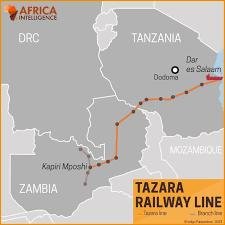
Large-scale renovation of Tanzania-Zambia Railway Authority with Chinese funds (Opens in new tab) (TAZARA) aims to transform an aging railway line built in the 1970s into a modern, profitable trade corridor within three years. Tanzanian government spokesperson Gerson Musigwa (Opens in new tab) He announced that the partnership with China would “turn the railways, which have been in decline for decades, into a regional growth engine.” It was originally built with support from China during the Cold War as a symbol of solidarity between Africa and Asia. (Opens in new tab)the 1,860-kilometer (1,160-mile) line is entering a new era of sustainability and strategic importance.
Tanzania and Zambia Railway Authority
Source: African Information Bureau
Under the new agreement signed in November, China Civil Engineering Construction General Corporation (Opens in new tab) (CCECC) – a state-owned construction company affiliated with the giant China Railway Construction Corporation – will invest $1.4 billion to rehabilitate and upgrade TAZARA. (Opens in new tab). In return, CCECC secured a 30-year concession to operate the railway. Officials project that the revitalized line will generate approximately $30 million in annual revenue (more than today’s significant losses) and represent a significant turnaround. Planned upgrades include new tracks, modern signaling systems, station and train renovations, and expanded freight capacity. Annual cargo volume is expected to jump sixfold, from approximately 400,000 tons to 2.4 million tons.
Increased trade and resources
Tanzanian authorities say the overhaul of the railway will accelerate exports of vital goods and open up economic opportunities. Minerals such as cobalt and rare earth elements, which are essential for electric car batteries and high-tech magnets, can be moved more efficiently to ports.
This could strengthen the global supply of such resources, which are in high demand for green technologies. The route will also reduce transportation costs for agricultural products and manufacturers, create jobs, and strengthen Tanzania’s role as a regional logistics hub linked to the Southern African Development Community. (Opens in new tab) network.
Local debates and Western influence
The landmark agreement sparked controversy in Tanzania and Zambia. Leaders have hailed this as transformative and in line with Tanzania’s Vision 2050. (Opens in new tab) The goal of a modern $1 trillion economy. But opponents question the wisdom of giving Chinese companies control of strategic assets for 30 years. They claim an annual membership fee of $30 million. (Opens in new tab) This may be a poor trade-off, raising concerns about sovereignty and transparency.
One Tanzanian opposition leader even denounced the project as “another corrupt project to sell out the country.” There is similar skepticism in Zambia, where there are growing calls to ensure the deal truly benefits the people and does not become a “debt trap.”
Geopolitically, TAZARA’s resurgence highlights the expansion of China’s infrastructure base in Africa, which is closely monitored by the West. The railway is located on a corridor rich in resources such as copper, cobalt and rare earths, where China already wields significant influence in global supply chains.
Upgrading this line could help diversify international access to these critical minerals, but China’s role in funding and operating the corridor could also strengthen its control over resource flows, a strategic concern for the United States and its allies. Western governments have begun supporting alternative projects, such as the US- and EU-backed Lobito Corridor Railway linking the Congo-Zambia copper belt to Atlantic ports, to provide African countries with new outlets for mineral exports and counter Chinese domination.
The rail investment standoff highlights the growing competition for minerals and trade routes in Africa.
Disclaimer: This news item is based on Chinese state media reporting. The accuracy of the information should be independently verified.
© 2025 Rare Earth Exchanges™ – Accelerating transparency, accuracy, and insight across the rare earth and critical mineral supply chain.
