


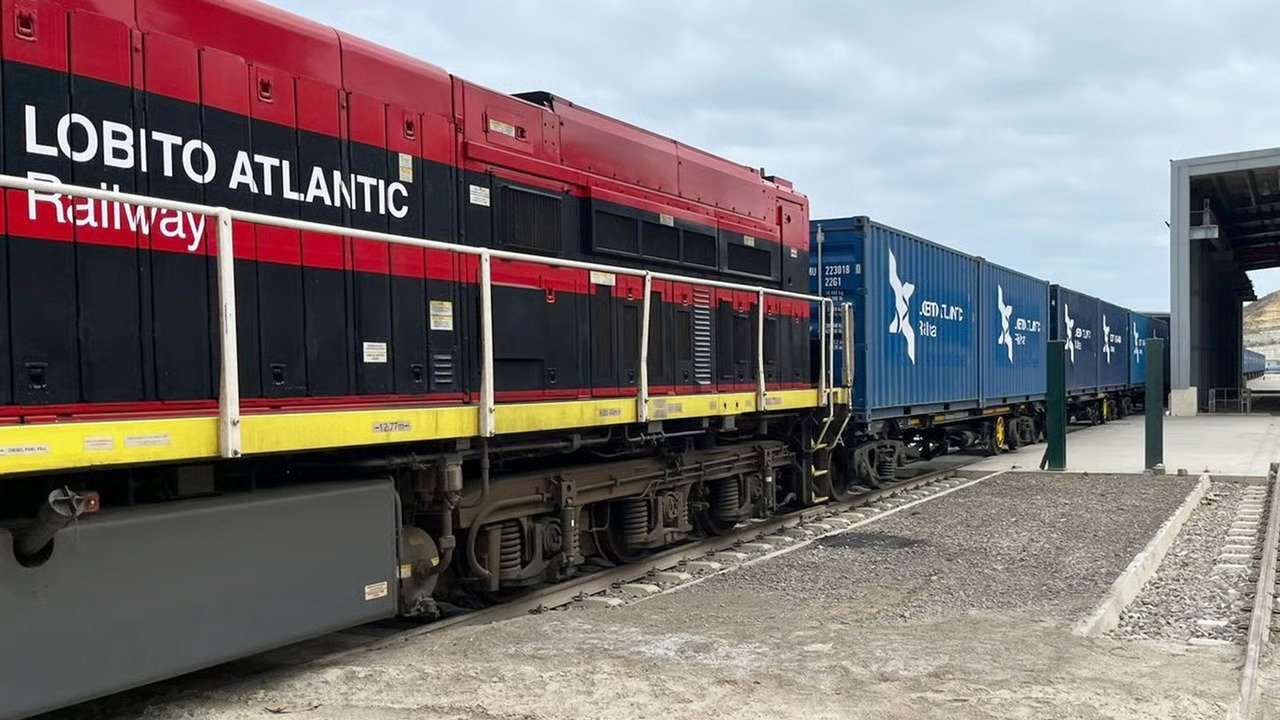
Africa’s efforts to secure a greater share of the world’s critical mineral value chains took a concrete step this week with the African Finance Corporation announcing the completion of a $753 million financing package for Angola’s Lobito Atlantic Railway, a flagship cross-border logistics corridor linking the Atlantic coast and mineral-rich Central and Southern Africa.
Alongside Eaglestone, AFC acted as joint financial advisor to Lobito Atlantic Railway SA, the concessionaire for the 1,300km brownfield railway that runs from the port of Lobito to the border with the Democratic Republic of the Congo.
The $553 million loan from the U.S. International Development Finance Corporation and $200 million from the Development Bank of Southern Africa will support the repair, upgrade, and long-term operation of the rail corridor, which policymakers and investors consider strategically essential for trade, industrialization, and supply chain resilience.
Corridor built with scale in mind
Once fully operational, the Lobito line is expected to increase annual cargo capacity tenfold to approximately 4.6 million tonnes and reduce the cost of transporting critical minerals by approximately 30%, according to project estimates. This combination of scale and cost efficiency has raised the profile of the corridor as competition between the West and Asia intensifies for access to copper, cobalt and other battery metals produced in the DRC and Zambia.
Project sponsors Mota-Engil, Trafigura and Vecturis bring expertise in engineering, goods logistics and freight rail operations to one of the most ambitious transport concessions underway in southern Africa.
“This transaction demonstrates the role that structured, long-term project finance can play in opening up regional trade,” said AFC President and CEO Samaira Zubair, noting the importance of the corridor for Angola and its neighbors.
Bets on Angola’s infrastructure
For Angola, the Lobito Atlantic Railway is more than just a transportation upgrade. This is part of a broader effort to reposition the country as a logistics gateway between landlocked mineral producers and global markets, while diversifying away from oil dependence.
Angola joined the AFC as a member state in 2022 and became a shareholder in 2025, a move that reflects the country’s increasing use of multilateral and development finance partnerships to funnel long-term financing for infrastructure development. Since then, AFC has expanded its advisory and investment reach across transport, energy and industrial projects in Angola, including complementary greenfield rail initiatives.
strategic implications
Beyond the employment and skills transfer during the construction phase, the corridor is designed to anchor downstream economic activities along the route, including warehousing, processing and ancillary services, as well as strengthen Southern Africa’s integration into global supply chains, as geopolitical scrutiny of mineral sourcing increases.
For investors, Lobito’s financing highlights the shift in infrastructure deals in Africa towards bankable export-related assets, backed by trusted sponsors and development finance institutions, structures that deliver strategic impact while mitigating risk.
