


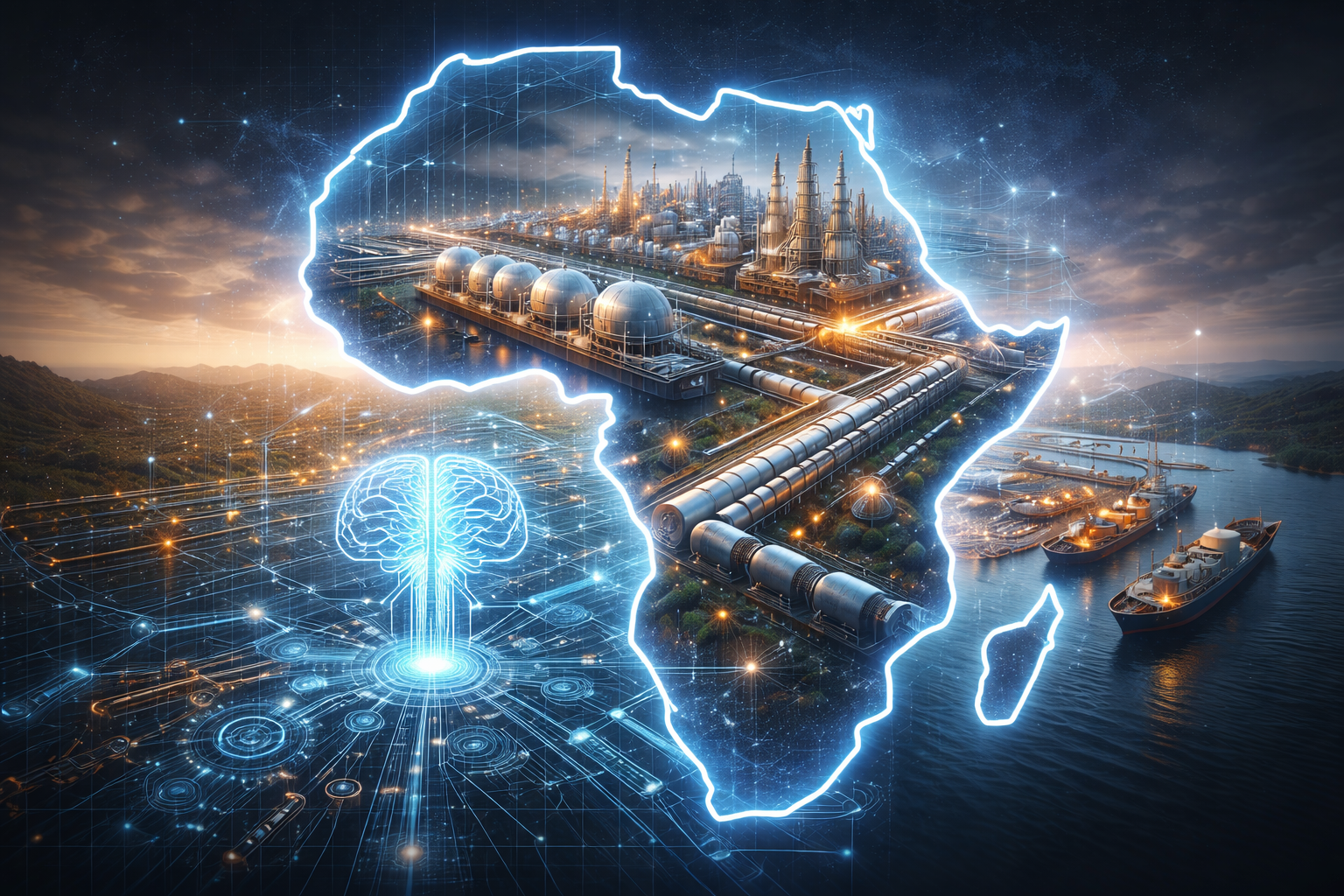
As African countries commercialize their rich oil and gas reserves and expand their export capacity, midstream infrastructure, from pipelines and storage terminals to export hubs, is moving from routine operational tasks to a critical strategic focus. Chronic infrastructure shortages continue to impede the efficient delivery of crude oil, gas, and refined products, resulting in billions of dollars in lost revenue and delaying project returns.
An expert panel on ‘Improving the reliability of midstream infrastructure’ at the Africa Energy Investment (IAE) Forum, to be held in Paris on April 22-23, 2026, will consider how artificial intelligence (AI), predictive analytics and data integration can transform the continent’s energy logistics. This session, part of the AI Forum within the Forum’s Strategy track, will introduce practical data-driven solutions to improve reliability and cost efficiency across midstream systems.
Recent developments across West Africa highlight the urgency of this debate. In Nigeria, the commissioning of Green Energy International’s Otakipo onshore crude oil export terminal, the first domestic facility of its kind in more than 50 years, has added 750,000 barrels of storage capacity and up to 360,000 barrels of throughput per day. Meanwhile, the nearly 2,000-kilometre-long Niger-Benin oil pipeline will resume exports in 2024 after previous security disruptions, reinforcing the importance of a resilient pipeline network in the region’s export strategy. As these assets grow, performance will increasingly rely on integrated monitoring, real-time data, and predictive maintenance. In these areas, AI can significantly enhance stability, safety, and cost control.
In Central and East Africa, the ongoing development of the East African Crude Oil Pipeline (EACOP), designed to transport 216,000 barrels per day from Uganda’s Tirenga and Kingfisher fields to Tanzania’s Tanga Port, further emphasizes the need for a data-centric reliability strategy. While construction milestones are being achieved, the operational phase will require advanced maintenance and monitoring across a variety of terrains and climates. Intelligent asset management platforms can optimize predictive maintenance, reduce downtime, and enhance safety across these extensive networks.
Broad regional reform and investment momentum make the conversation even more timely. Regulatory improvements in Nigeria and Angola have freed up new capital, with African producers targeting billions of dollars in upstream and midstream investment over the next decade. In Angola, a reported $70 billion investment pipeline includes deepwater development and associated infrastructure that relies on reliable transportation and processing systems to achieve full commercial potential. As investments grow, so does the need for a robust operational framework that ensures continuity and predictability.
Operational reliability does more than just reduce costs. It supports energy security, export competitiveness and investor confidence. Africa’s limited pipeline, storage and transportation networks continue to constrain revenues, and Deloitte’s Africa Oil & Gas Outlook 2025 notes that these gaps are driving up costs, lengthening project schedules and discouraging investment. By implementing predictive analytics and AI-powered monitoring, operators can shift maintenance from a reactive burden to a proactive value driver, reducing outages and strengthening the business case for future midstream investments.
The IAE 2026 Forum is an important platform for these discussions, bringing together government leaders, national and international oil company executives, investors, technology innovators, and regulators. The “Enhancing Midstream Infrastructure Reliability” panel within the Strategic Track’s AI Forum will provide attendees with practical insights into the intersection of energy and advanced technologies, moving beyond theory to real-world applications that can improve performance and attract investment.
This panel will highlight for investors and operators why midstream reliability deserves more attention in Africa’s energy policy and how AI innovation can fill critical gaps and improve competitiveness. As African countries pursue ambitious production and export goals, leveraging AI to achieve operational excellence could be the difference between unrealized potential and sustained growth.
IAE 2026 is a special forum aimed at connecting African energy markets with global investors and will serve as a key platform for deal-making in the lead-up to Africa Energy Week. Scheduled for April 22-23, 2026 in Paris, the event will offer participants two days of in-depth interaction with industry experts, project developers, investors and policy makers. For more information, please visit www.invest-africa-energy.com. To become a sponsor or register as a representative, please contact sales@energycapitalpower.com.
