


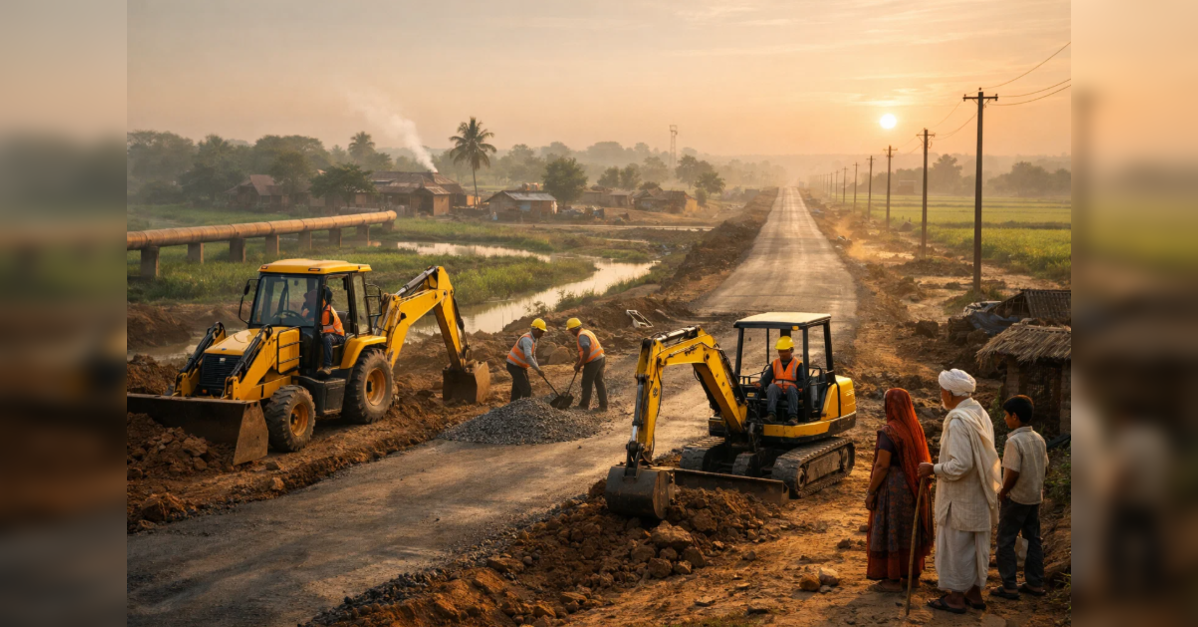
India’s construction equipment (CE) sector, once considered an import-dependent and slow-growing industry, has undergone a remarkable transformation. What was once a functional tool for urban expansion is now an important driver of rural development, economic inclusion, and global competitiveness. Today, Indian-made machines are not only shaping highways and skylines, but also paving roads in remote villages, irrigating farmland and building the foundations of a new state of Bharat. And the world is paying attention. In just a few years, India’s CE industry has gone from following the curve of the world to following the curve of the world. Driven by policies like Atmanirbhar Bharat and Ghatti Shakti, and driven by innovation across the public and private sectors, Indian CE manufacturers are building world-class machines that can compete head-to-head with the world’s leading companies. These machines can now be seen on construction sites in India as well as across Africa and Southeast Asia, a testament to India’s growing reputation for engineering.
The Indian Construction Machinery Manufacturers Association (ICEMA) pegs the domestic market at $9.5 billion and predicts it could more than double by 2030. The industry recorded record sales of over 140,000 units in FY2025 and has set a target of becoming a $25 billion market by the end of 2010, making India the world’s second-largest construction equipment market. However, there is a catch here. It’s not just mega-subway projects that are driving this growth. It is India’s small towns, villages and forgotten hinterlands.
Where the road and roots meet
With more than 65 per cent of India’s population living in rural areas, real progress lies in fostering growth at the grassroots. That’s where the CE sector has the biggest impact. Government programs such as PMGSY, Jal Jeevan Mission and Pradhan Mantri Awas Yojana have created a new wave of rural infrastructure projects, from all-weather roads and water pipes to village schools and sanitation facilities. These projects require different types of machinery that are rugged, fuel efficient and adaptable to India’s diverse terrain. Machines like backhoe loaders, mini excavators and telehandlers have become the unsung heroes of this movement, helping build canals in Chhattisgarh, dig reservoirs in Rajasthan and lay brick roads in Bihar. These machines are more than just tools. They are the enablers of change. However, making a difference in these areas requires more than just equipment.
The CE industry is also building less obvious but equally important human capabilities. Companies are investing in skills programs to train operators and mechanics in rural areas. They collaborate with NBFCs and banks to provide financing solutions to small contractors. And we ensure that spare parts and services reach even the most remote parts of the country. This support system has the knock-on effect of boosting local employment, empowering micro-entrepreneurs, and keeping the engines of progress running long after the machines have left the field.
country’s growth engine
India’s construction sector accounts for approximately 8% of GDP and employs over 40 million people. It is gearing up to become the world’s third largest city by 2025, and its fate is deeply tied to the vitality of its local infrastructure. Every time a new road is built, farmers’ access to markets is enhanced. Every electrified village is driving new business or supporting digital learning. All water tanks and drainage systems contribute to improved health and productivity. These are not isolated benefits but multipliers for India’s growth story. At the center of this is the quiet, powerful, and indispensable construction machinery industry.
As construction progresses in India, so too does smarter construction. Construction equipment manufacturers are integrating telematics, AI, and IoT to improve efficiency, enable predictive maintenance, and reduce costs. Electric and hybrid machines are also entering the market, indicating a shift towards more environmentally friendly construction.
The world is now looking to Indian manufacturers not only for economic solutions but also for forward-looking innovations. With the development of hydrogen-powered prototypes and self-driving devices on the horizon, India is preparing not just to participate, but to lead.
What lies ahead: Building for Bharat, with Bharat
The next big leap is not about how many machines we export, but how many lives we impact. The real opportunity for the CE sector lies in designing India-first solutions that are cost-effective, durable, locally maintainable and operated by a trained and empowered workforce.
Because architecture in Bharat is not just concrete and steel. It’s about dignity, opportunity, and progress in reaching the final mile. It’s about putting powerful tools into the hands of people who have waited too long for a fair chance to develop. In this mission, the Indian construction equipment industry is not just a partner, but a catalyst for change.
(The author is Manish Mathur, CEO-Cranes, ACE-Action Construction Equipment. Views are personal.)
