


The findings highlighted ongoing infrastructure and logistics constraints on the continent, despite significant improvements in some terminals.
Lloyd’s List’s latest assessment shows a strong recovery in global container traffic. Global throughput in 2024 will reach 743,600,000 twenty-foot equivalent units (teu), an 8.1% year-on-year increase, marking a recovery from volumes held back for several years by pandemic-era turmoil and geopolitical tensions.
Asia continues to dominate global trade flows, with Chinese ports alone accounting for more than 40% of total container throughput.
North America and Europe also gained momentum, supported by supply chain changes, increased consumer spending and strategic inventory replenishment.
Africa’s top performing ports ranked globally
Below is the only African terminal listed in the world’s 100 best container ports.
Africa still plays a modest role in global container shipping, with only four ports listed in the Lloyd’s List Top 100 for 2025.
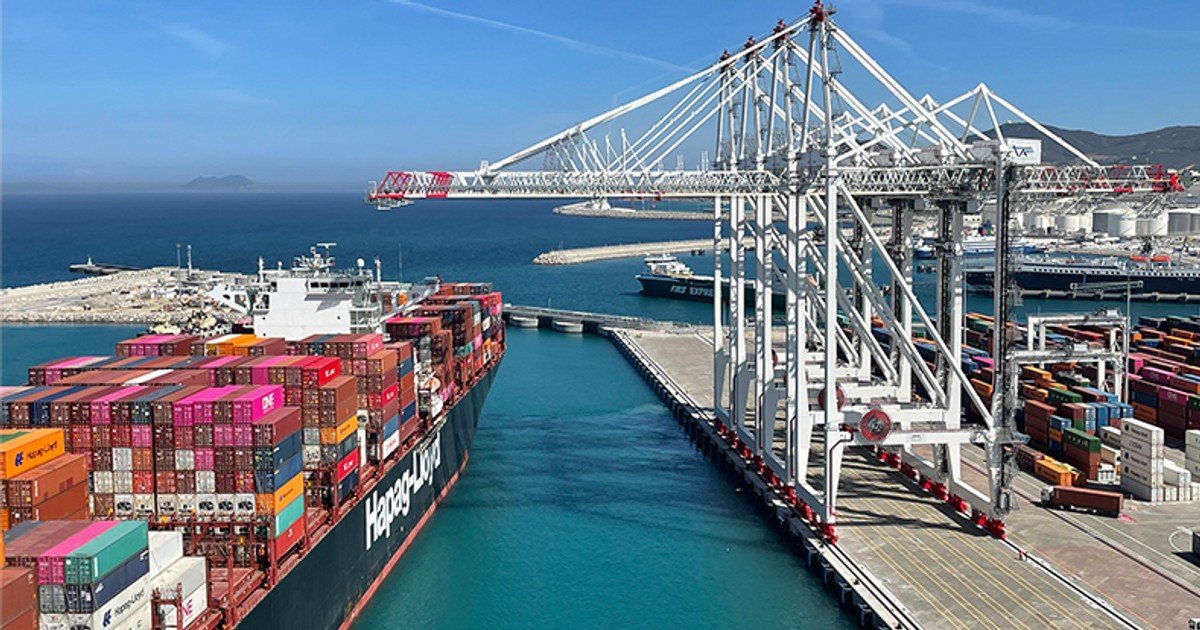
Morocco’s Tanger Med remains the continent’s strongest performer, processing more than 10.2 million TEU in 2024, ranking 17th in the world. This is a jump of 18.9%, reinforcing its role as a major transshipment gateway.
Egypt is followed by Port Said in 53rd place, but its 3.9 million TEU was slightly reduced due to Red Sea disruption. Alexandria continued its momentum, reaching 2.2 million TEUs and recording the fastest throughput growth in the region.
Why is Africa lagging behind in global logistics competition?
The continent’s transport performance continues to face severe strain from global and regional disruptions.
Meanwhile, major Western airlines are cutting back on operations on some West African routes, citing lower cargo demand and capacity constraints.
At the structural level, limitations in port automation, transport capacity bottlenecks, slow cargo clearance, and lack of rail connectivity continue to reduce competitiveness. Many African economies remain highly import-dependent, with low incentives for large-scale transshipment investment.
While the four ports listed are showing positive signs, the continent needs to accelerate investment in maritime infrastructure, digital logistics systems and supply chain security to prevent further marginalization in global trade.
