


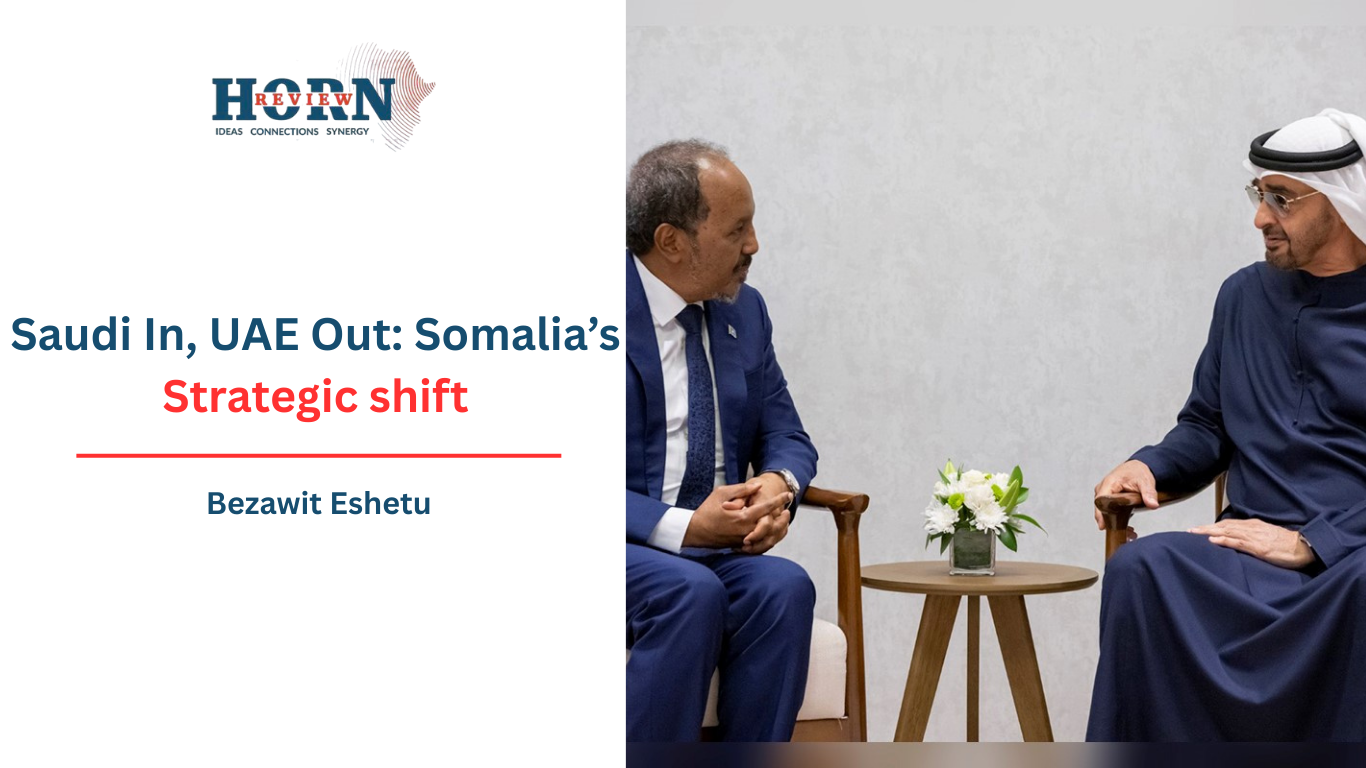
The Council of Ministers of the Federal Republic of Somalia has formally terminated all existing security and defense agreements with the United Arab Emirates (UAE). This decision was made by the Cabinet and is aimed at protecting national unity, territorial integrity, and constitutional order. The announcement was made in early January 2026 during a turbulent period in the Horn of Africa, and was accompanied by a ban on the use of Somali airspace by military and cargo aircraft owned or leased by the UAE. This indicates a significant increase in tensions in the region.
The move stems from allegations that the UAE allowed Yemeni Southern Transitional Council leader Aidars al-Zubaidi to transit through Somali territory without permission. Al-Zubaidi, a key figure in Yemen’s separatist movement, is said to have fled from Aden to Somaliland, boarded a UAE-linked flight to Mogadishu without permission from the Somali government, and then headed to Abu Dhabi. The incident not only highlights Somalia’s fragile sovereignty, but also shows how rivalries in the Gulf project are expanding beyond the Red Sea, turning the Horn into a competitive battleground that values strategic posture over stability.
This dismissal is more than just a diplomatic dispute. This reflects Mogadishu’s efforts to assert control in response to ongoing dissatisfaction with Emirates influence. Historically, the UAE has invested heavily in the region, often bypassing central authorities and building relationships with local entities. In Somaliland, which claimed independence in 1991, Abu Dhabi secured a long-term lease on the port of Berbera and turned it into a military and commercial center rivaling the strategic importance of Mogadishu.
Its presence could weaken Somalia’s grip on the Bab el-Mandeb Strait, a key route for global trade, and the disruption could affect oil shipments and raise energy prices around the world. By supporting Somaliland’s autonomy, the UAE is effectively weakening Somalia’s unity and challenging the conventional wisdom that investments in the Gulf promote development. Instead, they often deepen divisions to gain exclusive access to ports and resources, demonstrating a strategy of calculated fragmentation rather than true partnership.
A similar move occurred in Yemen, as the UAE’s support for the Southern Transitional Council weakened the central government. The STC took control of Aden and much of southern Yemen with Emirati support, including military training and infrastructure deals that catered to Abu Dhabi’s interests in the Arabian Sea. This relationship reduces the strategic need for a united Yemen, as areas controlled by the UAE provide an alternative base for expanding influence in the Indian Ocean.
Both situations show trends. The idea is that a divided state would make it harder for Iran-backed forces like the Houthis to control the country, so the UAE would strengthen the separatists, reaping economic benefits while indirectly undermining Iran’s influence. However, this approach complicates the recognition of the Gulf states as unique. It reveals rifts within the Gulf, where one country’s short-term advantage increases the region’s long-term instability.
The link between the situations in Somalia and Yemen points to a deliberate Saudi strategy to maintain a federal structure not to promote regional harmony but to protect Riyadh’s strategic interests that increase its influence. In Somalia, the unified state, including Somaliland, is strengthening its control of the Gulf of Aden, which is essential for monitoring maritime threats and securing trade routes. Without Somaliland, Mogadishu would lose the potential of Berbera port, its geopolitical importance would decline, and it would no longer be a reliable partner for Saudi goals of countering Iranian influence.
Similarly, in Yemen, maintaining control of the south, including the key port of Aden, would ensure dominance of the Bab el-Mandeb Strait, a key corridor for global oil trade. An alliance between the southern separatists and the UAE would undermine this control and reduce Saudi competitiveness in energy security and regional power relations. Riyadh’s concerns about such an outcome stem from concerns that a successful secession would foster similar divisions, weakening networks of allies and allowing rivals like Abu Dhabi to gain dominance in the Red Sea.
Saudi Arabia does not act as a benevolent stabilizer. Rather, they are self-interested actors focused on maintaining influence in the federal structure to strengthen their position. Interventions, whether by coalition leadership in Yemen or potential action in Somalia, are focused on countering UAE aggression and maintaining a unified buffer zone against threats like the Houthis and al-Shabaab. Although framed in the language of unity, this strategy often exacerbates local conflicts by prioritizing centralized control at the expense of more inclusive governance and perpetuating a cycle in which external support undermines internal reconciliation.
However, this self-serving strategy has led countries facing UAE-backed divisions to seek direct Saudi support as a countermeasure. In Somalia, this dynamic is underlined by the defense minister’s recent plea for Riyadh to intervene militarily against Somaliland’s separatist ambitions, a request reinforced by rising tensions following Israel’s recognition of Somaliland. Such appeals highlight how fragile states view Saudi involvement not as altruistic aid but as a practical means to maintain nominal national integrity under the influence of rival Gulf states.
This shift is indicative of a broader trend among Muslim-majority countries in fragile situations, which are increasingly bypassing intermediaries like the UAE and Qatar in favor of Riyadh’s military and economic influence. However, this direct engagement does not elevate Saudi foreign policy into a positive stabilizing force. Rather, it reveals Riyadh’s opportunistic pursuit of advantage, as seen in Yemen, where Saudi-aligned groups are resisting the autonomy of the Southern Transitional Council (STC). In both Somalia and Yemen, the UAE’s expansion is seen as an existential threat that Riyadh uses to contain rivals and secure its own interests, often at the expense of local cohesion.
Nevertheless, this increased reliance on Saudi intervention poses significant risks that could undermine the very stability these countries seek. In Yemen, efforts to consolidate southern powers under Saudi leadership could alienate STC supporters, reignite violence in the south, and shift focus away from the Houthi conflict, all of which serve Riyadh’s aim of central control.
Similarly, in Somalia, inviting Saudi military involvement could provoke a backlash from Somaliland, which has already branded such a move as a provocation, deepening entrenched divisions rather than resolving rifts. Compounding these risks is the potential to galvanize non-state actors such as al-Shabab, whose responses could lead to broader instability. Al-Shabaab, which is linked to al-Qaeda and controls large swathes of southern Somalia, has historically used foreign intervention to rally support and strengthen its insurgency against what it sees as a violation of Somalia’s sovereignty.
Recent reports have highlighted growing ties between al-Shabab and Yemen’s Iranian-backed Houthis, including arms smuggling in the Gulf of Aden and coordinated attacks on maritime targets. These groups, which share an anti-Saudi ideology, could interpret Riyadh’s military presence in Somalia as an extension of the conflict in Yemen, sparking a unified backlash that would amplify the threat across the region.
Somalia’s eagerness to seek foreign aid, which is rooted in its internal vulnerabilities, thus risks backfiring spectacularly. Al-Shabaab may gain ideological traction by escalating urban bombings and attacks on rural areas, casting Saudi forces as aggressors. This scenario challenges the illusion that foreign military aid strengthens weak states. In practice, it often empowers rebel groups and fuels cross-border violence that, consistent with Riyadh’s broader conflict, erodes local sovereignty.
Ultimately, this episode exemplifies an enduring pattern in international relations. In other words, the pursuit of strategic advantage in fragile states often accelerates their collapse. Somalia’s ban on UAE flights and its appeal to Saudi Arabia may provide leverage in the short term, but will foster dependence that undermines long-term autonomy. As Gulf states vie for control of the Horn of Africa’s ports and agencies, the standoff threatens to spark a cascading conflict with far-reaching global consequences. In this evolving regional context, direct appeals to great powers like Saudi Arabia reflect a calculated reliance on proven power, but also highlight the risks of involving external actors in internal conflicts. Such invitations could galvanize rebellions and create ripple effects that a single state cannot contain.
Bezawit Eshetu, Horn Review Researcher
