


In November, sustainability-minded people around the world will be watching Baku, Azerbaijan for the United Nations climate change conference known as COP29, writes Amanda Williams, head of environment and sustainability at CIOB.
I was lucky enough to attend this year’s conference and am advocating for the built environment and construction industry to be at the center of the conversation on climate action, and I hope to see climate skills firmly on the agenda.
CIOB has already signed up to the Institute for Environmental Management and Evaluation’s #GreenSkillsAtCop campaign ahead of the event. The campaign is a campaign to encourage governments around the world to place greater emphasis on green skills.
As the world’s leading professional association for construction management and guidance, our members around the world advocate for a more sustainable built environment.
There is an urgent need to close the green skills gap in the construction industry in many parts of the world, and sub-Saharan Africa is not immune to the need to rapidly develop green labor skills.
These skills, which include, for example, sustainable design and building practices, environmentally friendly techniques and materials, and efficient use of resources, are essential to developing infrastructure that supports population growth and helps achieve sustainability goals.
Africa’s population is growing rapidly, with the continent having the fastest rate of urbanization in the world, with urban populations expected to nearly triple by 2050.
This means a huge demand for new buildings and provides an opportunity to build these buildings sustainably from the start, delivering net-zero carbon and a healthy, fair and resilient built environment.
I recently heard from Mike Dean, a passionate construction manager based in Pretoria. He shared enlightening insights behind the green skills shortage facing sub-Saharan Africa.
He emphasized that although the region is rich in potential, many barriers and a lack of formal training programs can hinder the development of these important skills.
Many countries in the region lack regulatory frameworks and policy incentives to encourage sustainable construction practices. The training programs that do exist are often city-based, expensive, and only available in some countries.
Mike said economic factors were also an obstacle, as construction companies across the region relied on imports for some of the most sustainable materials and techniques. This makes their integration not only costly but also logistically difficult, especially when local knowledge regarding the use of such materials is lacking.
This high dependence on imported materials may highlight the potential for adopting bio-based low-carbon development strategies, especially given Africa’s abundance of local construction technologies and resources.
So what are some potential solutions to the need to rapidly develop these work skills?
Mike’s view, which I also support, is that several initiatives can be implemented to foster the development of green skills and support sustainable construction across sub-Saharan Africa.
At the end of the day, a lot of it comes down to the urgent need for increased funding. Investing in extensive vocational training programs, including certification in green building practices, has the potential to build a workforce with green skills.
We believe that training should be, and always should be, accessible and affordable. Emphasis should be placed on practical hands-on experience in areas such as low-carbon construction techniques, renewable energy installations, sustainable material sourcing and energy efficiency.
Encouraging universities and colleges to incorporate Green Course content and partner with local, regional and international experts could provide structured and standardized training across the region. However, training in new technologies can also be delivered on-site as part of project planning, allowing employed people to participate in the training.
Strong low-carbon transition policies are a key driver and should drive green building standards across the region’s construction sector. This can be achieved by establishing and enforcing building codes that include green standards that help create demand for sustainable practices. There are already some great examples, such as the use of green certification systems such as Leadership in Energy and Environmental Design (LEED), Green Star, and Excellence in Design for Greater Efficiency (EDGE), as seen in Ghana, South Africa, and Kenya.
Other ideas Mike told us about include encouraging local production to minimize dependence on imported materials, financial incentives such as tax breaks and subsidies, and encouraging community participation in support programs that highlight the benefits of sustainable construction and training practices.
In conclusion, sub-Saharan Africa has a young and growing population and has great potential to promote sustainable development. Developing green-skilled workers in the construction sector can be an important step in building resilient and sustainable infrastructure across the region, with co-benefits such as job creation, economic growth, and improved welfare and housing conditions.
By investing in training and promoting sustainable practices, the region can create a construction workforce with the green skills needed to meet both current needs and future challenges.
Amanda Williams is Head of Environmental Sustainability at the Chartered Institute of Buildings.
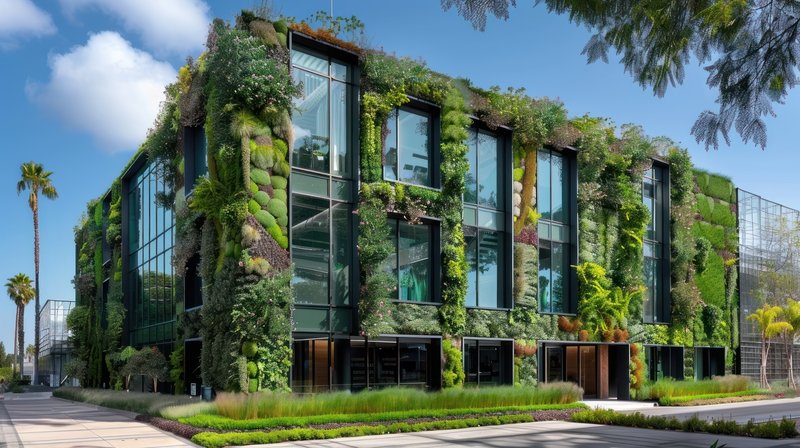
Photo: Sustainable building using recycled materials, green living walls and water-saving systems (Source: © Si Le / Dreamstime)
