


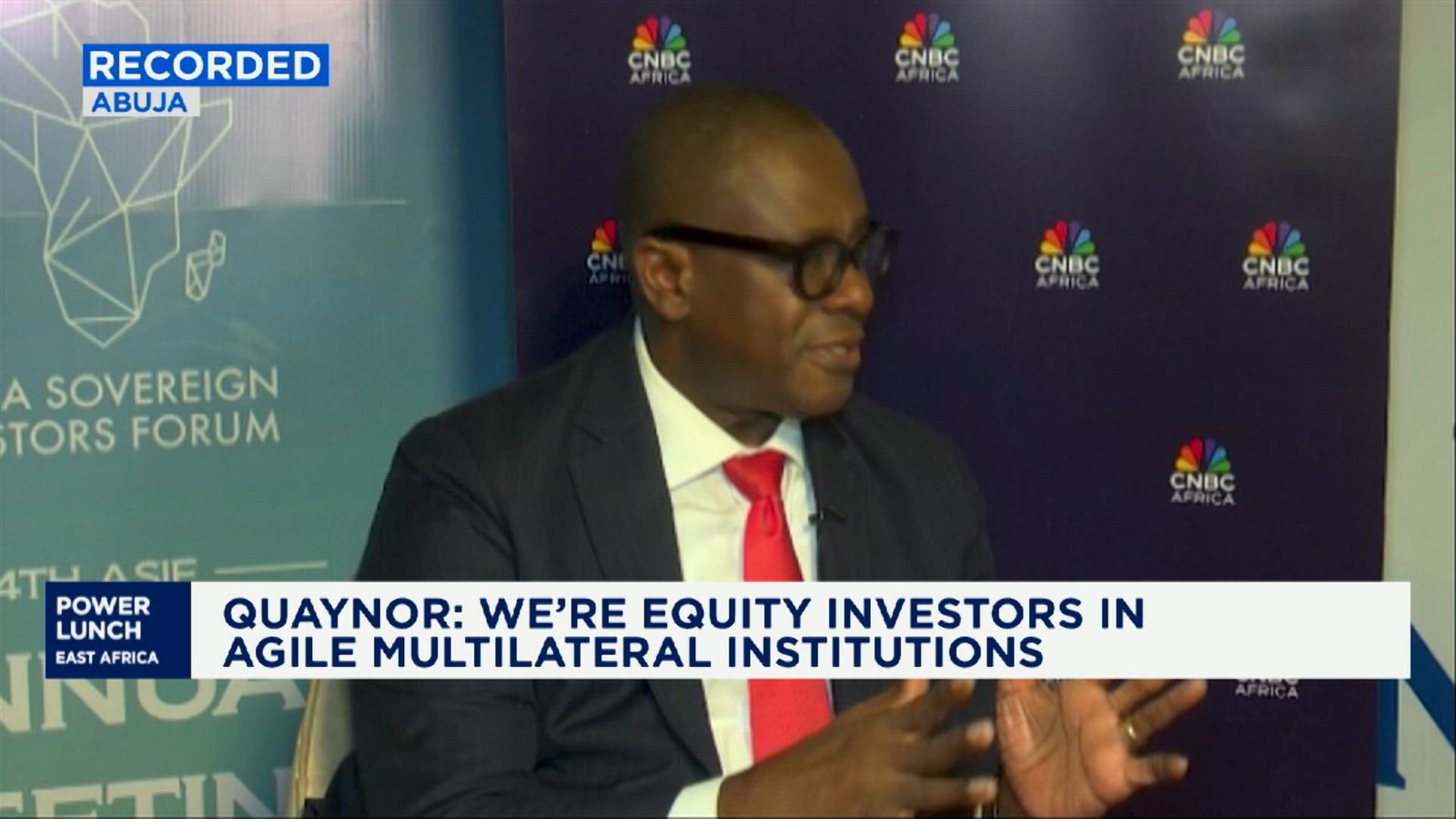
In a compelling demonstration of Africa’s financial empowerment, the African Development Bank (AfDB) and the Nigerian Government Investment Authority (NSIA) have successfully mobilized $500 million in infrastructure financing over the past eight years. This initiative highlights the growing role of African sovereign wealth and strategic investment funds in driving capital development across the continent. CNBC Africa’s David Elabi delved into this topic with AfDB Vice President Private Sector Infrastructure and Industrialization, Solomon Adegbi Koeno, at the 4th African Sovereign Investor Forum in Abuja, Nigeria.
Mr. Koeno emphasized that African financial institutions play a vital role in reshaping the continent’s economic structure. This year’s forum theme, focused on embodying collaborative efforts, reflects a commitment to harnessing Africa’s resources to meet Africa’s needs. As an equity investor in several institutions, including the African Finance Corporation and Africa 50, AfDB aims to strengthen its mandate through local entities that understand Africa’s story and can deliver projects with agility and responsiveness.
The emergence of African sovereign wealth and strategic investment funds marks an important development in the continent’s financial landscape. These funds are known for their unique ability to straddle the political and investment worlds. We are well-governed and commercially minded with a strong understanding of government’s strategic direction, as well as adept at project development and early-stage investing. For example, the cooperation between AfDB and NSIA through “infrared” has mobilized domestic capital amounting to approximately $50 billion in local currency.
Additionally, this collaboration resulted in the creation of the Nigeria Infrastructure Debt Fund, which is now Nigeria’s largest infrastructure investor. From implementing youth entrepreneurship investment banking to considering corporate financing for NSIA projects, the strategic role of sovereign wealth funds in financing innovative projects is clear.
This year’s forum highlighted several important themes, particularly the shift from knowledge sharing to co-investment among sovereign wealth funds. There is a growing trend towards cross-border projects that mobilize large domestic capital flows and attract global financial interests. However, regulatory hurdles remain significant barriers, complicating the pursuit of growth and stability in many African economies. Despite these challenges, efforts are being directed towards increasing the bankability of transformation projects.
A $500 million project aimed at fostering green infrastructure in Africa is underway. This initiative is not limited to renewable energy, but also extends to transportation, healthcare, water and communications. The strategy, with $400 million allocated for direct project development and $100 million for project preparation, aims to address often complex regulatory, policy, and institutional challenges.
A pivotal moment of the forum was the planned signing of the agreement between the Green Infrastructure Alliance and the African Sovereign Investors Forum. This partnership represents a strategic step towards increasing the scale and speed of project development across Africa.
The African Development Bank remains optimistic about the future. As Mr. Koeno noted, efforts are underway to leverage African capital for development priorities, integrating not only capital but also institutional capacity to mobilize assets from different investment pools.
Mr. Koeno referred to the role of local organizations and emphasized the need for improved financial management and strategic planning. By strengthening public financial management and clearly defining priority projects, local governments can create a more business-friendly environment that attracts private sector investment.
In conclusion, as Africa’s economic landscape evolves, the role of sovereign wealth funds becomes increasingly important. With their ability to co-invest, manage assets and drive infrastructure projects, they will play a key role in Africa’s future development trajectory.
