


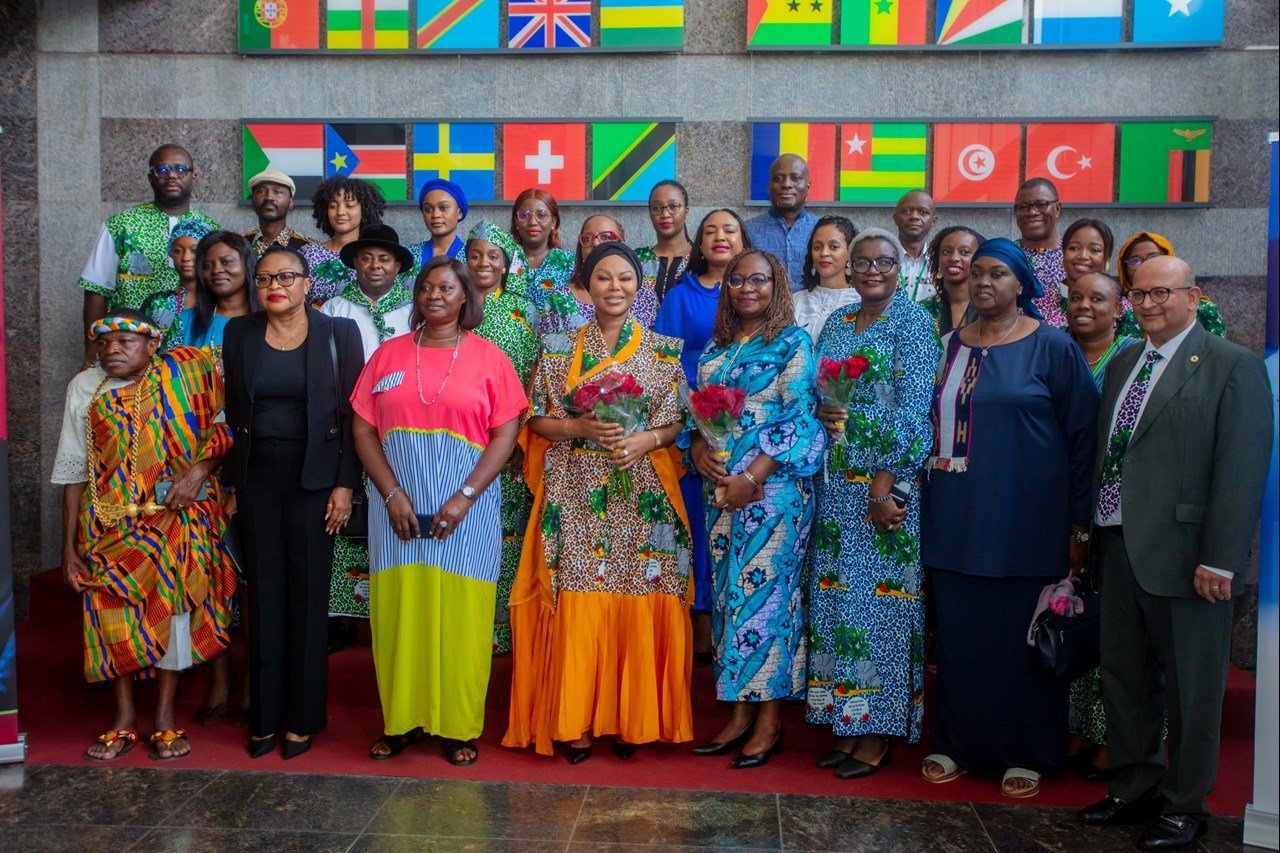
The African Development Bank Group (AfDB) held a high-level dialogue to commemorate International Women’s Day 2026, underscoring that access to justice and legal rights are central to the economic empowerment of women across Africa.
The event, titled “Justice for Her: Rights, Justice, and Women’s Economic Empowerment in Africa,” brought policymakers, legal experts, development experts, traditional leaders, entrepreneurs, and students to World Bank headquarters to explore how legal systems and institutional protections influence women’s economic participation.
The session also launched the World Bank’s month-long Gender in Focus series, highlighting how the Bank’s projects are impacting women, girls, and communities across Africa.
Women hold the key to Africa’s economic future potential
Featured speaker Nasseneva Touré, Ivory Coast’s Minister of Women, Family and Children, said that women’s empowerment is not only a social priority, but also an economic necessity.
“Africa’s development cannot sustainably accelerate if half of Africa’s potential remains untapped, and that potential is African women,” Touré said.
Marie-Laure Akin Olugbard, Senior Vice President, and Dr. Jemima Nyuki, Director of Gender, Women and Civil Society at the Bank, also addressed the participants.
The event was streamed across the Bank’s digital platforms as part of the Bank’s broader strategy to promote inclusive growth through gender equality, youth empowerment, governance reforms, and human capital development.
Access to justice is key to economic empowerment
Speakers emphasized that women’s economic empowerment begins with legal rights and access to the justice system.
In many parts of Africa, women continue to face barriers to accessing land ownership, financial services and legal protection, limiting their economic participation.
“Promoting women’s rights is not a sectoral issue, but is fundamental to national development, economic competitiveness and Africa’s long-term stability,” said Akin Olugbad.
“When women lose access to land, finances and legal protection, the entire economy pays the price in lower productivity and slower growth.”
Legal reform can unlock economic opportunities
Participants also discussed the role of legal reform in expanding opportunities for women.
Côte d’Ivoire was highlighted as an example of progress, with reforms to address gender-based violence, inheritance laws, and women’s political representation.
However, significant barriers remain. Dr. Njuki said women-owned and women-led businesses across Africa face an estimated $1.4 trillion funding gap.
This shortfall results not only from market constraints but also from inequalities in asset ownership and access to collateral, which limit women’s ability to obtain credit.
Women entrepreneurs still face structural barriers
Panelists from civil society and grassroots organizations shared experiences that illustrate the challenges faced by women entrepreneurs.
Anastasie Quadio, president of the women-led agricultural cooperative Vibrière Etraikpa de Tumoudi, said many women farmers in rural areas struggle to access bank loans.
The African Development Bank’s Affirmative Financial Action for Women in Africa (AFAWA) initiative is helping address these challenges by expanding access to capital and business support to women entrepreneurs across the continent.
Through AFAWA, Kouadio’s cooperative and tens of thousands of other women-led businesses have improved access to finance.
Bridging the gap between law and reality
Speakers also noted that although many African countries have adopted gender equality laws, implementation often lags behind policy commitments.
Judge Fatou Diakité, president of the Ivorian Magistrates Association, said legal rights do not necessarily translate into real consequences.
She cited land ownership statistics showing that women hold only about 12 percent of registered land certificates in Ivory Coast, highlighting the gap between formal rights and actual access.
Ms Diakité said improving women’s access to justice requires increasing awareness of legal rights and strengthening access to legal institutions, especially in rural areas.
Traditional leader Danho Akhraj also emphasized the influence of community leadership in supporting women’s economic inclusion.
Development agencies have a role to play
The speakers concluded that development agencies must help bridge the gap between policy commitments and actual opportunities for women.
Diris Asuagbor, head of the African Development Bank’s Ethics Office, said the African Development Bank is developing an internal justice system that combines informal dispute resolution mechanisms with formal investigation processes.
Concluding the dialogue, Dr Ramzi Ali, Director of Staff Welfare Services, Compensation and Employment Policy at the Bank, said development institutions have a broader responsibility to support gender-responsive access to justice.
The event emphasized that strengthening legal rights, financial inclusion and institutional protections are essential to unlocking the full economic potential of Africa’s women entrepreneurs and workers.
