


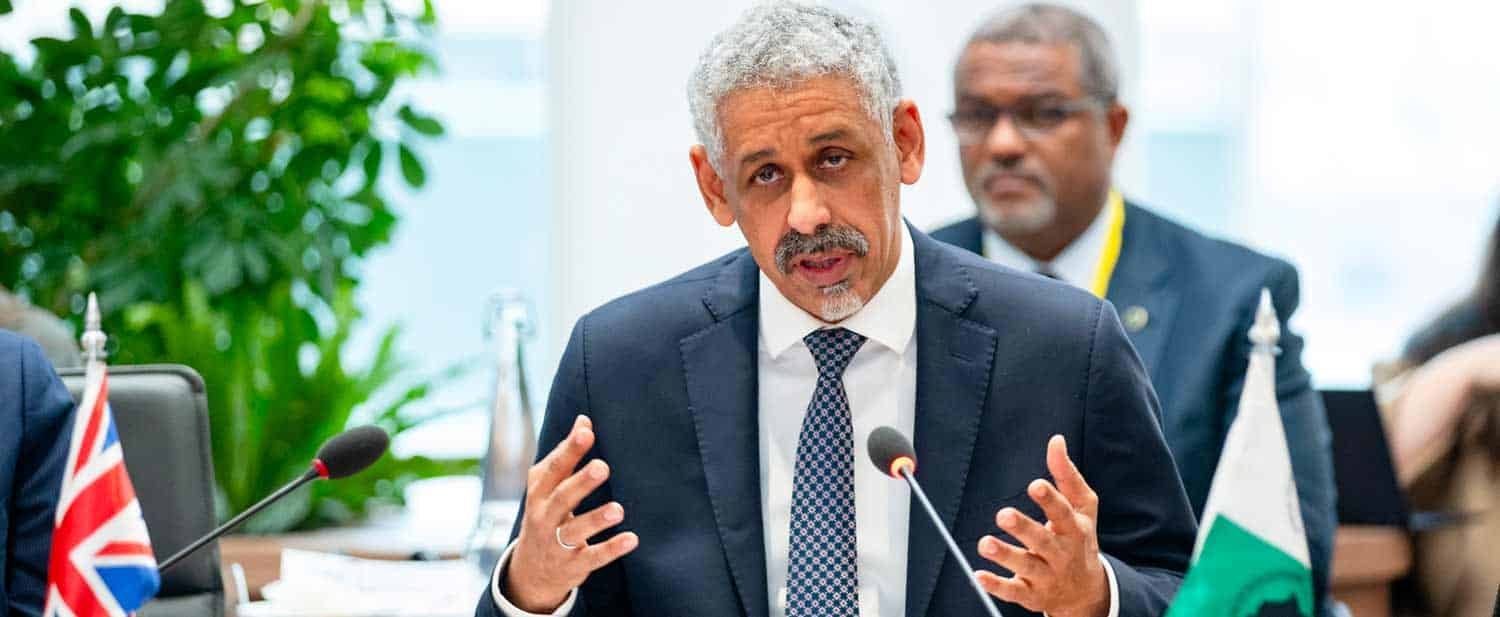
The African Development Bank (AfDB) faces a $12 billion funding shortfall after its concessional lending arm secured a record $11 billion in commitments in its latest donor round, highlighting the growing strain on development finance.
The pledge was announced after the conclusion of a two-day donor pledge conference in London that ended on Tuesday.
The triennial event marks the 17th replenishment of the African Development Fund (ADF), through which the Bank provides low-cost loans and grants to Africa’s poorest and most debt-stressed economies.
This result was a 23% increase compared to the previous replenishment, but fell well short of the AfDB’s target of $25 billion.
Despite the lack of funding, AfDB President Sidi Ould Tarr said the result was a sign of confidence in the bank’s evolving development model despite the challenging global situation.
“This is not just a replenishment, this is a turning point,” Tarr said in a statement at the end of the meeting. “In one of the most challenging global environments for development finance, our partners chose ambition over layoffs and investment over inertia.”
Why lack of funds matters
ADF plays a critical role in financing infrastructure, social services, and climate adaptation projects in low-income countries, with repayment terms often exceeding 20 years and sometimes with grants.
These capabilities have become increasingly important as many African governments face high debt burdens, reduced fiscal space and limited access to international capital markets.
While the $11 billion mobilization was the largest replenishment in the Fund’s history, the remaining $12 billion gap highlights the difficulty of maintaining concessional funding flows amid tight donor budgets, geopolitical tensions, and competing fiscal priorities across developed countries.
Donations from Africa reached $183 million
One of the most notable outcomes of the latest round was the record participation of African countries themselves.
Twenty-three African countries contributed to the ADF for the first time, and 19 countries, including Kenya, Zambia and Ivory Coast, made commitments for the first time, totaling $182.7 million.
Long-time partners also stepped up their support. The Arab Bank for Economic Development (BADEA) has pledged up to $800 million, and the OPEC International Development Fund has pledged up to $2 billion, bringing the total above the previous replenishment cycle.
US participation remains uncertain
However, negotiations were hampered by the lack of confirmed contributions from the United States, which has historically been one of the fund’s major contributors.
Ahead of the meeting, AfDB officials warned that without U.S. participation, a funding gap of about $560 million could remain. The level of Washington’s involvement in the London conference remained unclear.
In early 2025, the United States withdrew its planned $197 million contribution, raising concerns about the vulnerability of multilateral development finance to donor countries’ domestic political changes.
Despite the shortfall, AfDB officials framed the results as evidence of institutional resilience, even as this replenishment exposed the structural pressures facing concessional finance at a time when Africa’s development needs remain acute.
