


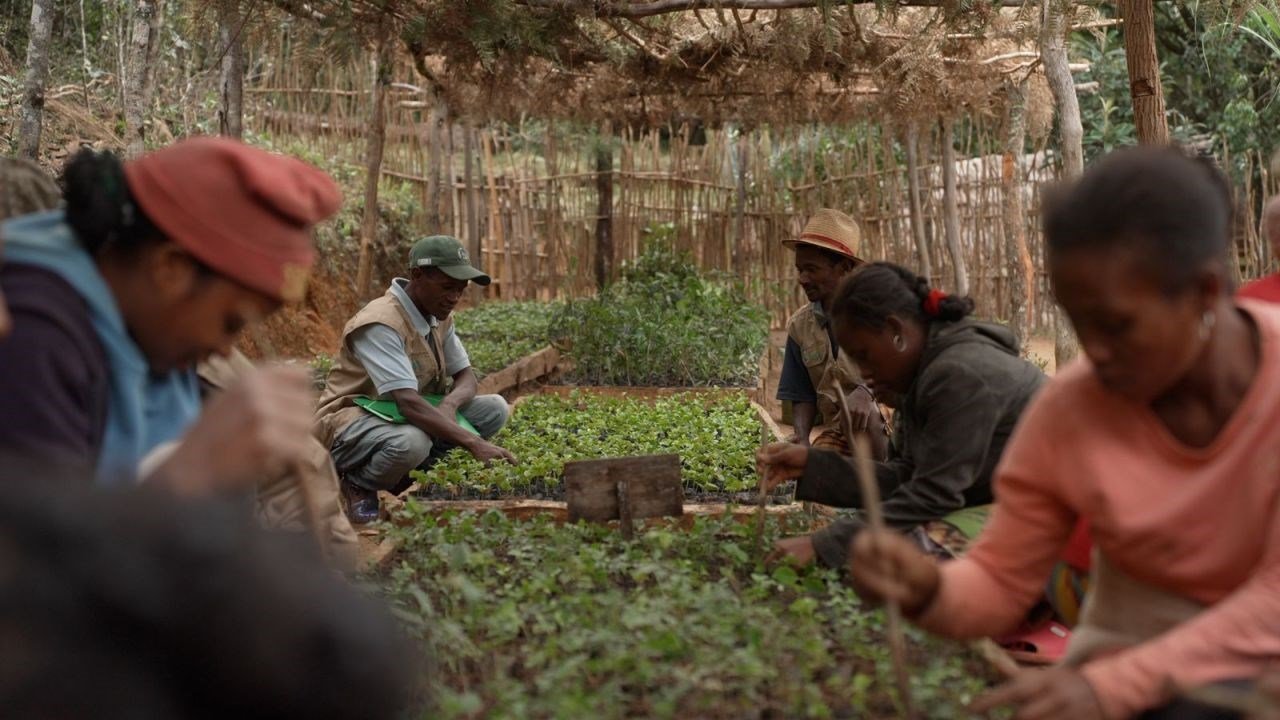
A cassava field just minutes from a country road north of Ivory Coast’s commercial capital Abidjan is quietly transforming the livelihoods of thousands of women farmers, thanks to a development program supported by the African Development Bank (AfDB).
The initiative, known as the Women-Led Staples Cooperatives Advisory Project, is helping women farmers strengthen their agricultural businesses, become more resilient to climate change and access better markets. Since its launch in 2022, the project has supported 322 women-led cooperatives, benefiting more than 21,300 women across the country.
The program recently welcomed a delegation from the African Development Bank Group, led by Dr. Jemima Nyuki, Director of Gender, Women and Civil Society, to visit women farmers growing cassava, a staple crop widely consumed across West Africa.
Building climate-resilient agriculture
During the visit, women farmers demonstrated new cultivation techniques designed to help crops withstand decreasing rainfall and climate change, which are increasingly challenging the farming community.
Although cassava remains an important crop for both household consumption and local markets, farmers in areas such as Tumoudi in central Ivory Coast face difficulties accessing commercial markets.
Challenges include limited storage facilities, inadequate processing capacity, and high transportation costs, all of which reduce farmers’ ability to secure a fair price for their produce.
Training women to manage and grow their businesses
A core element of the program is skills development and financial literacy, which will enable women farmers to more effectively manage their cooperatives and scale up production.
More than 1,500 women have received functional literacy training, giving them the basic financial and management skills they need to run profitable agricultural businesses.
“This project helped us to expand our thinking and learn to know our land better,” said Anastasy Quadio, head of the Union Vivrières Etraikpa de Tumoudi cooperative.
“We know we can expand cassava production, but we wanted to know how to finance expansion of cassava production,” she explained. “What is financial accounting? How can I become financially literate? Through this project, I was able to reach out to illiterate women farmers.”
Access to finance and added value
This initiative is being funded through the African Development Bank’s Affirmative Financial Assistance Action for Women in Africa (AFAWA) program, with $1.5 million allocated to support this project.
The program works with UN Women to provide women farmers with access to funding, leadership training, and value-added processing skills.
The main achievements are as follows.
Trained 200 women on product packaging and labeling
Governance management training for 400 union members
Supporting the improvement of agricultural processing and high added value
The project is also developing a digital marketplace called “Blaatto”, which means “come and buy” in Baule, to allow cooperatives to sell their products online and reach a wider market.
Increased income supports education
Women farmers participating in the project say their incomes have already increased thanks to improved processing techniques and market access.
With increased income, many participants were able to invest in their families’ futures, such as paying their children’s school fees.
“You are producing the food that Ivorians eat. You are processing the food that Ivorians are eating,” Njuki told the women during a community dialogue.
“Our role at the World Bank, in partnership with UN Women, is to support you,” she added.
Njuki stressed that empowering women farmers has broader social benefits, from improved nutrition to strengthening local economies.
“It is through women that our children are educated. It is through women that we are well-nourished. It is because of women’s hard work that villages like this thrive,” she said.
Seek mechanization to increase production
Despite the progress, cooperative leaders say additional investment is needed to scale up production.
Women farmers expressed interest in using agricultural machinery and improved processing equipment to increase productivity and ensure consistent quality of cassava-based products.
“We have land here. We have cassava products,” said Rose Janet Coffey, leader of the women-led agricultural cooperative Les Moissonneuse Federation.
“We’ve had entrepreneurship training and coaching. We can do more,” she said.
Promote inclusive agricultural growth
In a meeting with local officials in Tumodi, Njuki described the program as a catalyst for inclusive and sustainable agricultural transformation.
The initiative aims to foster long-term, gender-sensitive economic growth in rural Ivory Coast by strengthening women-led cooperatives, improving market access and building resilience to climate change.
