


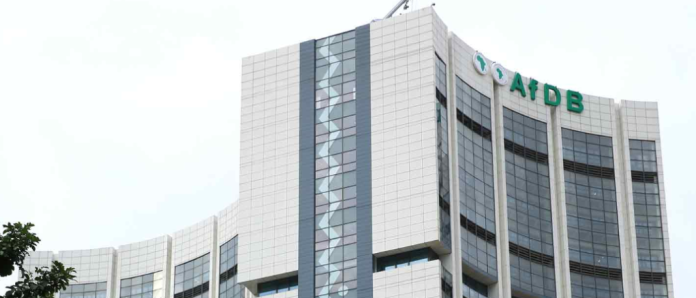
The African Development Bank Group announced significant new financial support for renewable energy projects across Africa during the ongoing Climate Change Summit in Belem. Germany and Italy have committed nearly 50 million euros to the Sustainable Energy Fund for Africa (SEFA) to step up efforts to bring electricity to the millions of people currently living without electricity.
The pledge was announced during a key event at the 30th United Nations Climate Change Conference (COP30), which runs until November 21 in Brazil. The commitment was announced at a side event focused on mobilizing commercial capital for renewable energy and energy access in Africa, and highlighted international support for the continent’s clean energy transition.
SEFA is a multi-donor special fund established in 2011 to provide catalytic financing to foster private sector investment in renewable energy and energy efficiency. The fund is managed by the African Development Bank and supports projects across three strategic priorities: green baseload production, green mini-grids and improved energy efficiency.
This new funding will directly support Mission 300, an ambitious partnership between the African Development Bank Group and the World Bank Group. Mission 300 aims to connect 300 million people to electricity in sub-Saharan Africa by 2030, addressing one of the world’s most pressing development challenges. To accelerate access to energy through Mission 300, the World Bank Group will connect 250 million people to electricity by 2030, and the African Development Bank will connect an additional 50 million people to electricity.
Approximately 600 million people in sub-Saharan Africa currently live without access to electricity, posing a major barrier to economic development, health care delivery and educational progress. A lack of reliable electricity forces communities to rely on expensive diesel generators and traditional biomass fuels, both of which contribute to environmental degradation and health problems.
SEFA has raised millions of dollars to unlock private investment to expand energy access across Africa, with Denmark, the United Kingdom, Spain and France also announcing new or additional contributions. These efforts demonstrate growing international recognition of Africa’s renewable energy potential and the need for coordinated climate finance.
SEFA currently boasts a portfolio of over $300 million in high-impact investments and technical assistance programs, with up to $15 billion in investments expected to be made and approximately 12 million new electricity connections delivered. The Fund’s performance in 2024 set records, with significant projects approved to advance clean energy in multiple countries.
At the COP30 negotiations, the World Bank Group reaffirmed its leadership in advancing Africa’s climate priorities and advocated for a decisive global scale-up of green finance to developing countries. Dr. Sidi Ould Tarr, President of the African Development Bank Group, is meeting with world leaders to secure commitment to climate adaptation and resilience financing.
Despite contributing less than 4% of global emissions, Africa is home to nine of the world’s most vulnerable countries to climate change and receives just 3% of global climate finance. This gap has been a central focus for African countries at COP30, with leaders pushing for greater direct access to climate funds through African institutions.
SEFA provides technical assistance and concessional financial instruments to remove market barriers, build a stronger pipeline of projects and improve the risk-return profile of individual investments. The Fund’s approach combines grants and technical expertise to help African countries develop bankable renewable energy projects that can attract private investment.
Recent SEFA-supported projects include solar installations, mini-grid developments, and energy efficiency programs across the continent. In June 2025, the Fund committed $8 million to a total $26.5 million financing package for the 32MW Ilute solar power project in Zambia, demonstrating how relatively modest public funds can leverage large-scale private investment.
The German and Italian efforts build on previous support from both countries. Germany is contributing €100 million to SEFA in 2021, following an initial contribution of €50 million in 2020. These investments are focused on promoting private sector participation in green baseload generation, transmission and distribution infrastructure.
Kevin Kariuki, African Development Bank Group Vice President for Power, Energy, Climate and Green Growth, will lead the agency’s delegation to the COP30 negotiations. Under his leadership, the Bank has prioritized climate-resilient infrastructure, expanding renewable energy, and supporting countries transitioning away from fossil fuels.
The timing of these new commitments coincides with the growing momentum surrounding Mission 300. At the Africa Energy Summit in Dar es Salaam in January 2025, African leaders signed an energy agreement outlining specific reforms and goals to expand access to electricity. The commitments made at COP30 provide important financial support to implement these national commitments.
Private sector involvement remains central to achieving the goals of Mission 300. Development banks alone cannot provide the estimated funding needed to electrify Africa, making commercial investment essential. SEFA’s blended finance approach helps reduce risk for private investors while ensuring that projects deliver social and environmental benefits alongside economic returns.
The African Development Bank Group has established itself as a global leader in climate finance innovation, committing $5.5 billion to climate action in 2024, nearly half of its annual commitments. This track record positions us as a trusted partner in providing international climate finance to African countries.
COP30 will continue until November 21, with negotiations focused on scaling up climate finance, accelerating the energy transition and ensuring vulnerable countries receive adequate support to adapt. The conference marks the 10th anniversary of the Paris Agreement and is an important time to assess progress and strengthen commitments.
