


Local company Kipay Energy has signed a project preparation facility financing agreement with the African Export-Import Bank (Afreximbank) for the 200MW Sombwe hydropower project in the Democratic Republic of the Congo (DRC).
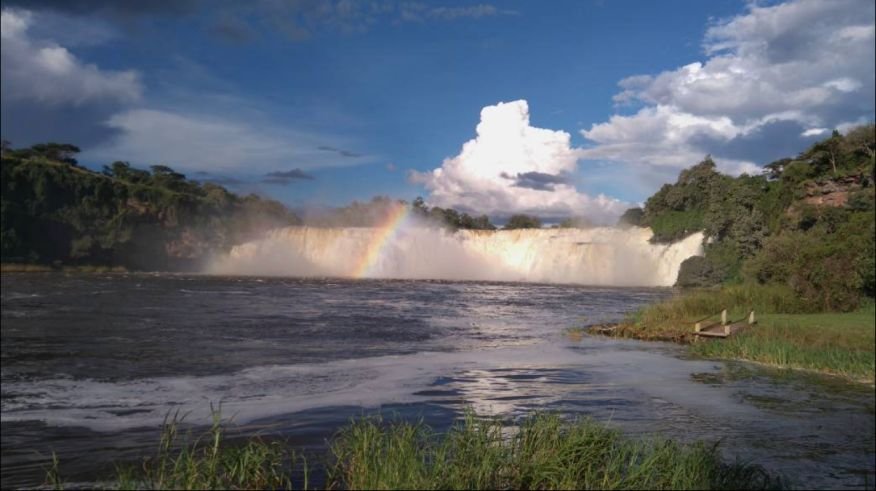
The project is located on the Lufira River, 30 km downstream from Kiubo Falls in the southern Democratic Republic of the Congo, and deep within the Copperbelt mining region of northern Haut-Katanga province.
Kipay Energy develops, designs, constructs, installs, commissions, operates and manages reservoir-based facilities for 30 years.
Afreximbank will partner with the company to fund technical and bankability studies, legal, financial advisory and financing costs for the development of the Sombwe factory. The bank will also lead the structuring of debt financing for a captive power generation project with a total investment cost estimated at more than US$500 million.
The Sombwe project involves the construction of a 94-metre-tall roller-compacted concrete arch gravity dam wall, ensuring a reservoir capable of storing approximately 320 million cubic meters. The construction period is scheduled to be four years.
Source: Knight Peasold
The project will also involve the construction of a 205km 220kV transmission line linking the power plant with the Fangourmet substation, allowing connection to the national power company SNEL’s network.
The generated electricity will be supplied to mining companies, enabling the beneficiation of minerals such as copper and cobalt in the Democratic Republic of the Congo. The facility will also expand electricity access to approximately 100,000 households in the nearby area and enhance supply to educational and medical facilities.
The Sombwe project will include a solar photovoltaic (PV) component that will generate 46MW, which will help supplement demand during the dry season, especially during low water levels. This environmental flow is also intended to form part of an electrification project aimed at empowering nearby local communities.
The power plant is located downstream of two operational hydropower facilities, the 42MW Koni power plant and the 78MW Mwadingsha power plant.
Once completed, the Sombwe project is expected to not only enhance fishing and other economic activities in the reservoir, but also facilitate the creation of over 2,000 direct jobs and 952 potential indirect jobs. Other envisaged benefits include the generation of tax revenues for the DRC government during the project period and the development of industrial clusters around the mining areas.
The project marks Afreximbank’s first private sector renewable energy initiative in the DRC.
“Afreximbank is committed to supporting the Democratic Republic of the Congo’s energy transition and strengthening the country’s energy security, while developing energy infrastructure that harnesses the vast potential of renewable energy and enables sustainable trade,” said Kanayo Awani, Executive Vice President, Intra-African Trade and Export Development at Afreximbank.
“This financing strengthens Afreximbank’s commitment to developing renewable energy projects and mobilizing private capital to secure a sustainable future for the Democratic Republic of the Congo and the region. We are also proud to be deploying innovative structures that encompass captive markets to enhance the bankability of projects.”
A technical feasibility study for the project was carried out by global consulting firm Knight Piesold and France’s Ingelop.
It is estimated that the DRC holds 50% of Africa’s waters and 6% of the world’s waters. The Central African country has a hydropower potential of 100,000MW, of which only 2.5% is currently in operation.
As of late August, DRC’s installed capacity was 2,800MW, electricity demand was 5,250MW, and overall supply was 2,100MW.
Kipay Energy is also working on the 48MW Fungurume solar power scheme in Lualaba province. Local teams from Smart Congo, LBK and EKMM began work on the project in December 2022, with construction progressing in stages. The plant is expected to be the largest solar power plant in the Democratic Republic of the Congo and the first in Central Africa to use tracker technology.
Photo above: Kiubo Falls, DRC (Source: Knight Piesold)
