


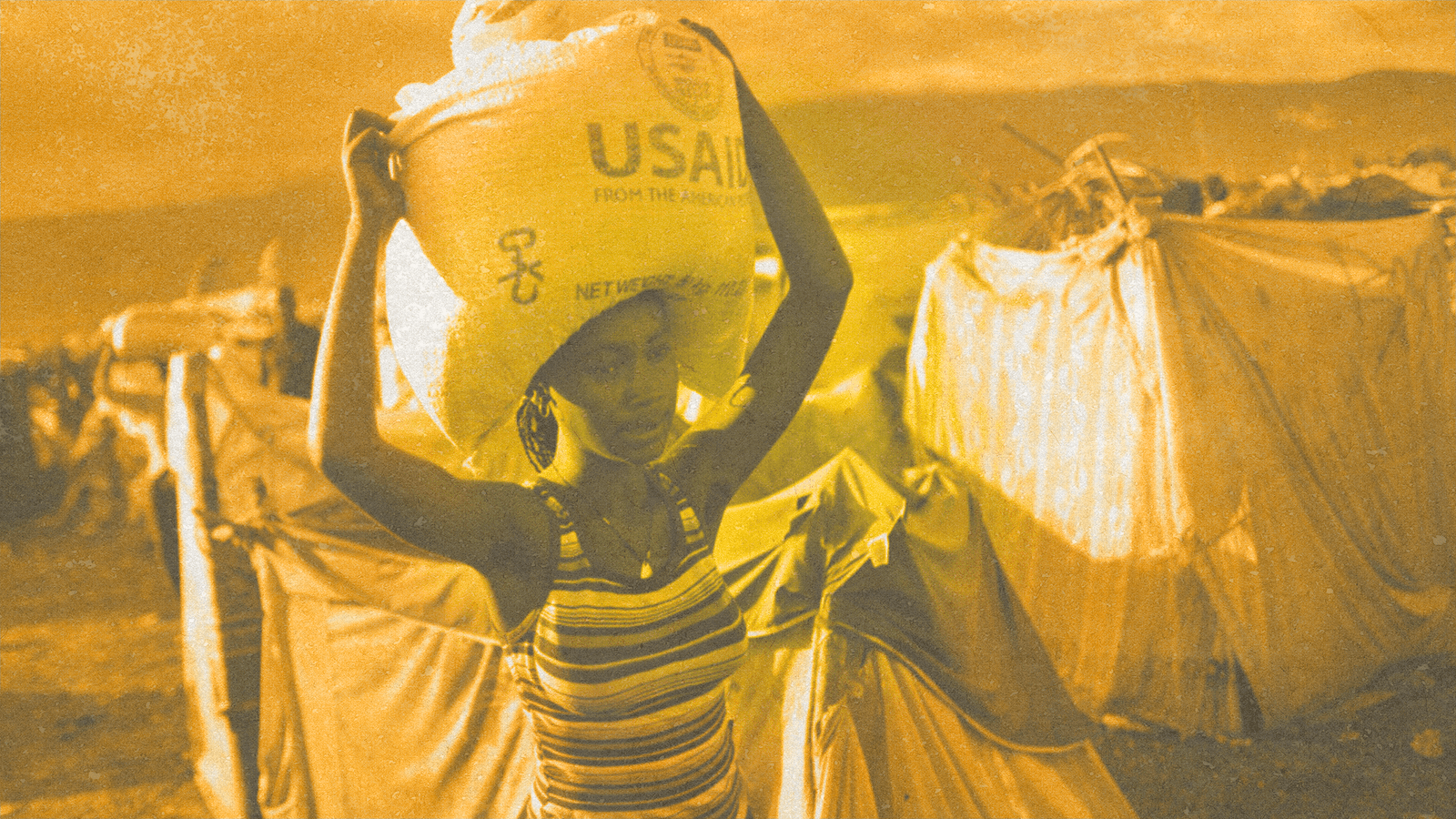
African leaders continued to advance their ambitious efforts at the World Economic Forum (WEF) aimed at fundamentally reshaping the continent’s development model, calling for an end to aid dependence and advocating greater control over trillions of dollars worth of natural resources.
The Accra Reset Initiative, led by several African presidents, including President John Mahama of Ghana, represents a concerted push by the Global South to reshape the international system.
The Accra Reset Initiative said African countries joined forces in Davos to ensure the continent’s voice was heard loud and clear, even as leaders from across the Global South representing four continents were equally pushing the agenda.
Key topics included the critical need to mobilize domestic capital, collectively negotiate on critical minerals, and build regional manufacturing capacity, rather than relying on traditional development aid, which leaders say has failed to deliver sustained prosperity.
The Sovereign Negotiators Club and the strategic blueprint for the Sovereign Prosperity Sphere, which is called a “minimum viable geoeconomic platform” for regional consensus building, are part of the Accra Reset Strategy unveiled at Davos.
“The global multinational system of governance that was widely agreed upon and accepted after World War II is disintegrating,” Mahama told a packed conference room on the sidelines of Davos.
“Africa will have a seat at the table that will decide what that new world order will look like. Africa must pick itself up on its own two feet.”
The initiative comes at a time when humanitarian aid is shrinking globally and European countries are redirecting overseas development aid to defense spending.
Accra Reset leaders described what they called the “triple burden” that is trapping African countries. Africa’s dependence on other countries for basic food supplies, its marginalization by the great powers in the design of world institutions, its vulnerability to mood swings and other cycles in commodity markets, even though Africa supplies the world’s vital minerals (yet “recovering little of its value”).
“This is not sovereignty. It’s a trap. And it’s getting worse,” Mahama said at the event.
US$4 trillion domestic capital
A central pillar of the reset is mobilizing Africa’s significant but underutilized domestic capital pool. African Finance Corporation CEO Samaira Zubair presented research showing that the continent has US$4 trillion in domestic capital, far more than the external funding it typically seeks from international donors.
“We have to take ownership of our development. We have to fund our development intentionally,” Zubair told the gathering. “We found that there is a $4 trillion domestic capital pool on the continent, and I want us all to think about that, because most of what we seek externally is just a fraction of that.”
This includes African banks with $2.5 trillion, pension funds with $500 billion, insurance companies with $300 billion, sovereign wealth funds with $180 billion, and public development banks with more than $200 billion.
“What we need to do now is accept that we are not short on capital, but rather that it is locked up,” Zubair said. “We need to look at ways to ensure that funds flow from where they are to where they are needed most.”
Nigeria’s former vice president, Yemi Osinbajo, emphasized this point when he pointed out that huge amounts of African money were invested in US government bonds rather than locally.
“Funding is possible, and I think a lot of it depends on the ability to sit down and think these things through and achieve results,” he said.
The point about redesigning strategy based on deep insight into how the world is evolving was echoed by former New Zealand Prime Minister Helen Clark.
From project to platform
Dr. Haytham El Mayyargui, Executive Vice President of the African Export-Import Bank, outlined the strategic transition from isolated projects to an integrated regional platform.
He suggested thinking beyond individual projects. “We should think about corridors, regional linkages and Africa,” he said.
Mr. El Mayargui stressed that packaging multilateral projects with value addition to raw materials, integrated logistics and linkages with the African Continental Free Trade Area will create a sustainable and irreversible structure that attracts diaspora investments, global funds and pension funds.
He pointed to a key challenge: “India and China have 1.3 billion in assets like we do, but they have one blueprint for growth. We have more than 50 blueprints. And if we don’t start creating those blueprints, we’re going to continue to miss out on people who want a consistent financial plan.”
Policy clarity and political will
Papua New Guinea Prime Minister James Marape provided a Pacific perspective on resource sovereignty and emphasized the importance of policy clarity on foreign direct investment.
His government currently captures 55% of natural resource revenues and recently renegotiated a major gold mine to secure 51% government ownership while preserving investor profits.
“I think aid dependence has held us all back. We need to step up,” Marape said, stressing that policy clarity must be “intergenerational, not just one generation, not based on a political cycle.”
South Africa’s Small Business Development Minister Stella Ndabeni-Abrahams has called on African leaders to move beyond rhetoric and into action. “We know all about Africa’s problems.
We know what resources we have. We know we are not doing it, but we are not willing to invest in it,” she said.
“Is Africa learning to speak with one voice, rather than turning left and turning right?” Ndabeni-Abrahams asked, noting that while African expertise is driving innovation globally in fields from artificial intelligence to engineering, Africa is not incentivizing skilled workers to invest in their own capabilities.
Medical financing and domestic mobilization
The Accra Reset is a broad-based Global South development platform, but health is seen as a key entry point due to the urgent need for post-dependency reforms triggered by recent aid cuts.
Dr. Tedros Adhanom Ghebreyesus, Director-General of the World Health Organization, highlighted a startling economic reality. While Africa receives between $55 billion and $74 billion in aid, it loses $88 billion a year to illegal lending.
“The amount of illegal loans already exceeds what Africa receives in donations,” Tedros said, noting that many leaders recognize that dependence is a mindset problem that requires fundamental change.
He cited immediate revenue mobilization efforts through taxes on alcohol, tobacco and sugary drinks in countries including Ghana, Nigeria and Zimbabwe, while longer-term solutions focused on public health insurance and social health insurance systems. Tedros stressed that any remaining development aid needs to empower countries, rather than replace them.
“The flow of funds should respect the principles of one policy, one plan, one budget, one report, and the state in the driver’s seat,” he said.
President Felix Shisekedi of the Democratic Republic of the Congo, a member of the initiative’s first presidential council, emphasized action over rhetoric.
“Sovereignty is not a slogan. Sovereignty must be demonstrated, built and realized through action and results,” he said, noting that for the Great Lakes region, “investable peace and harmony will not be solidified by declarations alone” but through “production, jobs, trusted regional value chains, and effectively shared prosperity.”
The DRC confirmed its active support for the Great Lakes Sovereign and Prosperous Zone initiative designed by Accra Reset.
Other areas mentioned at the event include the Nile Basin and Niger Basin platforms. Former Nigerian President Olusegun Obasanjo, a member of the Accra Reset Guardians Circle, contextualized the reset amid global turmoil.
“We are living in a new era of disruption, uncertainty and unpredictability,” he said. “At such times, countries that are not organized to negotiate and implement do not just fall behind; they become bargaining chips at best, and stepping stones at worst.”
trade and sovereignty
Santiago Wills, representing World Trade Organization Director-General Ngozi Okonjo-Iweala, acknowledged that calls for a global reset were “understandable and necessary” given the strong strains on the global trading system from conflict, climate shocks and fragmentation risks.
“A meaningful reset is about rebuilding trust, updating the rules and ensuring trade continues to be delivered to people around the world,” Wills said. “The challenge before us is not to reverse globalization, but to rethink it.
What we need is reglobalization, a form of integration that distributes benefits more equitably, reduces system-wide vulnerabilities, and reflects today’s realities. ”
He emphasized that the Accra Reset’s concept of “sovereignty as practice” resonates with the realities of trade. “True economic sovereignty lies in the ability to build competitive value chains, negotiate effectively and access markets on fair and predictable terms,” Wills said.
Federation Secretary-General Shirley Ayoko Botchwei pledged pragmatic partnership, noting that “traditional development cooperation can no longer meet the need for impactful and resilient solutions” with “too many declarations and too few delivery tools.”
“Don’t let Davos be another summit of oratory. Let it be a stepping stone to execution,” Botchway said. •
Source: World Economic Forum
