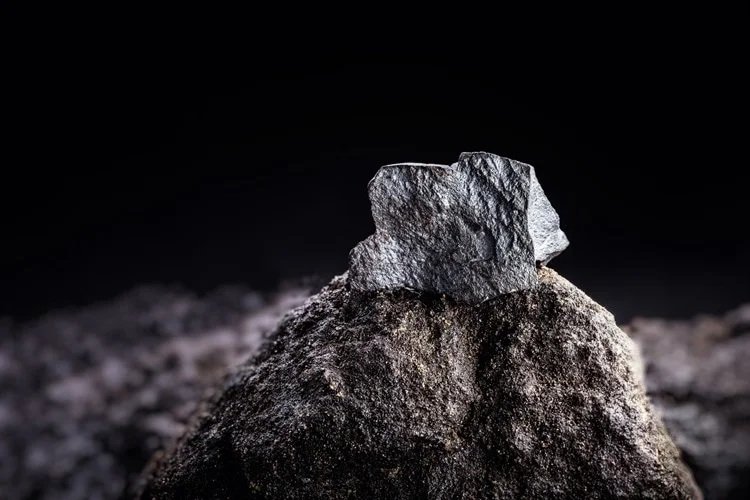
Governments in many African countries, including Guinea, Liberia and the Democratic Republic of Congo, are increasing investment in steel to revive domestic steel industries and reduce dependence on imported construction materials.
The African Finance Corporation (AFC) has identified iron ore as a critical strategic resource to advance Africa’s industrialization goals. Africa has an estimated US$8.6 trillion worth of untapped mineral resources, and iron ore is now emerging as a strategic resource for building the country’s steel and construction industries.
The market is expected to grow from approximately USD 313 billion in 2026 to approximately USD 425 billion by 2034, driven primarily by infrastructure expansion and demand from the construction and automotive sectors, according to forecasts cited by Energy Capital & Power.
Still, many of its values remain locked during the extraction stage. According to the African Finance Corporation, minerals generate far greater economic benefits when processed into industrial products such as steel, aluminum and alloys than when exported in their raw state.
Guinea’s vast Simandou iron ore deposit is widely considered to be the world’s largest untapped high-grade iron ore reserve and is one of the most high-profile projects worldwide. Once fully operational, the project is expected to produce up to 120 million tonnes of iron ore annually, according to project estimates cited by companies involved in the development.
Bird reported that global steel producers are already working to secure supply from the deposit. They include China Baowu Steel Group, the world’s largest steelmaker, which is expanding its participation in the project as Chinese manufacturers seek long-term access to high-grade ore.
In Guinea, the government has positioned Simandou as a cornerstone of a broader economic transformation strategy. According to the national planning document, the Simandou 2040 development program includes 122 priority projects spanning infrastructure, agriculture, education and health.
Iron ore production is also expanding in Liberia, a West African country. Liberia’s Ministry of Mines and Energy says it expects production to reach 25 million to 30 million tonnes per year once current mining projects reach full capacity, with expansion projects led by ArcelorMittal and other operators.
Although the continent has world-class reserves of iron ore and key steelmaking raw materials such as manganese, chromium and nickel, it remains highly dependent on imports of finished steel products.
Many African countries export raw materials extracted from African soil, but import finished steel products used in construction, transportation infrastructure, and manufacturing. Experts have called for strengthening mineral beneficiation and domestic processing industries to address the imbalance.
Samaira Zubair, president and CEO of Africa Finance Corporation, told Bird that the constraint is not a lack of resources, but rather aligning mineral production, infrastructure investment and processing capacity with Africa’s long-term demand fundamentals.
South African policymakers are also aiming to boost mining investment in the country. President Cyril Ramaphosa said in his State of the Union address in early 2026 that the government aims to attract approximately R2 trillion (more than US$117 billion) in mining investment over the next five years.
“Our iron ore reserves are valued at more than R40 trillion, making mining a sunrise industry. After years of declining investment in exploration, we are pouring money into geological mapping and exploration to tap into our significant mineral reserves,” Ramaphosa said.
In the Democratic Republic of Congo (DRC), authorities are exploring iron ore potential alongside the country’s main copper and cobalt sectors. According to the Ministry of Mines, DRC authorities estimate that the country has untapped mineral resources worth approximately US$24 trillion.
However, much of that demand is currently met by imports. International trade data shows African countries import large quantities of finished steel from major producing countries such as China, India and Türkiye.
Africa exports iron ore and other raw materials for steelmaking, but imports finished products used in construction, transportation infrastructure, and manufacturing. When African countries import steel, they often import products made from minerals originally mined on the African continent, such as manganese from Gabon and South Africa, chromium from Zimbabwe, and nickel from Madagascar, according to an analysis by Africa Finance Corporation. Despite rich iron ore reserves, Africa’s steel production has only increased slightly.
Bonface Orcho, Bird Story Agency.