


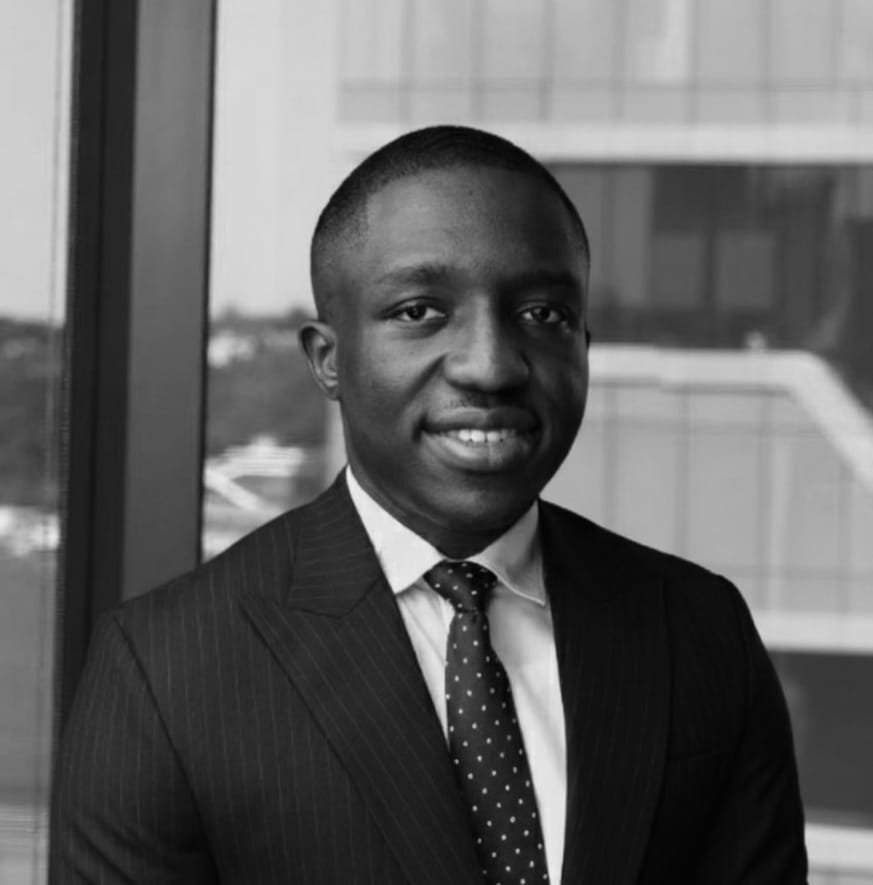
Ebitari Itonyo is an infrastructure finance expert with Africa Finance Corporation (AFC), Mitsubishi UFJ Bank (New York), and ARM Holding Company.
He advises on energy, transportation and digital infrastructure projects across Africa and holds an MBA from Columbia Business School. He talks to Vanessa Obioha about why Africa’s next development leap depends on execution, not money.
Everyone agrees there is a huge infrastructure gap in Africa, yet capital injections continue to set new records. What are the real constraints?
The constraint is execution. There is liquidity from DFIs, sovereign funds, pension assets and private credit managers. Nigeria alone has over N25 trillion in pension assets as of August 2025, but only a fraction of the announced projects will be converted into operating assets. According to BCG’s Bridging Africa Infrastructure Execution Gap, only 10 percent of projects reach financial completion and only 6 percent progress to construction. Approximately 65% stall before feasibility is completed. It is not a capital crisis, but an execution crisis.
Can you explain what you mean by the word “execute”?
This is the complete journey from concept to closing. Three things define it. Preparation consisting of reliable demand forecasting and integrated financial models. Risk allocation. Risks are allocated to the parties best suited to manage them. adjustment. Legal, technical, and commercial workstreams are synchronized. If you miss any of them, even a good project will fall apart due to its complexity.
From your work at AFC and MUFG, what is the difference between the projects you actually close?
Consistency and discipline. At AFC, successful transactions involved early credit enhancement partners such as MIGA and ATI. At MUFG, we were involved from the very early stages of project development to ensure that the entire advisory chain worked based on one validated financial model. Transparency in risk sharing has given investors the peace of mind to embrace rather than avoid pricing uncertainty. Execution is essentially the financial application of good project management.
Where can Africa strengthen its discipline?
By professionalizing project preparation. We need regional “project readiness factories”, not just one-off bodies like Nigeria’s Infrastructure Advisory Council. You need a small, expert team of modelers, engineers, and lawyers who can turn concepts into profitable term sheets. Governments, DFIs, and private foundations can jointly provide funding, with the private sponsor paying a success fee upon closing. That’s how we scale bankability.
Many governments still try to lead every major project. Should the private sector play a bigger role?
absolutely. It is more cost-effective for the government to let private sponsors take the lead. When a country borrows 15% to fund assets that generate returns in the high single digits, the math doesn’t hold up, even in developed markets. Governments should focus on delivering frameworks, viability gap financing and predictable tariffs, thereby attracting private investors who need the certainty they can build and implement.
Currency and political risks remain deterrents. How can we keep the trade alive?
By building resilience into the structure. Utilize mixed currency reserves, inflation-linked tariffs, and enforceable step-in rights. The goal is not to eliminate volatility. It’s about designing projects that survive. When investors understand that discipline, confidence builds.
What will success look like five years from now?
Success is for Africa to routinely turn feasibility studies into financial closes within 18 months instead of five years. When that happens, pension funds, private credit, and DFI capital will come together in a stable and repeatable pipeline. At that point, Africa’s problem will no longer be about executions. It becomes a priority.
What will happen next?
The problem isn’t capital, it’s conversion. Africa’s next leap forward will depend on turning available funds into real, productive assets. To do this, we need to better manage risk, build confidence in project structures, and reach a stage where we can confidently invest our retirement savings in the continent’s infrastructure. In doing so, Africa can prove that it can finance and implement its own future.
