


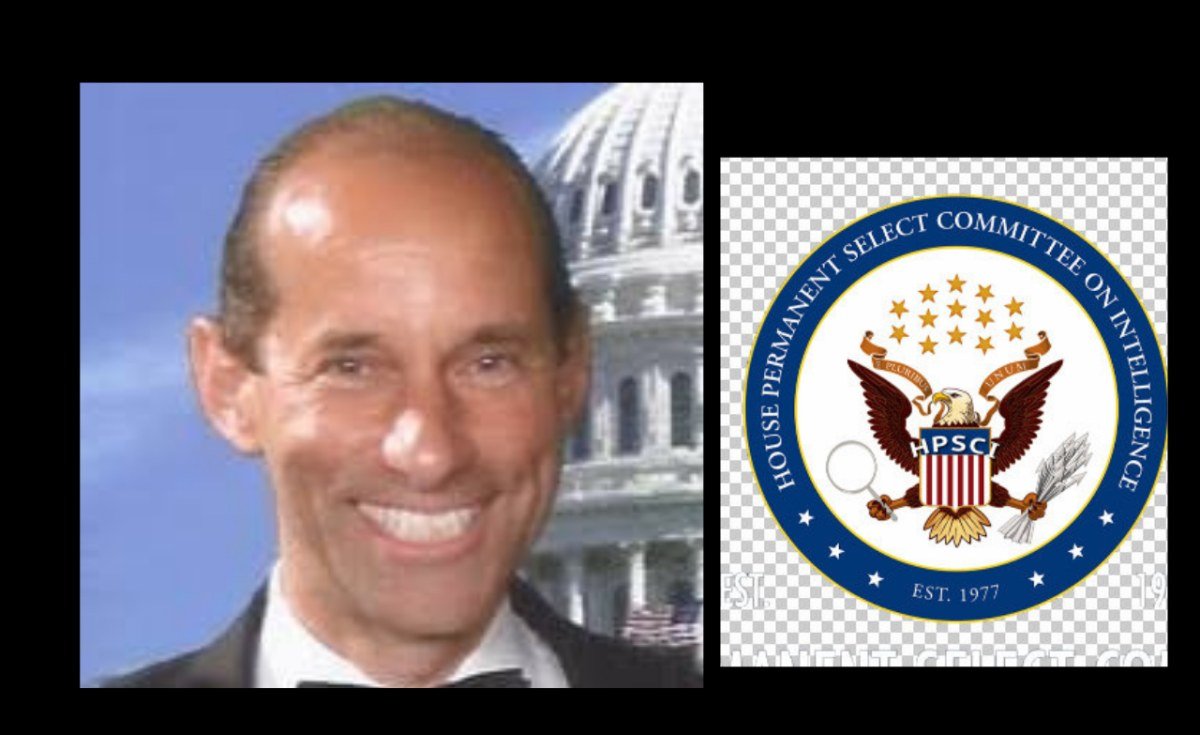
Frank W. Garcia Jr., a veteran Republican Congressional aide with little experience in Africa, was nominated by President Trump to head the State Department’s Africa Bureau.
Since President Trump took office a little more than a year ago, the agency, which manages U.S. relations with 49 sub-Saharan countries, has had three consecutive leaders. The latest is Nick Checkers, a former CIA analyst who became a senior agency official on January 6th.
Read: Former CIA analyst now head of U.S. African civil service
The announcement came as Deputy Secretary of State Christopher Landau completed a tour of four African countries to “rebalance trade, ensure a positive business environment, and promote security and peace, all of President Trump’s priorities,” the State Department said. Landau, whose first stop was Egypt and has also visited Ethiopia, Kenya and Djibouti, is the highest-level official to visit sub-Saharan Africa during President Trump’s second term.
Garcia, whose nomination to be assistant secretary for African Affairs was submitted to the Senate by the White House on Thursday, currently serves as a senior adviser to Representative Rick Crawford (R-Arkansas), chairman of the House Permanent Select Committee on Intelligence (HPSCI). Previously, he served for four years as staff director for the Intelligence Subcommittee, which oversees defense intelligence. While serving as a professional staff member of the Intelligence Committee from 2006 to 2014, his responsibilities included overseeing technical intelligence gathering.
Most previous assistant secretaries for Africa have been career diplomats, but President Trump and his administration are making policy decisions differently, relying much less on experts and communicating decisions through social media posts. The Africa Bureau is currently one of four regions within the State Department and is headed by an unidentified senior official.
From 2016 to 2021, Garcia served as president of Via Stelle LLC, a technology consulting firm focused on the U.S. government (defense and intelligence) market, according to his LinkedIn profile. He holds degrees from the Naval Postgraduate School, the National War College, the University of Rhode Island, and the University of South Carolina, and served as a captain in the U.S. Navy for two years with the National Reconnaissance Office.
Shortly after taking the top Africa bureau job last month, Checker distributed a memo urging American diplomats to “unabashedly and aggressively” communicate “the American people’s generosity in containing HIV/AIDS and alleviating hunger,” according to the Guardian, which obtained a copy of the internal email. “It is not impolite to remind these countries of the generosity of the American people in containing HIV/AIDS and alleviating hunger,” the email said. “Rather, it is essential that we counter the often false narrative that the United States is not our largest donor and enable us to use that aid more effectively to advance our national interests.”
In recent weeks, Checker has focused on repairing U.S. relations with Sahel countries, where bilateral ties were severed in recent coups. On January 18, Checkers represented the United States at the inauguration of former coup leader and newly elected Guinean President Mamadi Doumbouya in Conakry, and had a “productive sideline with key government ministers, regional partners, and private sector leaders focused on advancing region-wide agreements that strengthen U.S. trade relationships and support U.S. jobs and growth.”
On Friday, the State Department announced that Checker would travel to Bamako, West Africa, “to convey the United States’ respect for Mali’s sovereignty and our desire to chart a new trajectory for the bilateral relationship and move beyond policy failures.”
At the same time, Massad Bouras, the senior U.S. adviser for Arab and African affairs, who has ties to and knowledge of the region, was on a whirlwind journey through North Africa. A week ago, he traveled to Tripoli to speak at the Libyan Energy and Economic Summit and meet with Prime Minister Abdelhamid Dabaiba, before heading to Benghazi to meet with leaders of rival factions that hold power in the country’s east. “The United States is committed to working with Libyan leaders and the private sector to support growth, attract investment, and deliver tangible benefits to both the Libyan people and the American people,” Boulos said in a post on X.
He also visited Algeria and discussed “deepening strong trade and defense ties” with Algeria, and discussed “constructive discussions on regional security issues, migration and investment opportunities” with Tunisia.
For much of the past year, Mr. Boulos has been a central figure in the administration’s most visible diplomatic efforts, particularly efforts to end the conflict in eastern Democratic Republic of Congo. Those efforts included a meeting in Washington in December hosted by President Trump to sign a peace agreement with President Felix Shisekedi of the Democratic Republic of the Congo and Paul Kagame of Rwanda, which has not yet brought an end to the fighting. He is also the US leader of the Quad Initiative on Sudan, which includes Egypt, Saudi Arabia and the UAE, but failed to achieve a ceasefire proposed in a joint statement issued in September as the war reached “catastrophic levels”.
Tshisekedi will return to Washington this week to attend Thursday’s National Prayer Breakfast. The Congolese President, together with Minister of Mines Louis Watum Kabamba, will attend the first Ministerial Conference on Critical Minerals, convened by Secretary of State Marco Rubio with the participation of a coalition of mineral-rich and developed countries. Senior officials from Guinea and Kenya will also participate in the meeting, which the State Department said is aimed at “strengthening critical mineral supply chains with international partners.”
While in the US capital, Mr Tshisekedi and his high-level delegation are expected to come under pressure to move the stalled peace process forward. At the beginning of a hearing on the Democratic Republic of the Congo-Rwanda Agreement convened last week by the House Africa Subcommittee, Chairman Chris Smith (R-N.J.) called for increased pressure on Rwanda to “demobilize” fighters in eastern Congo, saying the government of the Democratic Republic of Congo must disarm and relocate actors who threaten Rwanda and the peace agreement that both sides have agreed to implement.
As for Garcia, confirmation by the Senate as assistant secretary could take several months. The long process typically begins with a review and hearing by the Foreign Relations Committee, followed by a vote in the committee and on the Senate floor, where a majority of senators present and voting must agree.
