


The realization of infrastructure built with borrowed technology and funds has been touted as a beacon of progress by many of sub-Saharan Africa’s post-independence leaders and praised by its people. Sixty years after independence, this misconception continues to prevail, pushing Africans further and further away from genuine, deep-rooted and sustainable progress.
This article reinforces the historically proven truth that developed peoples are able to build and maintain infrastructure in addition to more outward-looking indicators of progress within their borders. Human resource development is the basis of a nation’s prosperity, and there are no shortcuts for Africa. Strategic investments in systems, processes, and knowledge bases that target the public’s intellect and emotions provide a pedestal for endogenous infrastructure, technology, and other forms of progress.
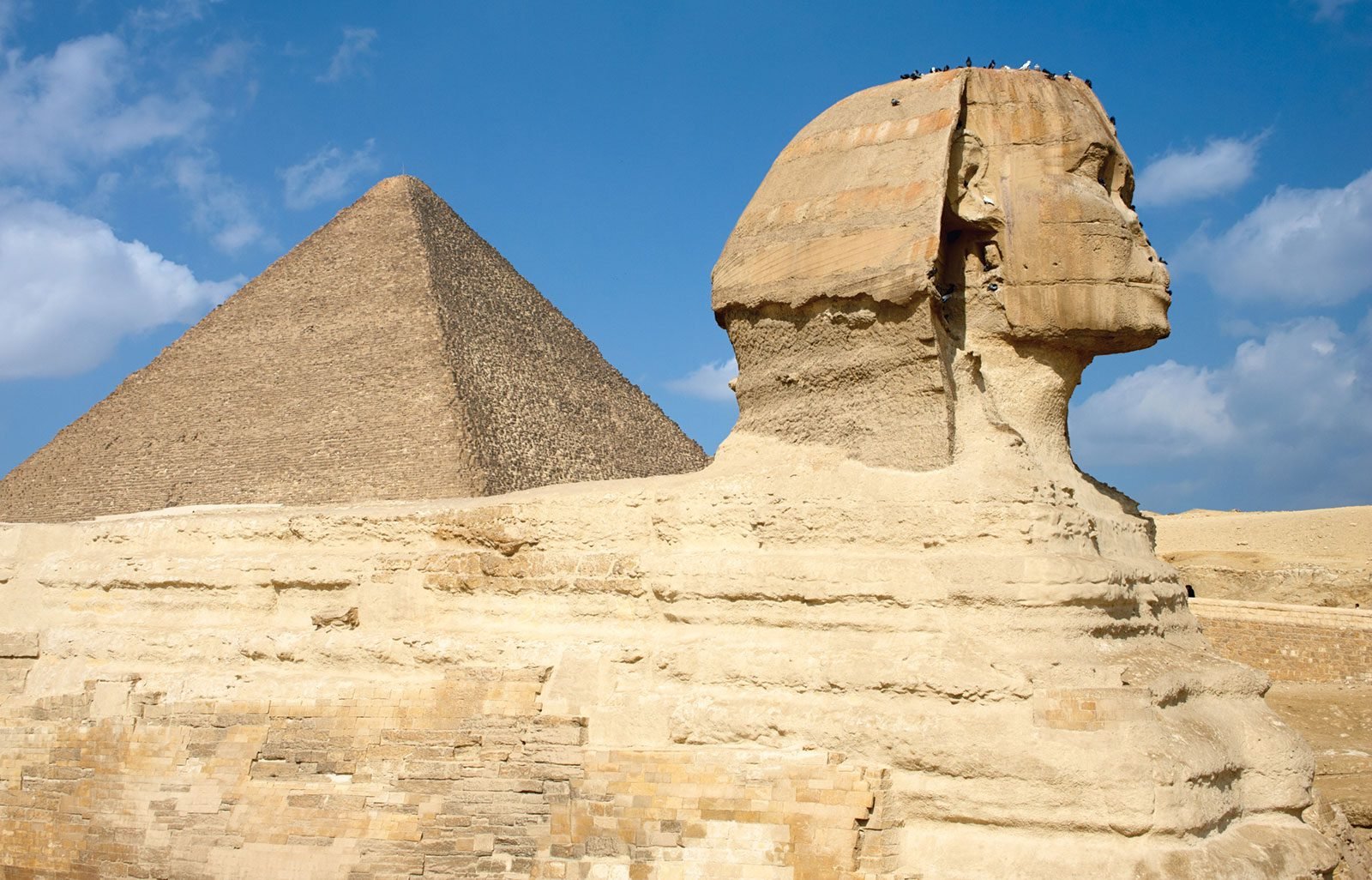
Ancient Egypt was the greatest center of education in the ancient world. At the same time, the infrastructural achievements of the ancient Egyptians continue to be astonishing to this day. The thirst for knowledge exhibited by the ancient Egyptians and the investment in knowledge production of their time is unmatched by any other era. More recently, Western countries in Europe and North America have built modest civilizations on investments in comprehensive education that emphasizes character, culture, art, politics, science, technology, and more. The same history is a guidepost for all countries today considered to have advanced infrastructure, including China and other Asian economies.
One of the things that is often overlooked about ancient Egypt and today’s world powers is the connection between culture and knowledge. In order to build the knowledge they used to develop their infrastructure, ancient Egypt had the deepest respect for the land and culture. It was a land of emotionally intelligent people who turned inward for inspiration for personal and community growth and national progress. The ancient Egyptians regarded locally produced knowledge with respect and did not value the sole consumption of other people’s culture, knowledge, and resources. The same applies to today’s modern civilization.
One of Africa’s biggest challenges to date is the intellectual strength and will power to break free from the consumerist mindset entrenched in the colonial era. In fact, the newly raised flag of independence hardly began to fly across the country until African leaders began undertaking large-scale white elephant projects, but their people lacked the technical know-how to build and maintain them, and their treasuries lacked the financial resources to do so. While many projects were half-heartedly abandoned “forever,” many were completed and worked for several years, relying heavily on inaccessible outside expertise and imported reinforcements. By the 1980s, when many such projects were in obscurity and host countries were gasping for air economically, the International Monetary Fund (IMF) arrived in a deluge, shouldering ill-conceived and ill-fated structural adjustment programs with unfortunate consequences for the continent.
If history had given Africa’s climate its proper place, the wasteful loans forced on African countries by the IMF and its Paris Club partners more than 30 years ago (of which many have little to show for today) would have acted as a deterrent. it’s not. Many African countries continue to borrow money to finance infrastructure development. Africa is spreading its debt tentacles beyond Paris Club countries to other countries, mainly in Asia. With each tightening of new lenders, the impact on Africa becomes even more dire.
All Africans of good will must strongly resist the continuing trend of borrowing money, knowledge and skills to build infrastructure. As exemplified by the continent’s post-independence history, borrowing for infrastructure does not bring lasting benefits to current and future generations of Africans. It has served primarily to empower the wealthy, perpetuate class disparities across the region, and leave Africans’ self-esteem at an all-time low.
As in ancient Egypt, formal, non-formal and non-formal education across Africa today must be firmly built on respect for the land, people and culture. The aim is to transform the average person’s mindset to the point where innovation, creativity, character, and the social-emotional connections necessary for accelerated progress arise spontaneously. Africa’s indigenous knowledge systems are needed for policy action and education across all disciplines and disciplines.
In the age of liberalized knowledge brought about by the Internet, governments should focus on strongly supporting Africans to access sufficient knowledge to build their own infrastructure using local materials and resources. Achieving this requires more than establishing research and development institutions. For example, people’s moral values need to be strengthened through exemplary leadership and education.
On the national side, Africa must embark on a period of desperate self-education that extends to intellectual expansion in specific fields, social-emotional learning, community, national, regional and world history, the arts, and social sciences, to name but a few. Citizens will have to start respectfully demanding and advocating for the building of community and national knowledge bases and human development through comprehensive education aimed at transforming the human spirit. Furthermore, all Africans concerned should speak out against continued borrowing. We should work with governments to achieve this objective.
Advances in infrastructure and technology are rarely the product of technology transfer or borrowing for construction. Africa’s futile pursuit of progress through infrastructure routes riddled with debt will only end in ridicule for this generation of Africans, and will add immeasurable hardship to the next generation. Sustainable development in Africa depends directly on Africans building their own infrastructure, using primarily locally sourced physical and intellectual materials and labor. But this is the easiest thing to say. Because building and maintaining infrastructure at the envisaged level will only be possible if humans are developed in all aspects. Therefore, to achieve accelerated progress, emphasis must be placed on the social, emotional and intellectual training of Africans.
Dr. Esiob is the principal of Julani University. Follow Dr. Chika Esiob on Twitter, Instagram and Facebook @drkkaesiobu
