


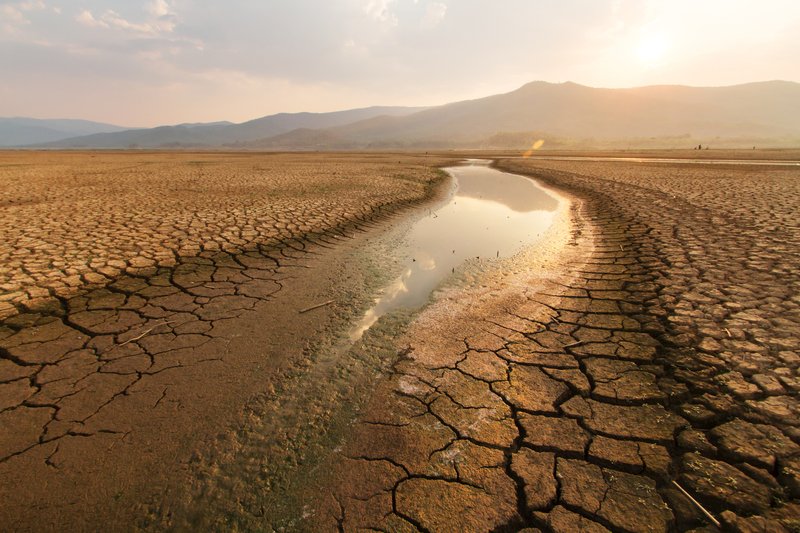
African companies are leading the way in climate risk assessment, adaptation and value creation, according to the annual climate research report by Boston Consulting Group (BCG) in the US and the Sustainability Action Platform CO2 AI.
The report, titled “How are companies tackling climate change challenges and creating value?” analyzed responses from 1,924 executives responsible for their companies’ emissions measurement, reporting and reduction efforts. These companies come from 16 major industries and 26 countries and together account for 40% of global greenhouse gas (GHG) emissions.
The study found that while global reporting rates are down from 9% in 2024 and 10% in 2023, African companies are outperforming the survey average in identifying and measuring physical and transitional climate risks at 14%, and second regionally after Asia-Pacific (16%). Additionally, African countries are rated as most likely to assess climate risks, particularly physical climate risks, as they are expected to be disproportionately affected by climate change.
on the ground
In fact, Africa is already being ravaged by the effects of climate change.
The Africa Climate Security Risk Assessment (ACRA) August 2024 report by the multilateral initiative Weathering Risk says that while the African continent is one of the lowest contributors to greenhouse gas emissions, it is highly vulnerable to the impacts of climate change due to the intersection of various socio-economic, political and environmental challenges. The climate crisis is already causing significant damage to biodiversity, water security, food production, life, health and economic growth, and the impacts of climate change are predicted to worsen significantly in the coming decades.
The ACRA report cited 2023 figures from the Food and Agriculture Organization of the United Nations (FAO) and said 1.34 billion Africans currently face water scarcity and 20% of Africa’s population is affected by hunger, often lacking access to cheap and reliable energy.
The BCG and CO2 AI study found that Asia-Pacific, the Middle East, and Africa had the highest increase in normalized climate losses as a percentage of revenue, with average climate-related losses in Africa increasing by 0.2% from 1.9% in 2023 to 2.1% in 2024.
The report says there is strong local recognition that climate change poses significant risks to business operations, with many companies already experiencing the impacts. As a result, companies in the region are taking a more proactive approach to comprehensively identifying and measuring these risks, ahead of other regions.
“African companies are leading by example, with 14% of companies comprehensively measuring climate risk, well above the global average,” said Hamid Maher, managing director and senior partner of BCG’s Casablanca division. “This is a testament to the continent’s commitment to resilience and forward-thinking leadership, both essential as Africa faces disproportionate climate impacts, as well as its remarkable resourcefulness.”
But research shows African companies have ground to cover. Only 6% of large African companies measure their emissions comprehensively, compared to 7% globally, and just 10% of African companies have emissions targets that cover Scope 1, 2 and 3, which is 3 percentage points below the global average.
The report said that African companies are broadly in line with global companies on emissions transparency, but fewer have set clear targets for reducing emissions, adding that while disclosures may be driven by external requirements from other jurisdictions or customers, there is a relatively low focus on decarbonization compared to other companies around the world.
climate recovery
According to the study, 82% of global companies surveyed said they had realized economic benefits from decarbonization, with 6% reporting a value of more than 10% of annual revenue. This means that the net value per company (after taking into account costs) is USD 221 million. These benefits primarily come from increased revenue through sustainable products and reduced operating costs through increased efficiency and resource optimization.
The report found that African businesses are reaping significant benefits from decarbonization (11% of companies compared to the survey average of 6%) and adaptation (7% of companies compared to the survey average of 4%). Investing in climate action is seen as delivering tangible benefits, strengthening our position as a trusted supplier and creating greater value for our business.
For global companies that assess both physical risks, such as storms and sea level rise, and transition risks, such as policy and market changes, the average projected financial exposure by 2030 is USD 790 million. Nearly half of companies report that their climate risk adaptation efforts have generated a return on investment of 10% or more, demonstrating that proactive preparation delivers real, measurable value.
advanced tools
The study says that as companies scale up their climate investments and goals, they are strengthening the way they finance and operate their climate efforts and increasing their use of advanced governance mechanisms. We found that a third of companies have introduced an internal carbon price, and the adoption of climate change plans has increased by 5 percentage points year-on-year, with 61% of plans now approved at board level. The report says these tools represent an important shift as companies move from broad aspirations to more pragmatic climate change strategies.
Research shows that by putting sustainability at the heart of their strategy, a small number of companies are realizing financial benefits equal to around 10% of their revenue. This report identifies four factors common to companies generating the greatest financial value from climate action.
· Comprehensive emissions and risk measurement (1.4x more likely to achieve significant returns)
・Quantification of impact through internal carbon pricing and risk modeling (1.6x)
· Adopt a migration and adaptation plan (2.2x)
・Use of multiple advanced digital solutions (2.3x)
Specifically, African businesses are using several advanced digital tools for mitigation. AI agents (54%); predictive AI (48%); advanced computing (40%); Internet of Things (IoT; 36%); augmented reality (AR)/virtual reality (VR; 34%).
In addition, we use the following technologies for adaptation and resilience: Generative AI (56%). AI agents (49%). Predictive AI (46%); Advanced Computing (38%); IoT (37%); AR/VR (29%); Earth Observation (23%) and Drones (19%).
“Companies that are getting real value from sustainability are those that lean towards AI and advanced digital tools,” said Charlotte DeGott, CEO of CO2 AI and co-author of the report. “Companies are using them 10% more than their peers, especially to drive decarbonization. And when companies layer multiple advanced solutions, they are more than twice as likely to achieve real and significant benefits.”
Top photo: Climate change (© Nitsuki | Dreamstime.com)
