


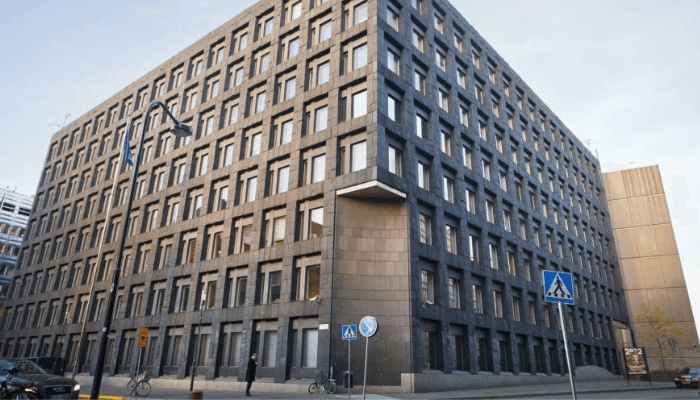
In August 2025, African Finance Corporation (AFC) released its comprehensive annual development impact report, providing an in-depth look at the corporation’s transformative role in Africa’s infrastructure and economic development. AFC has completed more than 166 projects in 36 countries, contributing more than US$50 billion to the continent’s gross domestic product (GDP) and creating 7 million jobs. These remarkable results highlight the potential of the AFC’s mixed finance model, an approach that combines public and private sector investments to accelerate Africa’s growth, particularly in key areas such as energy, industrialization and regional integration.
Central to AFC’s development strategy is its key role in Africa’s energy transition. One of the company’s most notable achievements is the creation of Infinity Power, Africa’s largest and fastest growing renewable energy platform. The platform currently delivers 1.4 GW of clean power and is expected to reach 3 GW by 2030. These efforts are key to the continent’s transition away from fossil fuels, as AFC continues to develop large-scale wind and solar power projects across the region, including Egypt, Senegal and South Africa.
Also read: Kenya, Zambia, Tanzania amend public-private partnership law to close infrastructure funding gap
The energy transition is also contributing to climate change mitigation, with AFC-supported projects avoiding 8.8 million tonnes of CO₂ emissions annually. This is an essential step in addressing Africa’s increasing vulnerability to the impacts of climate change, while also laying the foundations for sustainable development. Projects like the Red Sea Power Project in Djibouti aim to make the country the first country in Africa to run entirely on renewable energy, further demonstrating AFC’s leadership in accelerating the continent’s clean energy future.
While the energy transition is important, the AFC’s broader focus also includes industrialization and regional integration. Its investments are helping to build the foundations for a stronger industrial ecosystem in Africa. For example, Gabon’s ARISE industrial platform provides opportunities for women in traditionally male-dominated sectors, with a female labor force participation rate of 42%. This is just one example of how AFC’s investments contribute to gender equality and enable women to actively participate in the economic opportunities these projects bring.
AFC’s digital inclusion efforts have also led to important social outcomes. Through investments in companies such as M-KOPA, a pay-as-you-go mobile solar energy financing platform, 1.7 million people gained access to mobile internet services for the first time. Additionally, AFC’s support for telecommunications companies such as MTN and Airtel has connected more than 100 million people across the continent to mobile and broadband services, bridging the digital divide and improving connectivity.
Beyond energy and digital inclusion, AFC’s investments have focused on improving Africa’s infrastructure, particularly transport and trade. The Lobito Railway Corridor project, which connects Angola, the Democratic Republic of the Congo (DRC) and Zambia, is a prime example. By reducing export schedules from 45 days to just 7 days, the rail project will facilitate smoother trade, reduce transportation costs and reduce CO₂ emissions by 300,000 tonnes per year. Improving connectivity in the region will not only boost regional economies, but also help unlock important trade routes for minerals essential to the global energy transition.
Also read: CHAN 2024: How African football is driving sustainable infrastructure in East Africa
Similarly, AFC’s Takoradi Port project in Ghana serves as a case study of how private sector participation can support the transition to sustainable infrastructure. This project, which has transitioned to private capital, exemplifies how infrastructure can maintain impact while delivering returns for investors and contributing to regional development.
The success of AFC’s projects is primarily due to its innovative mixed finance model, which ensures that projects are not only financially sustainable, but also have long-term development impact. By combining public and private capital, AFC addresses Africa’s infrastructure needs at scale, ensuring both project viability and impact.
AFC’s development model also emphasizes exit discipline, meaning that projects move to private capital once they become commercially viable. This will enable the AFC to reallocate funding to new initiatives and further drive Africa’s development, ensuring that its initial impact remains intact.
Also read: Meta turns to wood to reduce data center emissions, impacting Africa’s forestry supply chain
AFC’s investments are also aligned with global sustainability benchmarks, such as the United Nations Sustainable Development Goals (SDGs) and the GIIN IRIS+ standard, ensuring that projects contribute to both local and global efforts to address climate change, economic inequality, and social inclusion.
Looking to the future, the AFC report calls for continued collaboration between governments, development agencies and private investors to scale the model across Africa. As demand for sustainable, high-yield investments increases globally, AFC’s blended finance approach provides a replicable framework to accelerate Africa’s infrastructure development and climate resilience.
To continue on this path of transformation, it is essential that all stakeholders work together to scale these proven models. Only through strategic partnerships can Africa realize its full potential for sustainable growth, with a focus on climate-resilient infrastructure, industrialization and regional integration.

AFC’s approach to infrastructure investment is helping to lay the foundations for Africa’s sustainable future. With a focus on renewable energy, industrial development, regional integration and digital inclusion, AFC plays a key role in shaping the continent’s economic future. With a growing portfolio of impactful projects and a clear focus on measurable outcomes, AFC’s work demonstrates how infrastructure development can foster both economic growth and social inclusion.
As Africa continues to face the challenges of climate change, demographic change and economic inequality, the AFC’s development model serves as a powerful tool to create a more sustainable and resilient continent. The next decade promises to see transformative growth, with AFC at the forefront of Africa’s journey towards sustainable development.
Read the report here.
