


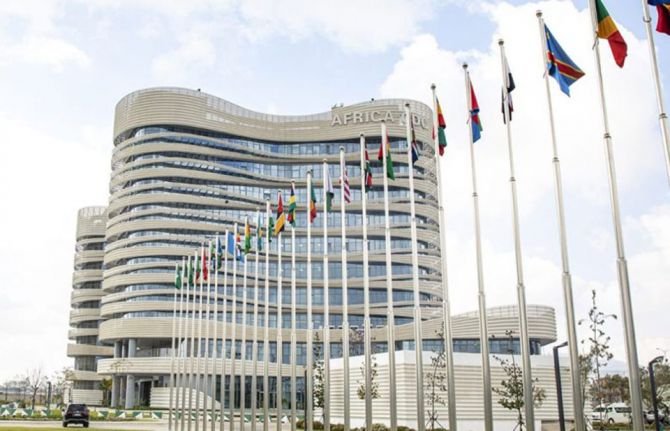
Addis Ababa, February 13, 2026 (ENA) — African ministers and health officials have called for urgent action to ensure fiscal health sovereignty as a foundation for building resilient health systems across the continent.
The call was made during a high-level event on promoting health security sovereignty in Africa, which focused on strengthening collaboration between finance and health leaders.
The event was co-sponsored by the Africa Centers for Disease Control and Prevention, the African Development Bank Group, and the African Union Development Agency.
The conference was attended by health and finance ministers from across Africa and considered ways to strengthen domestic health financing and reduce dependence on external support.
Speaking at the event, Dr. Mekdes Daba, Ethiopian Minister of Health and Vice-Chairman of the Africa CDC Board, said the continent is operating in a rapidly changing global landscape characterized by recurrent epidemics, evolving geopolitical realities, and declining foreign aid.
She noted that these changes have exposed the risk of over-reliance on external systems. He said building an integrated continental capacity is not just an institutional ambition, but a strategic necessity.
“Strengthening regional cooperation, sustaining investment at the national level, increasing technological capacity, strong governance and self-reliance are aspirations we must collectively pursue,” she said.
Africa CDC Executive Director Dr. Jean Kaseya emphasized that Africa must take ownership of its own health challenges. “Africa needs to define its own health priorities, drive its own solutions and finance its own resilience from within,” he said.
According to him, Africa’s health security and sovereignty represents a unifying vision that reframes health not as a social sector expenditure but as a pillar of continental sovereignty, economic resilience and geopolitical credibility.
“Africa’s health security is inseparable from Africa’s economic future and global standing,” he stressed.
Dr. Kaseya further emphasized the need to address inefficiencies in existing spending.
“Africa’s path away from aid dependence will not be found by chasing more resources, but by ending the gross inefficiencies and waste of resources that already exist,” he said.
Nardos Bekele, CEO of AUDA NEPAD, said sustainable health financing requires structural reforms and the deliberate mobilization of mixed investments to complement diverse domestic resources while reducing dependence on external financing.
“Health sovereignty should no longer be a slogan; it must become our financing strategy,” she asserted, noting that investing in health should be seen as a core economic strategy rather than consumer spending.
African Development Bank Group President Sidi Ould Tarr said the African Development Bank is promoting a new African financial architecture that goes beyond traditional debt limits.
He emphasized the deployment of innovative financial instruments and risk mitigation mechanisms to attract private sector investment and treat health as a productive social investment.
“We need to mobilize the necessary resources to eliminate the funding gap and reduce the out-of-pocket burden on the people,” he stressed.
Participants agreed that strengthening domestic health financing is central to ensuring Africa’s long-term economic stability and resilience.
